
Consumer trust in AI ads just crossed a line
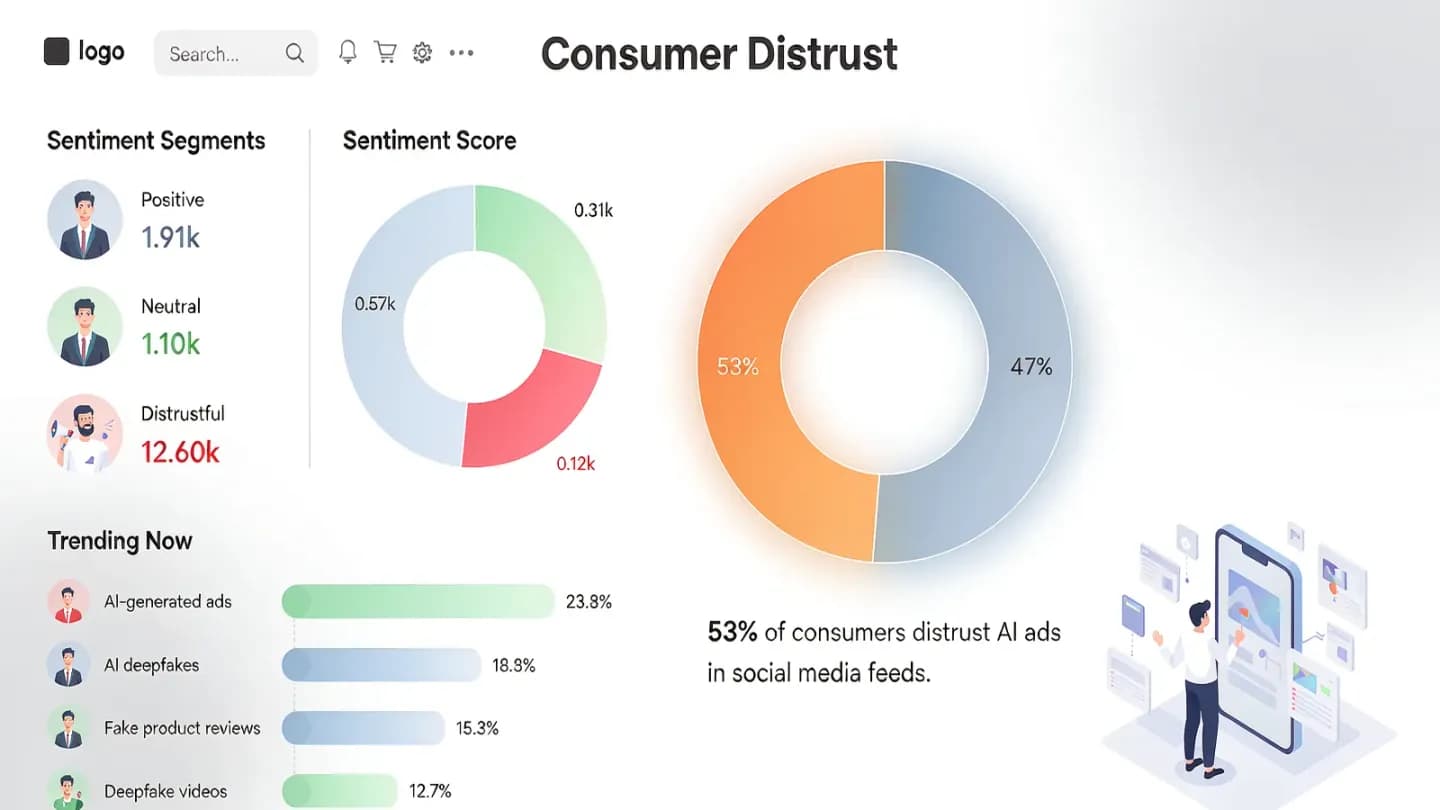
Consumer trust in AI ads has fallen to a clear majority-skeptical position in 2026: more than half of audiences now say they distrust synthetic creative, and that suspicion is reshaping how brands should produce and disclose generated video. The shift is no longer a fringe reaction - it is a mainstream expectation marketing teams cannot ignore.
The number that captures the moment comes from Jasper's 2026 research: 53 percent of consumers say they distrust content they believe was made with AI. Pair that with a wave of brand missteps in September 2026, and the pattern is hard to dismiss as noise. Audiences have moved from curious to cautious, and caution changes buying behavior in measurable ways that show up in click-through and conversion.
The September 2026 incidents are not isolated glitches; they are signals that audiences are calibrating a new skepticism toward anything that looks generated without acknowledgment. Brands that ignore the shift risk paying for reach while quietly losing the believability that converts reach into results. Trust, once spent, is expensive to earn back, and the brands that read the room early are already adjusting their briefs rather than their budgets. The cost of a trust miss is no longer reputation alone; it is the slow decay of performance across every channel that touches the brand.
The brand-side confidence gap
The distrust is not only audience-side. Inside marketing organizations, a parallel gap has opened between how much AI teams deploy and how confident they are in the results. Marketers keep funding the tools while struggling to prove the payoff, and {{link}} explains why deployment still lags the hype.
Epsilon's 2026 benchmark puts the contradiction in stark terms: 100 percent of surveyed marketers now use AI, yet only 9 percent can tie it to revenue, and 45 percent name data quality as their top challenge. The capability is everywhere; the proof is scarce. That internal uncertainty leaks into the work and, eventually, into how the audience reads it, because when the people making the ads cannot explain the value, the audience smells it instantly.
The gap matters because trust is built on consistency, and a team that cannot explain why an asset works will struggle to defend it when a viewer pushes back. That is why the internal confidence gap and the external trust gap are the same problem seen from two sides of the same campaign, and confidence is contagious in both directions.
Marketers keep funding the tools while struggling to prove the payoff, and CMO adoption gap explains why deployment still lags the hype.
What the 53% actually distrust
Dig into the sentiment and the objection is rarely that a machine made it. The resistance is about authenticity, consent, and whether the brand is being straight with viewers. The same hesitation shows up sharply among younger viewers, which {{link}} quantifies with fresh 2026 sentiment numbers.
Audiences tend to distrust AI creative when it feels substituted for real people without acknowledgment, when it mimics a human creator's style without permission, or when it is used to manufacture emotion cheaply. The objection is ethical before it is aesthetic. A polished synthetic version of a spokesperson reads as deception even when it looks flawless on screen, and consent is the line that separates a clever asset from a controversy. When the synthetic element replaces a real person rather than supporting one, the audience reads absence where it expected presence.
It is the difference between a brand that uses AI to extend a real story and one that uses it to fake a human one. This is why the trust problem does not dissolve with better models. Sharper rendering does not answer the question audiences are actually asking, which is whether the people in this ad were real and whether the brand told the truth about how it was made. Answer that honestly and rendering becomes a non-issue; dodge it and no amount of polish helps, because the question is moral before it is technical.
The same hesitation shows up sharply among younger viewers, which Gen Z backlash data quantifies with fresh 2026 sentiment numbers.
Why disclosure alone isn't fixing it
The obvious response is labeling: tell viewers the ad was generated. But a label is necessary, not sufficient. Several recent brand incidents show why a label is not a shield, and {{link}} collects the ones that cost the most trust.
A disclosure that appears after the emotional payload, buried in fine print, or slapped on content that still feels deceptive does little to rebuild confidence. Worse, a badge can read as a confession rather than a reassurance if the creative itself feels inauthentic. Transparency has to be designed into the work, not stapled onto the end of it, because a late disclosure repairs nothing that an early deception already broke. A badge that arrives with the punchline already delivered is a footnote to a decision the viewer already made.
A disclosure that arrives after the viewer has already formed an impression is too late to do its job. The stronger play is provenance: letting the audience verify how a piece was made, not just asserting that it was made by AI. Provenance turns a one-way claim into a two-way check, and that reciprocity is exactly what modern audiences expect from the brands they fund, because verification is the new transparency.
Several recent brand incidents show why a label is not a shield, and AI ad backlash cases collects the ones that cost the most trust.

Production moves that rebuild trust
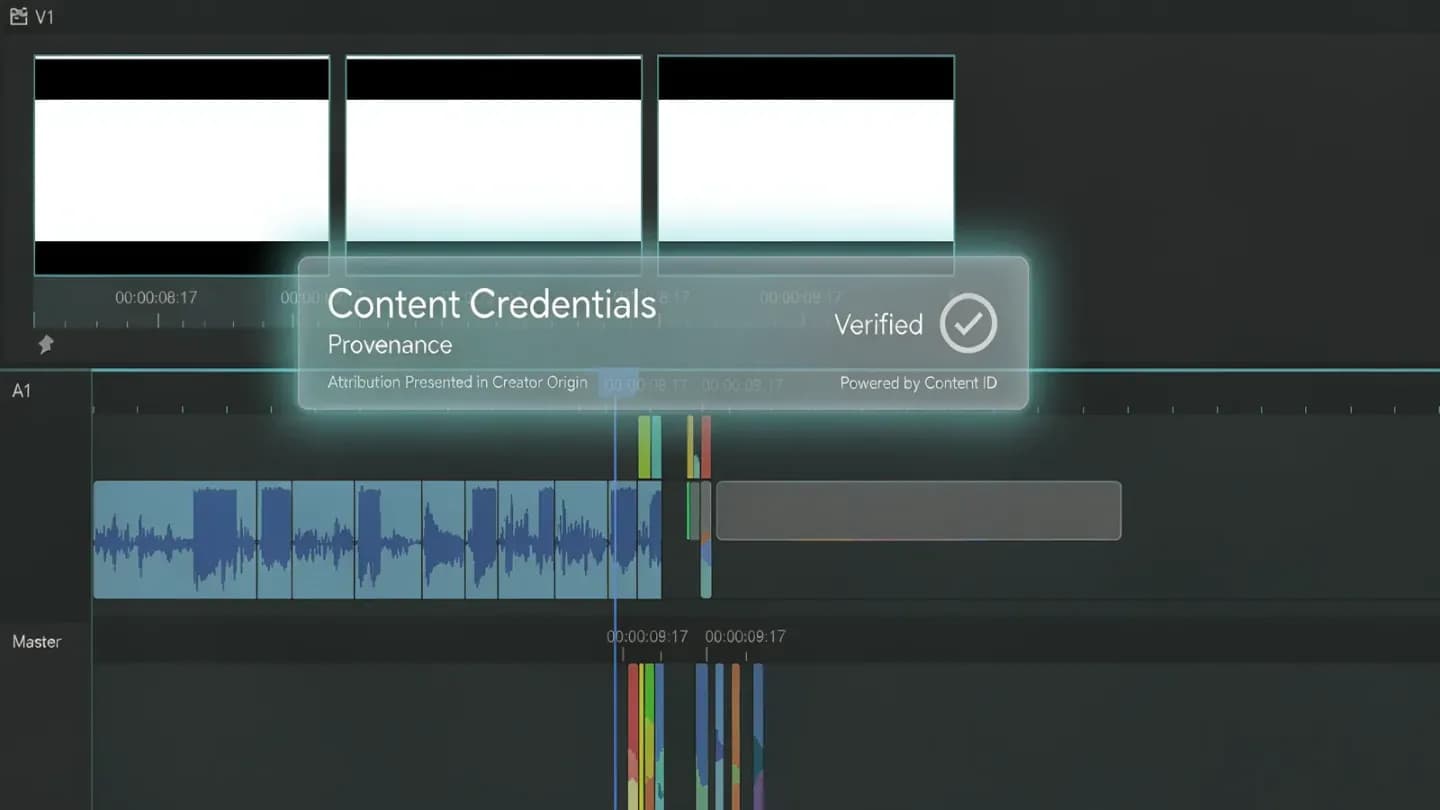
Rebuilding credibility is mostly a set of production decisions made before the render queue, not a post-hoc fix. The first is provenance by default - generate with Content Credentials on so the asset carries verifiable metadata about its origin and edits, as the C2PA specification describes. Provenance is the cheapest insurance a synthetic asset can carry. Capture the edit history at generation time and the asset arrives with its honesty already attached, before a single cut is questioned.
The second is human representation done with consent and credit, not mimicry. The third is restraint: using AI for volume and variation while reserving real footage and real people for the moments that carry emotional weight. The fourth is disclosure placed where the viewer actually sees it, in the language of the platform, not a legal footnote. Restraint is not the absence of AI; it is the discipline to use it where it earns its place in the story, using the machine for scale and the human for meaning.
None of these require abandoning AI video. They require treating trust as a production input with the same weight as resolution or runtime, and baking it into the brief instead of the review. Teams that treat trust as a brief-level requirement ship fewer but stronger assets, which is usually the better economic outcome anyway.
A practical trust checklist for 2026
Before any synthetic cut ships, run it through {{link}} that covers provenance, disclosure, aesthetics, and accessibility.
Concretely: is provenance metadata attached and verifiable? Is the disclosure visible and honest about both what was generated and what was not? Does the creative avoid impersonating real people without permission? And is the result actually better for the viewer, or merely cheaper for the brand? Those four questions separate AI creative that earns trust from AI creative that erodes it. If a piece fails even one of those tests, it is not ready regardless of how impressive the generation looks in the preview, and a single failed check should stop the publish rather than trigger a debate. Each question is a gate, and a gate that is skipped is a liability that travels with the asset into every feed it lands in.
Consumer skepticism toward synthetic ads is not a reason to retreat from the technology. It is a reason to get better at using it - publicly, accountably, and with the audience treated as a party to the process rather than a target for it. The brands that win with AI video will be the ones audiences believe, not merely the ones that publish the most, because believability compounds while its absence does too.
Before any synthetic cut ships, run it through four-check trust-QC gate that covers provenance, disclosure, aesthetics, and accessibility.
Put the framework into production
These related pages connect the article’s planning advice to a specific commercial scope.
References
- 2026 Benchmark Study: Marketing's AI Inflection PointEpsilon
Epsilon's 2026 benchmark finds 100 percent of surveyed marketers now use AI, but only 9 percent tie it to revenue and 45 percent cite data quality as their top challenge.
- 2026 IAB Digital Video Ad Spend Strategy ReportIAB
IAB's 2026 digital video ad spend report puts outlays above 80 billion dollars and flags an agentic-AI governance gap most buyers have not closed.
- C2PA Content Credentials SpecificationC2PA
C2PA's Content Credentials bind tamper-evident provenance metadata to media so audiences can verify whether a video was AI-generated.