
Why AI video quality control now needs a trust gate
AI video quality control is the pre-publish gate that stops templated, unlabeled, or inaccessible generated clips from reaching a brand feed. Before any AI-generated video ad ships, run four checks — provenance, disclosure, aesthetic trust, and accessibility — so the asset is defensible on day one instead of becoming a remediation job later.
The case for a gate is no longer theoretical. Brands flooded feeds with generative spots in 2025 and 2026, and the backlash arrived fast when the output looked cheap or hid its origins. CMOs are already {{link}} as the trust gap widens, and a pre-ship gate is how teams keep using generative tools without repeating those missteps. The pullback reflects a trust problem, not a tool problem. When a clip ships without a gate and later draws a complaint, the fix is rarely a quick edit — it is a takedown, a rewritten campaign, and a trust deficit that outlasts the quarter.
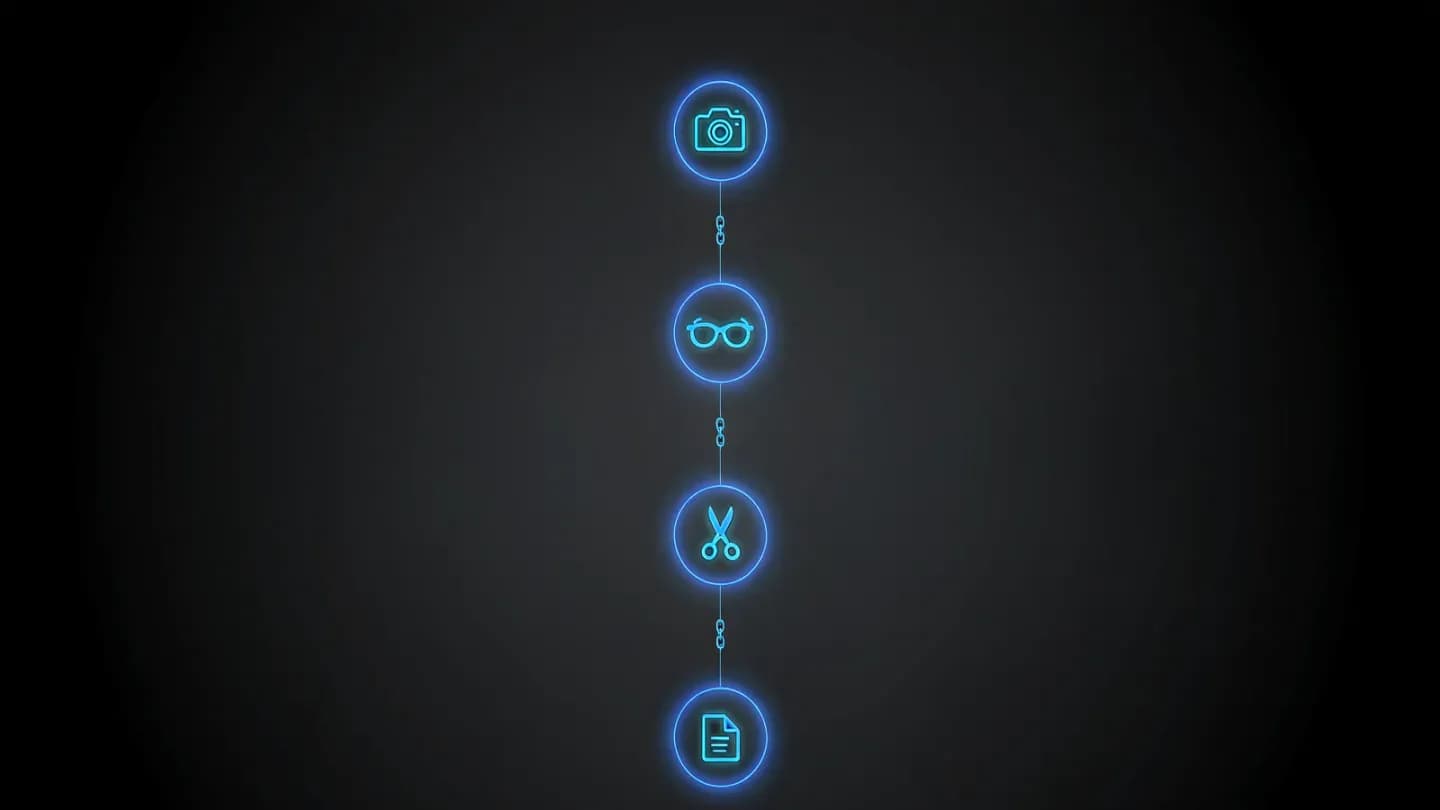
A trust gate is a short, mandatory checklist that sits between 'the model finished rendering' and 'this clip is live.' It is not a creative review — it is a compliance and quality fence. Four checks cover the risks that actually get brands into trouble: nobody can prove where the clip came from, the disclosure is missing, the look is generic, or the on-screen text fails basic accessibility. Each check takes minutes, but together they convert generative speed from a liability into a repeatable, defensible workflow.
CMOs are already scaling back AI video creative as the trust gap widens, and a pre-ship gate is how teams keep using generative tools without repeating those missteps.
Check 1 — Prove provenance with C2PA
Start with the question every regulator and platform will eventually ask: where did this asset come from, and what was done to it? C2PA answers that with Content Credentials, an open standard that binds a tamper-evident record of origin and edit history to the file itself. The provenance layer travels with the media, so a buyer, platform, or auditor can inspect it without trusting the brand's word. As detectors and ad exchanges begin to read provenance automatically, a signed manifest also becomes a quiet signal of legitimacy rather than a liability to explain.
In the gate, the check is concrete. Does the exported clip carry a valid C2PA manifest? Is it signed by the tool that generated or edited it? If the pipeline stripped the manifest during transcode or export, the clip fails until provenance is re-attached. Treat a missing or unsigned manifest as a hard stop, not a warning — once a clip ships without provenance, you cannot retro-fit trust. Build the manifest check into the export preset so it cannot be skipped on the final, tired render of the day.
Provenance also protects the team internally. When a generated actor, voice, or location is synthetic, the manifest should record that fact at the asset level. That single step turns 'we hope this is labeled somewhere' into 'the file states what it is,' which is exactly what the next two checks build on. Keep a copy of the signed manifest next to the master file so future editors inherit the record instead of starting from a blank provenance chain, and re-verify the signature after every handoff between tools.
Check 2 — Meet AI disclosure and labeling rules
Disclosure is now a legal obligation in several jurisdictions, not a courtesy. Under the EU AI Act, providers of systems that generate synthetic video must ensure outputs are marked in a machine-readable format and detectable as artificially generated, with the rule applying from August 2026. Treat disclosure as a {{link}}, not a footnote, so the published asset stays defensible if challenged. A visible label plus machine-readable metadata is the minimum bar, and the exact placement and wording vary by market, so the gate should pin the requirement to the specific regions the campaign runs in.
The gate should confirm two things. First, the published video shows a clear, human-readable disclosure when synthetic people, voices, or scenes appear. Second, the file carries the machine-readable signal that platforms and detectors expect. Bake both into the export preset so disclosure cannot be 'forgotten' on the busy final render. The cost of a missing label is a takedown or a trust hit, not a minor correction — and because disclosure rules differ across regions, document which standard each deliverable satisfies before it leaves the building.
Treat disclosure as a rights and compliance obligation, not a footnote, so the published asset stays defensible if challenged.

Check 3 — Kill the templated, generic look
Technical compliance is necessary but not sufficient. Audiences punish clips that look like everyone else's templated output, and that penalty is separate from any legal rule. When a generated scene {{link}}, the output reads as cheap template work rather than a considered film. The trust damage shows up in skip rates and brand-perception surveys long before anyone files a complaint, which is why the aesthetic check deserves a named owner rather than a glance.
The aesthetic check is a human judgment, but it has a script. Hold each clip against three questions: does it use the brand's actual palette, type, and pacing; does any frame show the generic 'AI sheen' of identical faces, soft plastic light, and canned motion; and would a viewer who knows the brand accept this as on-brief? If two of three fail, the clip goes back, not live. Watch for the tells specifically — too-perfect symmetry, hands that melt, text that wobbles, and a glossy sameness that could belong to any brand. Generative speed only pays off when the result still looks like the brand paid attention, so the gate is where that standard is enforced rather than hoped for.
When a generated scene skips the brand's reusable blocks, the output reads as cheap template work rather than a considered film.

Check 4 — Pass accessibility before publish
The last check is the one teams skip most often, and it is the easiest to fail. Any text burned into the video — lower-thirds, disclaimers, calls to action — must meet WCAG 2.2 contrast minimums: at least 4.5:1 for normal text and 3:1 for large text (roughly 24px or 18.5px bold). Pale grey supers on a bright sky fail silently and exclude viewers who already struggle to read on-screen text. Run a contrast check on every burned-in element, not just the hero title, because the small legal line is usually the one that fails.
Accessibility also means captions and, where relevant, audio description. Confirm captions are accurate, timed, and not clipped by safe-area margins, and that any disclosed synthetic voice is still intelligible. Run the clip muted once — if the message dies without sound, the accessibility check is not done. These fixes are cheap at the gate and expensive after a campaign draws a complaint, so treat the muted playback as a required step rather than a nice-to-have before the asset is marked ready.
Run the gate as a pre-ship checklist
None of the four checks is hard on its own; the failure mode is shipping before all four pass. Run them as a single checklist attached to the export ticket: provenance manifest present and signed, disclosure visible and machine-readable, aesthetic score passing the three-question test, and accessibility contrast plus captions verified. Any clip the gate flags can be {{link}} that turns raw generations into deliverable footage instead of shipping broken cuts.
Make the gate someone's job, not everyone's hope. Assign an owner per campaign, wire the checks into the render-and-export step so they cannot be skipped, and log the result next to the asset. Generative video rewards speed, but the brands that keep shipping it at scale are the ones that added a trust fence first — the gate is what lets the velocity stay safe. Review the checklist monthly as disclosure rules and platform detectors evolve, because a gate built for last quarter's standard quietly stops protecting you the moment the rules move.
Any clip the gate flags can be routed to a repair pass that turns raw generations into deliverable footage instead of shipping broken cuts.
Put the framework into production
These related pages connect the article’s planning advice to a specific commercial scope.
References
- C2PA — Verifying Media Content SourcesC2PA (Coalition for Content Provenance and Authenticity)
C2PA provides an open technical standard called Content Credentials that establishes the origin and edit history of digital content, functioning as a provenance layer publishers can bind to media.
- Article 50 — Transparency Obligations for Providers and Deployers of Certain AI Systems (EU AI Act)EU Artificial Intelligence Act
Providers of AI systems that generate synthetic video must ensure outputs are marked in a machine-readable format and detectable as artificially generated; the obligation applies from 2 August 2026.
- WCAG 2.2 Success Criterion 1.4.3 Contrast (Minimum)W3C Web Accessibility Initiative (WAI)
WCAG 2.2 requires a contrast ratio of at least 4.5:1 for normal text and 3:1 for large text (18pt or 14pt bold), a baseline any on-screen video supers or captions must meet.