
Why AI Brand Video Advertising Stayed in the Shallows
AI brand video advertising spent two years stuck at the edge of the industry. Brands used generative video for posters and social memes, but rarely for the brand films that actually carry a company's image. The reason was structural, not technical.
A traditional TVC is a small engineering project: a creative shop writes the script, a director and producer assemble a crew, then stages, lighting, gear and actors follow, and post-production handles edit, grade, VFX and packaging. A decent brand film runs from hundreds of thousands to millions of dollars and takes months. Worse, it is fragile — one storyboard change or one shifted selling point can mean a full reshoot, rescheduled dates and a bigger budget.
AI should have been the lever that broke that cost structure. Instead, most tools stalled at the same place: generating pretty clips. They could make a striking frame or a few seconds of spectacle, but they could not absorb a brand's real needs — precise product rendering, cross-shot tonal consistency, fast variation of one selling point, and a path into an actual edit and delivery pipeline. So most brand AI marketing parked in 'AI poster' shallow water, and {{link}} breaks down what that cost structure looks like.
The irony is that video is now table stakes — well over 90% of businesses use video in their marketing — yet the brand film, the asset a company shows at its most exposed, stayed human-shot the longest. The bar for a hero spot is higher than for a paid-social clip: a visible artifact in a brand film is a reputational event, not a metric dip, so teams treated AI as too risky for the one asset that mattered most.
So most brand AI marketing parked in 'AI poster' shallow water, and the real cost of AI video production breaks down what that cost structure looks like.
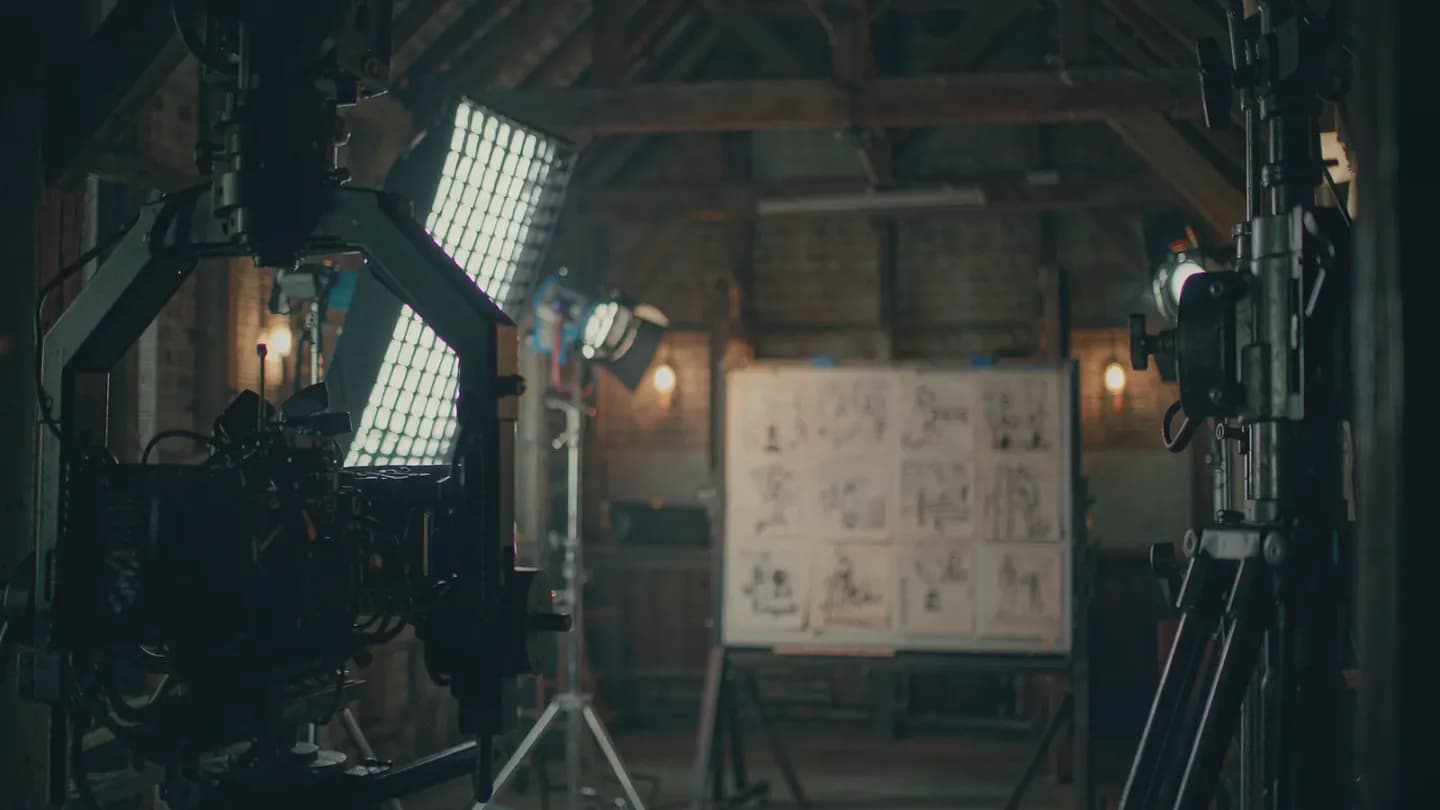
The Brands Wading In First
A batch of brands with unusually high standards for craft are now using AI as the start of the brand film itself, not a poster generator. For 茶颜悦色's '冷香凝' launch, the hard part was visualizing a cold aroma — morning dew falling into mountain mist, the chill of cold brew clinging to a wall. The team used Filmora.TV's canvas as the creative starting point, feeding text and image nodes to lock the narrative logic and visual standard together, compressing a week of on-location grading into hours and letting the brand preview the finished film before a single shoot day.
傲拓科技's six-and-a-half-minute corporate film ran on the same canvas. Covering a 17-year span and national engineering like the Three Gorges ship locks, the traditional approach meant camera crews in the dam zone and aerial shots waiting on weather. This time the team turned product images into high-precision technical drawings to lock the industrial structure, then used camera control and lensing on the canvas to 'build' the hydro hub's light scene — a full storyboard-to-preview loop with no on-site shooting.
汤臣倍健's Antarctica-themed TVC '敢探极境' was built by director Ouyang Yinghao on TapNow's node canvas, chaining text, image, video and audio nodes to hold 'every-frame consistency.' All storyboards and prompts were open-sourced in the TapTV community, where JD.com, Lenovo's World Cup work and Tsingtao's white beer commercials can be replicated. It proves director-led control lets an AI canvas replace part of external shooting and post, dropping previsualization from 'months and millions' to 'days and thousands.'
Three brands, three sectors, one decision logic: stop treating AI as a poster generator and use it as the TVC's previsualization and construction workbench. Doing that well depends on the brand elements you lock up front, and {{link}} is the library approach that keeps a film consistent across every version.
Doing that well depends on the brand elements you lock up front, and a reusable brand-block library is the library approach that keeps a film consistent across every version.

What Changed: The Canvas, Not the Generator
Look at the table and the players split cleanly. OpenAI and Google chase the model ceiling — proving how stunning a frame can be. ByteDance pushes Seedance and Jimeng into the consumer and platform feed. The group actually撬动 commercial production is the 'tool camp': companies like Filmora.TV, TapNow and LibTV that wrap generation into collaborative, reusable professional workflows rather than one-shot spectacle.
LibTV showed the model with '被裁掉的女孩': a team of three or four, about 10,000 yuan per episode, over 220 million Douyin views on a single platform, and a virtual heroine '方桃子' commanding a 258,000 yuan per 60-second commercial rate. TapNow's work with Ouyang on 汤臣倍健 shows the same node-canvas logic. Their shared value is moving AI from 'lottery-style generation' to 'controlled, engineered creation.'
But a gap remains. Today's tool-camp solutions mostly solve efficiency inside the director and creative team. They still lean on heavy manual work for a brand's strict compliance review, standardized multi-version output, and the technical specs of cross-platform delivery. AI has picked up 'shooting and first cut,' but not yet 'final approval and delivery.'
The short-drama market shows why the workbench wins. DataEye data cited in the same 21jingji report finds that AI-made micro-dramas were over 95% of new titles in early 2026 but captured only about 4% of market traffic, while original local dramas are projected to rise from 21% to 44% of the mix. Volume without craft gets punished; the tools that survive are the ones that wrap generation in a controlled, reusable pipeline rather than a prompt box.

The Compliance and Trust Gap AI Hasn't Closed
Brand films are compliance-sensitive by nature. Synthetic-content disclosure is now expected, and platforms are rolling out automatic detection for realistic AI video. For a high-stakes brand spot, a missed disclosure or a frame that reads as fake is a reputational event, not a metric dip.
Provenance standards and platform synthetic-label policies give a defensible path, but they have to be designed into the brief, not bolted on at the end. Treating disclosure as a planned input rather than a checkbox is exactly what {{link}} lays out for commercial video teams operating across regions.
The human review step is where brand safety actually lives. The 2026 AI ad failures that drew the most criticism were not model errors — they were approval steps skipped. AI can draft the rough; the brand still approves the cut, and that sign-off is what keeps a synthetic spot inside the law and inside the brand's own rules.
Treating disclosure as a planned input rather than a checkbox is exactly what cross-market disclosure rules lays out for commercial video teams operating across regions.
Why This Is the Real 'Deep Water Zone'
'Deep water' is not parameter stacking. It is AI finally entering real-money, real-combat commercial work — the brand films that carry genuine budgets and genuine risk. When production tools stop being the bottleneck, the scarce factor returns to human difference: creative penetration, brand-aesthetic authority, and precise emotional capture.
The tool camp's real gift is freeing creators from execution drudgery so they return to the creative work that matters. That is the same lesson behind the {{link}}, the operating model that keeps humans in charge of the concept while AI scales the volume.
For brand teams, the practical read is that the workbench raises the floor, not the ceiling. Small brands can now attempt a film that once needed an agency, but the brands that win will be the ones whose human team still owns the strategy, the aesthetic and the final yes.
That is the same lesson behind the pro-human AI video creative, the operating model that keeps humans in charge of the concept while AI scales the volume.
What Brand Teams Should Do Now
Treat AI as a previsualization workbench, not a magic export button. Build the brief, the brand pack and the governance guardrails first, then let the canvas absorb the repetitive construction.
Lock brand elements before generating — color, typography, product geometry and character continuity — and reuse them across every version so the film stays one film.
Plan platform-native cuts up front. A 16:9 master becomes a 9:16 Short, Reel or TikTok, a 1:1 feed clip and a 16:9 LinkedIn cut. Formatting is part of the story, not an export step you fix later.
Keep a human in final approval. The 2026 pattern is clear: AI earns its place in brand advertising by taking the heavy, repeatable middle of production, while the brand keeps the judgement that only people can make.
Put the framework into production
These related pages connect the article’s planning advice to a specific commercial scope.
References
- AI视频的下一个战场,是品牌广告的“深水区”21世纪经济报道
茶颜悦色 used Filmora.TV's canvas for the '冷香凝' brand film; 傲拓科技 built a 6:30 corporate film on Filmora.TV covering the Three Gorges ship locks with no on-site shooting; 汤臣倍健's Antarctica TVC '敢探极境' was made on TapNow's node canvas with director Ouyang Yinghao; the tool camp (Filmora.TV, TapNow, LibTV) is moving into TVC production, with LibTV's '被裁掉的女孩' run by a 3-4 person team at ~10,000 yuan per episode and 220M+ Douyin views.
- Content CredentialsC2PA
C2PA Content Credentials attach provenance and edit history to digital content so viewers and platforms can see how an asset was made, giving synthetic brand video a defensible, machine-readable disclosure path.
- Synthetic content disclosure policyYouTube
YouTube requires disclosure when content is altered or generated to be realistic, including synthetic humans and altered footage, and may apply an AI-generated label automatically to realistic AI video.
- U.S. Digital Video Ad Spend to Surpass $80B in 2026IAB
IAB's 2026 forecast puts U.S. digital video ad spend above $80 billion, with two-thirds of buyers already using or planning agentic AI, framing AI as core infrastructure for video buying and production rather than an experiment.