
Why AI video frequency capping is the constraint nobody planned for
AI video frequency capping is the 2026 constraint commercial teams forgot to plan for. Generative models erased the production ceiling, so a brand can now spin up fifty variants before lunch at near-zero marginal cost. But the impression ceiling, how often an audience can see an idea before it stops working, never moved. AI video frequency capping is where unlimited variant volume collides with a fixed attention budget.
The paradox is easy to miss because the production story is so loud. Every earnings call and product launch talks about how fast teams can now make video. What gets discussed far less is that the audience on the other end has a fixed attention budget, and the delivery algorithms are built to maximize reach. More variants do not automatically mean more effective reach; past a certain frequency they mean more waste and a faster slide into creative fatigue.
The spend numbers make the pressure obvious. U.S. digital video ad spending is projected to surpass eighty billion dollars in 2026 (IAB), and a growing share of that is AI-generated or AI-assisted creative. When more budget flows into more video, more impressions flow to the same audiences, and the frequency caps that used to be a minor media-buying detail become a primary creative-performance lever. The teams that treat capping as a creative problem, not just a trafficking setting, are the ones that keep performance from decaying.
This article is not another plea to make better single spots. It is about the control layer that sits above the creative: the impression ceiling, the frequency cap, and the variant library that lets you stay under it. AI changed the cost of making video; it did not change how fast an audience tires of seeing the same idea. The winners in 2026 are the teams that engineer the volume to fit the ceiling rather than pretending the ceiling went away.

AI variants fatigue audiences faster than the spots they replace
The uncomfortable data point is that AI-generated creative does not just hit the same fatigue wall as traditional video, it often hits it sooner. Practitioner benchmarks from 2026 put the gap at roughly fifteen to twenty percent faster fatigue for AI creatives versus human-produced ones on the same placement and audience. In one India-focused benchmark the onset of fatigue arrived about thirty five percent faster in 2026 than it did in 2024, driven by the raw volume of short-form content now in market.
The mechanism is subtle and worth naming. AI creative, even when it looks good, tends to share visual patterns across variants: similar pacing, transitions, and avatar expressions. The algorithm and the audience start to recognize those patterns as repetitive even when the literal hook differs. You are not showing the same ad; you are showing the same rhythm, and the audience's brain files it under 'seen this.'
The platform guidance has already moved to match. Meta's own internal benchmarks have shown that ad frequency above roughly 3.4 impressions per week triggers measurable click-through decline, and the Andromeda ranking shift weights creative signals so heavily that a single hero concept burns through its audience in two to three weeks instead of six. TikTok advises refreshing creative every seven days for performance campaigns, and YouTube's best-practice guidance calls for at least five to eight creative variants per campaign so the auction can learn. The old 'one hero, run it for a month' cadence is simply obsolete.
None of this means AI creative is worse. It means the decay curve is steeper and the audience is larger and more saturated, so the margin for error on frequency is thinner. A brand that ships fifty AI variants and rotates them blindly can fatigue its audience faster than a brand that shipped two human spots and let them breathe. The tool changed the math; the discipline did not.
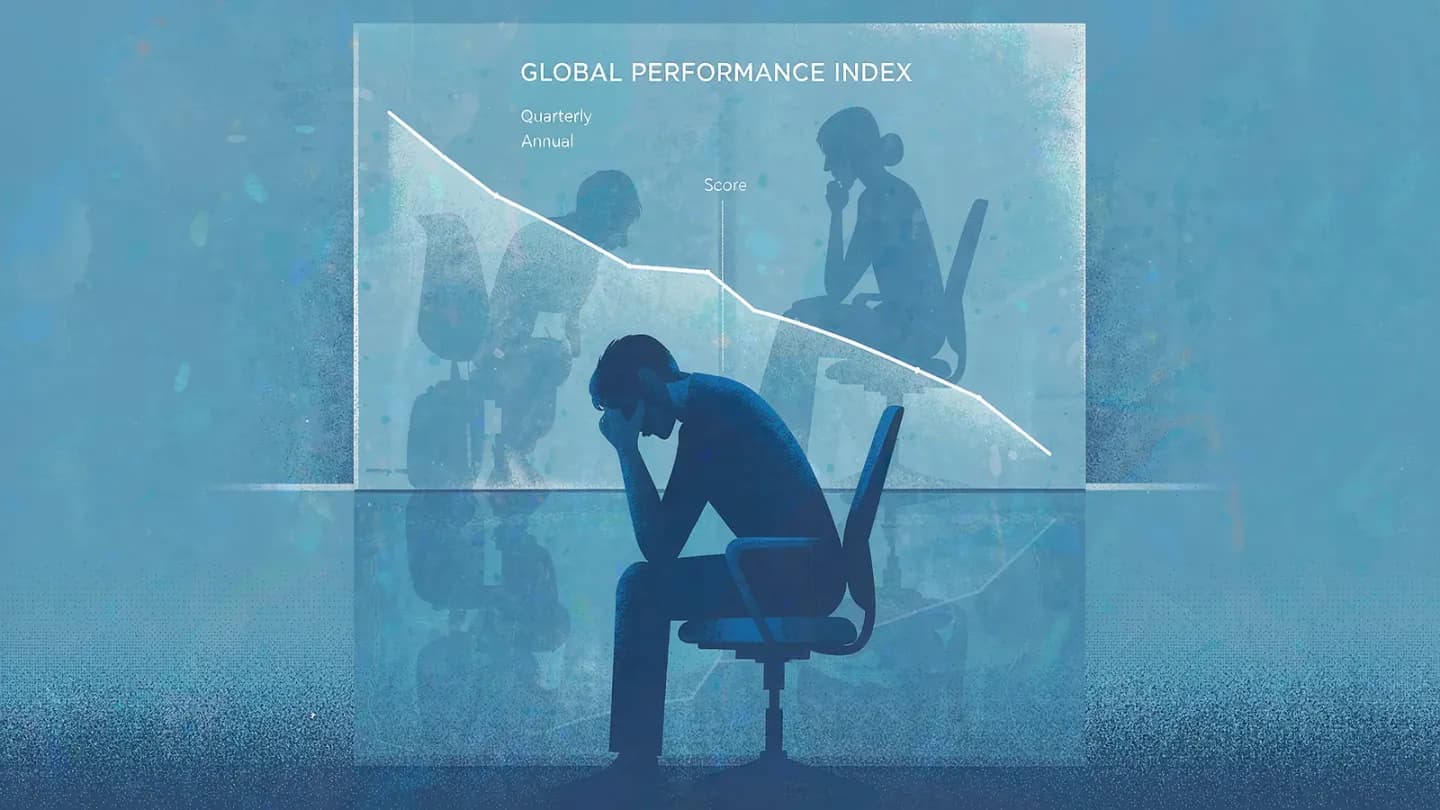
The paradox: variant volume can outrun fatigue if it is structured
Here is the part that saves the thesis. Because AI production is five to ten times faster than human production, the fatigue problem is solvable with volume, provided the volume is diverse. Teams that rotate three to five genuinely new AI variants into the auction every week tend to hold performance above the fatigue threshold indefinitely. The net effect is that AI creative fatigues faster per unit, but the production speed advantage means you never run out of fresh creative. You trade a quality race for a logistics race, and logistics is the one AI lets you win.
The trap is generating volume without structure. Fifty variants that all look like the same campaign do not fight fatigue; they give you fifty ways to fatigue the same audience. The refresh only works if the new creative is different enough to reset the novelty signal, with a different hook, opening visual, and emotional register. Sameness, even efficient sameness, is what the frequency cap punishes.
Adoption data shows the shift is already underway. In 2026 surveys, one hundred percent of marketers report using AI somewhere in their marketing, and roughly sixty three percent of video marketers now use AI video tools, up from about half the year before. The capability to outrun fatigue exists on every desk; the operating system to use it without burning the audience is what is missing. That system is built on a frequency cap, a variant matrix, and the discipline to retire creative on a schedule instead of on a hunch.
How to set a frequency cap that survives AI volume
Start by treating weekly frequency as a countdown timer, not an alarm. On Meta prospecting, performance typically begins sliding once weekly frequency crosses about 2.5, and it falls off a cliff past 4.0; past five to eight views of the same creative, conversion rate drops roughly forty five percent and click-through about fifty percent from baseline, while cost per result climbs fifty to eighty percent. Other platforms echo the shape: one benchmark flags a frequency above 3.5 per user within a seven-day window as the point where click-through typically declines by more than a quarter. The exact number varies by platform, but the curve does not.
The practical move is to rotate at the ad-set level on a calendar tied to the decay data, not to react when performance has already collapsed. Build a variant matrix that varies the things audiences actually notice: the hook, the opening visual, the emotional register, the spokesperson, the setting. One locked concept becomes dozens of deployable variants in under ninety minutes for under fifty dollars in compute when the brief and brand blocks are reusable. That is not a talking point; it is the difference between refreshing weekly and refreshing whenever someone happens to notice the numbers dropped.
Measure the thing that predicts fatigue, not the thing that reports it after the fact. Watch three numbers on a rolling window: frequency crossing 2 to 2.5 on prospecting (the leading indicator, which arrives before the performance drop), click-through down twenty to twenty five percent from the creative's own baseline for three or more days, and cost per mille creeping up fifteen to twenty percent with no auction event to explain it. Any one of those is a note; two together is your signal to rotate. The cap is only as good as the cadence you built to respect it.

What this changes for the 2026 creative operation
Outrunning fatigue is fundamentally a testing problem, and the {{link}} is where most teams still lose it.
When every extra variant costs almost nothing, the old economics of {{link}} flips from scarcity to abundance.
Finance teams now ask for a different kind of {{link}} before they approve an always-on variant program.
The operational answer most brands land on is {{link}}, so the variant library stays inside the team that owns the brand.
Put together, the operating model looks less like a studio and more like a manufacturing line with a strict quality gate. The brief is the input; the variant matrix is the process; the frequency cap is the throughput limit that keeps the output from damaging the audience. Teams that instrument this well stop asking 'is our AI creative good' and start asking 'how many distinct, on-brand variants can we field this week without crossing the ceiling.' That second question is the one that protects both performance and brand.
The lasting takeaway is that AI did not remove the constraints on video; it moved them. Production is cheap, but attention is not, and the impression ceiling is now the scarce resource. Commercial teams that engineer their variant volume to fit that ceiling, with a real frequency cap and a deep enough library to rotate against it, will outperform teams that simply generate more. In 2026 the discipline is not making the video. It is knowing when to stop showing it.
Outrunning fatigue is fundamentally a testing problem, and the creative winner-rate playbook is where most teams still lose it.
When every extra variant costs almost nothing, the old economics of cost per usable clip flips from scarcity to abundance.
Finance teams now ask for a different kind of budget proof before they approve an always-on variant program.
The operational answer most brands land on is production in-housing, so the variant library stays inside the team that owns the brand.
Put the framework into production
These related pages connect the article’s planning advice to a specific commercial scope.
References
- 2026 IAB Digital Video Ad Spend & Strategy Report: Part OneIAB
U.S. digital video ad spending is projected to surpass $80 billion in 2026, growing roughly 11% year-over-year and pulling more brand budget into video.
- TikTok Study 2026: How Short-Form Attention DecaysMetricool
A 2026 TikTok study found that 96% of a video's reach now arrives within the first 10 days of posting, while total views fell 31.30% even as upload volume rose 72.10% - a direct signal of how fast short-form attention decays.
- State of Video Marketing 2026Wyzowl
Roughly 63% of video marketers used AI video tools in 2026, up from about 51% the prior year, as adoption of generative creative accelerates.