
The finishing half of the pipeline became a model
AI video HDR delivery changed in 2026, and the change is structural: the grade moved inside the generative model. Runway's Ruby is not a generator at all but an SDR-to-HDR colour grading model, and Luma's Ray3.2 generates native 16-bit HDR with 16-bit EXR export. Your master format is now chosen in the tool rather than in the grade suite, and the extra brightness in that file was inferred rather than captured.
For most of the generative video era the workflow ended at the export button. A model produced a clip, and every professional decision after that, from colour to delivery container to versioning, happened somewhere else entirely. That division of labour broke in August 2026.
That placement matters more than any feature list. The finishing tools were once separate applications with separate operators, and the handoff between them was where quality was inspected. Now the export button and the grade are the same button. The {{link}}, and colour is the next station on the same line.
The finishing trades took the earliest AI adoption, and colour is the next station on the same line.
AI video HDR delivery is an inference, not a capture
Runway is unusually explicit that Ruby does not touch the picture. In the product documentation the answer to 'does Ruby change my footage' is that nothing is re-rendered or re-synthesized, pixels and audio pass through as received, and luma and colour are extended into HDR headroom. Read that carefully, because it describes a real technical distinction: the container changes, the source stays put, and the extra dynamic range is generated.
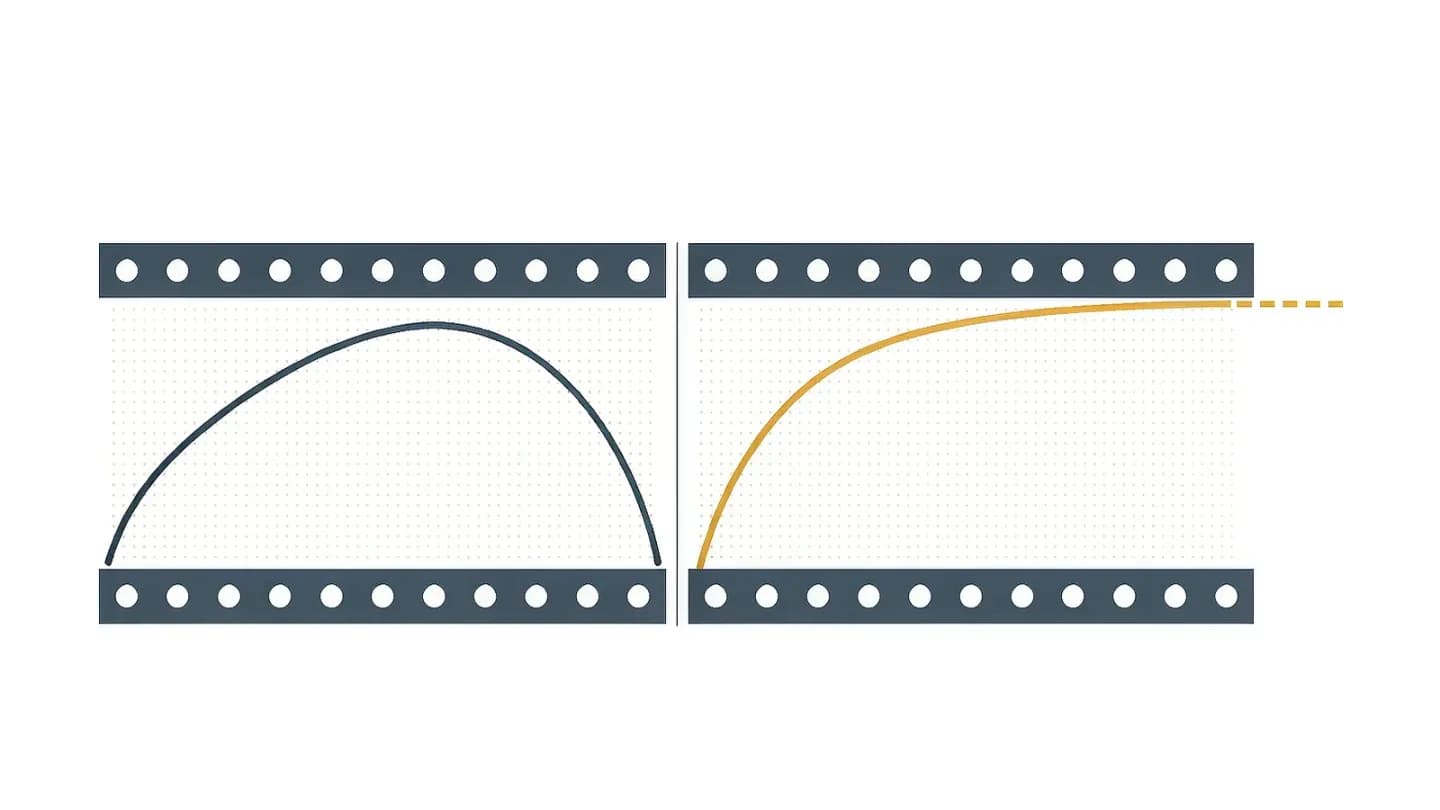
That last clause is the whole problem. Dynamic range that was never captured cannot be recovered, only predicted. A model can widen a highlight, invent a specular roll-off and lift a shadow, and it can do all three convincingly, but it is guessing at what a sensor would have seen. The delivered file is still labelled HDR, and a client watching it on an HDR display sees a picture that no camera recorded.
For commercial work this matters more than it does for a personal project, because colour is a brand asset. A packaging red, a sponsor's blue, the finish on a product: these are approved values, usually with a reference code and a named guardian attached to them. An automated grade that stretches colour into a wider gamut is making an aesthetic claim about those values, and it is making it at the moment of export.
The practical answer is not to refuse the tool but to file it correctly. Record the delivered HDR file as a derivative of the generated source: what the source was, which model graded it, what settings were used, and the fact that the added range is inferred rather than measured.
Pick the master your downstream pipeline actually opens
The deliverable menu is the part of this shift that most teams will meet first, and it is genuinely useful. Ruby outputs HDR10 as the default, or HLG, both as 10-bit HEVC. It outputs BT.2020 PQ ProRes mov files in 422 and 422 HQ at 10-bit, or 4444 at 12-bit. It also outputs OpenEXR image sequences in linear BT.2020. Runway's own guidance maps those to jobs rather than to preferences: HDR10 for general playback, HLG for broadcast, ProRes for editorial, and an EXR sequence for compositing.
There is a constraint hidden in that list. Alpha channels survive in the EXR and ProRes 4444 deliveries but not in HDR10 or HLG, so any element that needs a matte has to leave the model in one of the two heavier containers. Choosing the delivery format is therefore choosing which downstream departments can still work on the asset.
None of these formats are vendor inventions, which is why they are worth learning. HDR television parameters are governed internationally by ITU-R BT.2100, currently in force as BT.2100-3 after approval in February 2025. Colour management across vendors is governed in practice by ACES, the Academy system built to keep a consistent colour experience from capture through mastering, archiving and later remastering, and specifically to remove ambiguity when image files move between different suppliers.
The {{link}} a decade ago; picture delivery is repeating the exercise now. Loudness normalisation gave audio a single number that every facility could conform to, and it removed a whole class of delivery argument. Picture now has the same shape of problem, except that the number is a transfer function and a gamut rather than a loudness target.
It is worth being blunt about why the format choice cannot be left to whoever happened to export the file. {{link}}, so the master format is a commercial deliverable the client receives, not an internal working file. A master that a broadcaster cannot legally air is a production failure, not a technicality.
The audio side of the pipeline settled this question a decade ago; picture delivery is repeating the exercise now.
buyers now purchase finished commercial work, so the master format is a commercial deliverable the client receives, not an internal working file.
Native HDR and upconverted HDR will not match
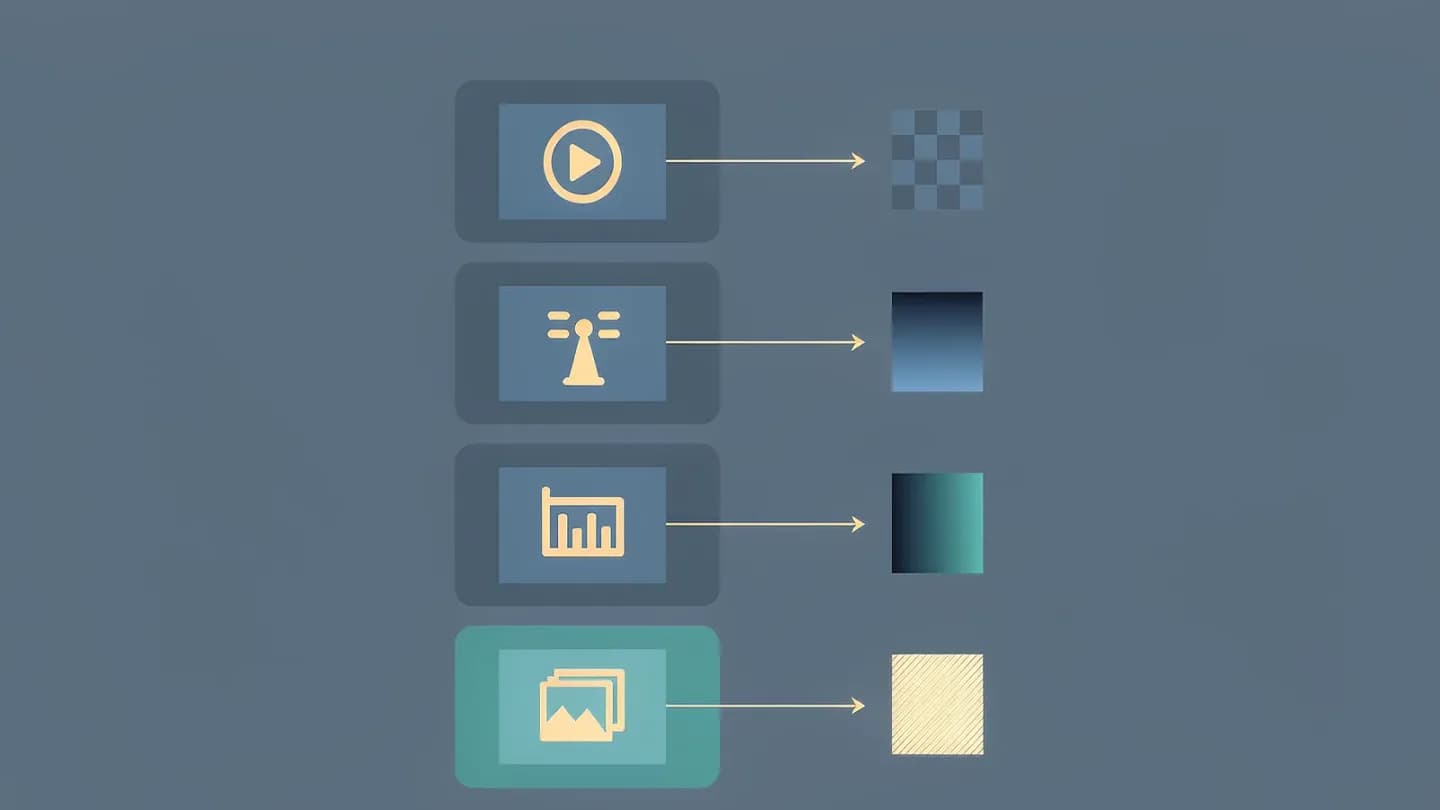
The two HDR paths in the market are not equivalent, and the vendors say so themselves. Runway notes that its Gen-4.5 model can generate in HDR from the start, including ACEScg EXR, which makes Ruby the tool for footage that already exists. Luma's Ray3.2 generates native 16-bit colour directly, though outputs are 1080p across its modes, and HDR is billed at twice the SDR credit cost while HDR plus EXR runs at three times.
Put those facts next to each other and a campaign-level hazard appears. A spot assembled from both paths carries two colour signatures. The natively generated shots hold real range. The upconverted shots hold a plausible estimate. A colourist can match them by eye in a grade suite, but cannot restore headroom the upconverted material never had, and any later re-grade for a new market or a new platform will hit the ceiling at different points on different shots.
The working rule that follows is to pick one path per campaign. If both are unavoidable, treat the whole piece as upconverted for QC purposes and grade to the weakest member rather than the strongest, so that no single shot is doing something the rest of the timeline cannot support.
There are also hard input limits to design around. Ruby accepts SDR video only, up to 30 seconds and under 4,096 pixels on each side, rejects video that is already HDR, and may crop output dimensions to a multiple of 16. Long-form work therefore arrives as a sequence of separately graded segments, and each segment is its own inference.
{{link}}, and colour is not on that list. Flicker, temporal drift, morphing faces and broken hands all have known repair routes by now. A colour signature that came from a model rather than a camera does not, because there is no correct version of the frame to repair toward.
There is a mature repair pass for flicker, temporal drift and morphing faces, and colour is not on that list.

What a colour QC step has to check
Because the grade is now an export setting, the QC checklist grows a column most video teams have never needed. Confirm the container matches the delivery target. Confirm the transfer function is the one the destination expects, since PQ and HLG are not interchangeable and render differently on the same display. Confirm the gamut tag is present, the bit depth is the one specified, and alpha exists only where the container supports it. Then confirm duration, pixel dimensions and audio survived.
Most of that is metadata work rather than viewing work, which is the real change. Two files can look identical on a calibrated monitor and behave completely differently inside a broadcaster's chain. A QC pass that only looks at the picture is no longer sufficient, because the picture is no longer the whole deliverable.
Archive discipline matters just as much. The ungraded generated source should be kept as the record of what the model actually produced, with the HDR master stored alongside it as the derivative that went out. If a brand later disputes what a campaign depicted, the useful artefact is the ungraded original plus the provenance of the inference, not the graded master everyone has already seen.
Budget for it too. HDR is not a free checkbox in 2026: at Luma it doubles the credit cost of a generation and triples it when EXR is included, and at Runway the grading model sits behind the upper consumer tier and above. HDR availability is therefore a plan decision and a per-shot cost line, which is exactly the kind of thing that quietly breaks a production budget halfway through a campaign.
The comfortable summary is that the AI tool finally produces files a real pipeline can open. The uncomfortable summary is that it produces them by guessing. Treat the master format as a specification you own, keep the ungraded source as the record, and put a human approval on the inference before the file leaves the building.
Put the framework into production
These related pages connect the article’s planning advice to a specific commercial scope.
References
- Runway Ruby | SDR to HDR Video ConversionRunway
Ruby is Runway's SDR-to-HDR color grading model. It delivers HDR10 by default or HLG as 10-bit HEVC, BT.2020 PQ ProRes mov files in 422 and 422 HQ at 10-bit or 4444 at 12-bit, and OpenEXR sequences in linear BT.2020, with HDR10 for playback, HLG for broadcast, ProRes for editorial and EXR for compositing. It accepts only SDR video up to 30 seconds and under 4096 pixels per side, rejects video that is already HDR, may crop output dimensions to a multiple of 16, and states that nothing is re-rendered or re-synthesized because pixels and audio pass through as received while luma and colour are extended into HDR headroom. Ruby is included on Max and higher plans, and Gen-4.5 can generate in HDR from the start including ACEScg EXR.
- Ray3.2 - Direct any frame. Finish every cut.Luma AI
Luma's Ray3.2 offers HDR generation described as native 16-bit colour generated by the model, plus EXR export of 16-bit EXR frames for colour grading, compositing and VFX in ACES2065-1 (AP0). The page states 1080p outputs across every mode, and lists output pricing where HDR costs 2x SDR credits and HDR plus EXR costs 3x SDR credits.
- Recommendation ITU-R BT.2100International Telecommunication Union
BT.2100 is titled 'Image parameter values for high dynamic range television for use in production and international programme exchange'. The version in force is BT.2100-3, approved in February 2025, managed by ITU-R Study Group 6.
- Academy Color Encoding System DocumentationAcademy of Motion Picture Arts and Sciences
ACES is described as an industry standard for managing colour and digital files throughout the lifecycle of almost any media production. The documentation states that ACES can ensure a consistent colour experience from image capture through editing, VFX, mastering, public presentation, archiving and future remastering, that it removes ambiguity when communicating image files in multi-vendor workflows, and that it helps create a known-quantity master for the archive.