
The 88% Figure Is the Least Useful Number About AI in Ad Production
AI in ad production is close to universal. XR's State of Ad Ops study, published on 9 September 2026, found that 88 percent of marketers on the agency and brand side use or pilot it during creative production, and nearly half use it daily. As a measure of industry adoption, that number is saturated. As a guide to what your team should do next, it is almost useless, because it flattens four very different businesses into one percentage.
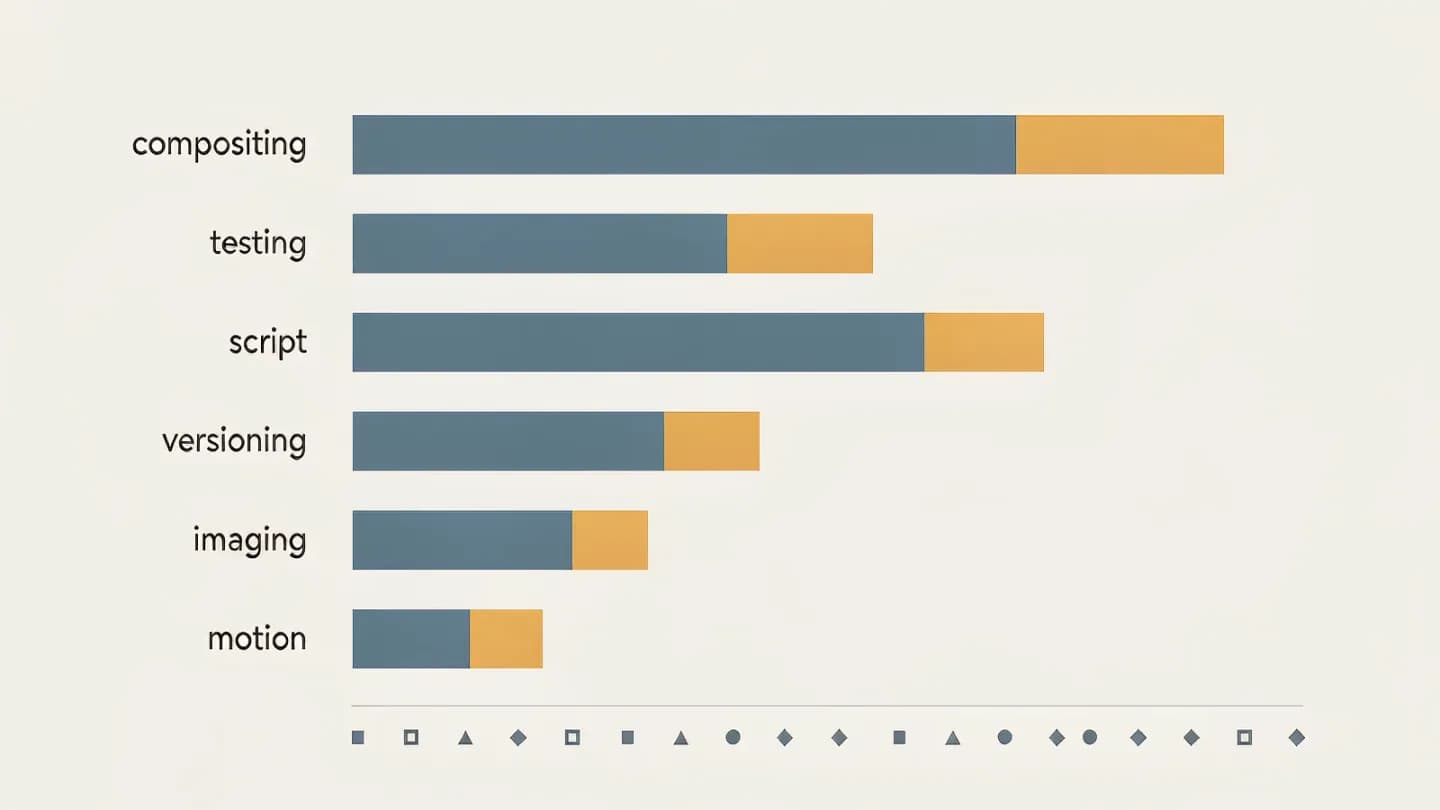
The study covers more than 400 advertising professionals across the United States and the United Kingdom, and its useful figure is the task ranking. AI usage is not spread evenly across the workflow. It clusters in production and post-production: visual effects and compositing at 45 percent, performance analysis and creative testing at 44 percent, image creation at 44 percent, video and motion generation at 42 percent, scripting and copywriting at 41 percent, and ad versioning and adaptation at 38 percent. That ordering is the story. The top of the list is finishing and testing; the bottom is the volume work that everyone assumed AI would swallow first.
AI Has Landed in the Finishing Trades
VFX and compositing leading at 45 percent would have surprised most production managers two years ago. The early promise of generative video was that it would replace the shoot. What it has actually replaced, so far, is a large slice of the expensive, invisible, highly technical work that happens after the shoot: rotoscoping, cleanup, set extensions, matte work, reframing and the dozens of small corrections that used to eat a finishing budget. That work has three properties that make it a natural fit. It is well specified, it is expensive per hour, and nobody outside the finishing suite has an opinion about how it gets done.
The same logic explains why performance analysis and creative testing sit at 44 percent. Testing is structured, repeatable and returns a number. It is the part of the creative process that most resembles software. Meanwhile the task everyone expected to fall first, ad versioning and adaptation, sits last at 38 percent. That is not because versioning is technically hard. It is because versioning is where brand risk concentrates: every resized cut is a fresh opportunity to break a logo, crop a disclosure or misplace a legal super.
The flip side is that generated footage still arrives with flicker, face morphing and temporal drift, which is why every finishing bay now needs a {{link}} rather than an opinion about models.
The flip side is that generated footage still arrives with flicker, face morphing and temporal drift, which is why every finishing bay now needs a post-production repair playbook rather than an opinion about models.
Your Seat in the Supply Chain Sets Your Ceiling
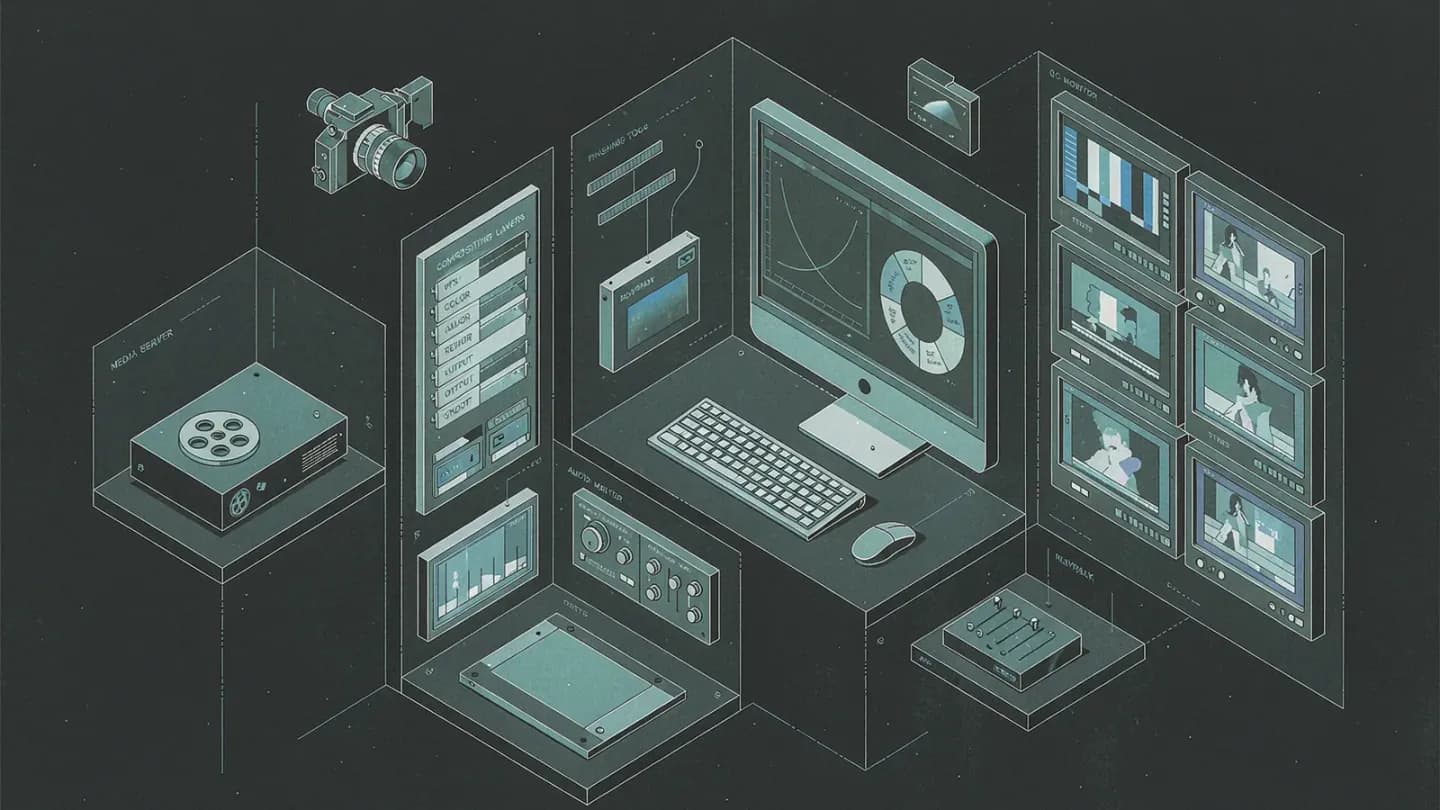
XR also broke adoption down by where a team sits, and the spread is far wider than the headline suggests. Production companies are furthest along, with 79 percent already using AI in their workflows or piloting it on specific projects. Full-service agencies have made it a daily habit: 62 percent now use AI every day to scale VFX work, run ad testing and speed up storyboarding. National and global brands sit at 42 percent, and they use it mainly at the front of the process, for campaign brief writing, image creation, scripting and voice-over. Media agencies trail at 36 percent, treating AI more as an experiment than an established tool.
Those four numbers are not a maturity ladder. They are a map of who holds which craft, and they line up with the {{link}} that has been redrawing commercial production. The reason a production company can run at 79 percent is that most of what it sells is exactly the work AI does best. The reason a media agency sits at 36 percent is that almost none of what it sells is.
There is a market-level wrinkle too. Both the US and the UK report strong adoption, but the two markets are pulling different levers. US teams prioritise quality and personalisation. UK teams lean on AI for speed to market and creative volume. Same tools, different economic pressure: one market is trying to make fewer, better assets, the other is trying to make more of them.
Those four numbers are not a maturity ladder. They are a map of who holds which craft, and they line up with the in-house studio and agency split that has been redrawing commercial production.
The Two Ends of the Chain Are Adopting AI for Opposite Reasons
Put the task ranking next to the seat ranking and a pattern appears that neither table shows on its own. The front of the chain and the back of the chain are buying AI for opposite reasons. Brands, at 42 percent, are using it to start more things: more briefs, more concepts, more scripts, more voice-over options. Production companies and agencies, at 79 and 62 percent, are using it to finish the things that already exist. AI is inflating the top of the funnel and compressing the back end at the same time.
That combination creates a specific operational problem. More starts flowing into a faster finish means the constraint migrates to the middle, into review, approval and handoff. XR's own framing is that brands and agencies are drawing clear lines between output and originality, letting AI tackle the busy work while keeping the big ideas firmly in human hands. The line is easy to state and hard to operationalise, because the big idea is not a line item on anyone's production schedule.
Why the Headline Hides the Cost Problem
Adoption at 88 percent tells you nothing about whether the work is getting cheaper, and the surrounding evidence is mixed. Wistia's 2026 State of Video, built on nearly 1,000 marketers and more than 13 million videos, attributes the surge in in-house video teams, from 36 percent to 54 percent of companies in two years, directly to AI, with 62 percent of teams now using or planning AI in their video workflows. Wyzowl's long-running survey puts AI video tool usage at 63 percent, up from 51 percent a year earlier. IAB, meanwhile, reports US digital video ad spend passing $80 billion while continuing to outpace the broader ad market.
Read together: more teams are making more video, in-house, with AI, into a market that is still growing. None of that guarantees margin. When the expensive part of production was the shoot, cutting shoot days saved money visibly. When the expensive part moves to finishing and testing, the saving is real but harder to see, because it shows up as hours not spent rather than invoices never sent.
Pricing the work at {{link}} instead of per asset or per seat is the only way to tell whether the finishing gains are real. If your generation volume doubled but your usable output did not, you have not adopted AI; you have adopted a rendering habit.
Pricing the work at cost per usable clip instead of per asset or per seat is the only way to tell whether the finishing gains are real.
A Seat-Based AI Plan for 2026
The practical conclusion is to stop benchmarking against the industry and start benchmarking against your seat. If you are a brand or in-house team at roughly 42 percent adoption, your next gains are in brief quality, concept exploration and pre-visualisation, and your real risk is generating more concepts than your approval process can absorb. If you are a full-service agency at 62 percent daily use, your exposure is that the versioning and adaptation work you used to bill is now the work clients do themselves. If you are a production company at 79 percent, your advantage is craft in finishing, and your risk is competing on the one thing AI has already made cheap.
Teams getting real value have already accepted that {{link}}, and they budget supervision accordingly. The pattern that shows up across every seat is the same: AI moved the work, it did not remove it. Someone still has to look at the frame, and that someone is now the most expensive person in the process.
A workable plan has four lines. Name which tasks AI touches and which it does not, in writing, per project type. Put a quality gate where generated material enters the finishing suite, not where it leaves. Measure usable output rather than generated output. And decide, before the brief, which seat owns the call when AI output is technically correct and creatively wrong. The 88 percent will keep rising. The teams that benefit are the ones who can say what the number is measuring.
Teams getting real value have already accepted that the bottleneck moved to approvals and versioning, and they budget supervision accordingly.
Put the framework into production
These related pages connect the article’s planning advice to a specific commercial scope.
References
- 88% of US advertisers now use AI in creative production, led by VFX, motion graphics creation and script writingXR (Extreme Reach)
XR's State of Ad Ops study of 400+ US and UK advertising professionals ranks AI usage by task (VFX and compositing 45%, performance analysis and creative testing 44%, image creation 44%, video and motion generation 42%, scripting and copywriting 41%, ad versioning 38%) and by position in the supply chain (production companies 79%, full-service agencies 62% daily, national and global brands 42%, media agencies 36%).
- The Key Takeaways From Wistia's 2026 State of Video WebinarWistia
The share of companies with in-house video teams jumped from 36% to 54% in two years, a shift Wistia attributes directly to AI, and 62% of teams are already using or planning AI in their video workflows.
- Video Marketing Statistics 2026Wyzowl
63% of marketers have used an AI video tool, up from 51% the previous year, and 91% of businesses use video as a marketing tool.
- 2026 IAB Digital Video Ad Spend & Strategy ReportIAB
US digital video ad spend passes $80 billion in 2026 and continues to outpace the broader ad market.