
Why generation speed stopped being the differentiator
AI video learning speed, not raw output, is becoming the metric that separates agencies in 2026. The reason is simple: once text-to-video tools collapse production time from weeks to an afternoon, simply generating more clips stops being a competitive edge, and the teams that win are the ones that learn fastest from what they ship.
For most of the last decade the bottleneck in agency video was capacity. Client demand for video outgrew any team's ability to hire, and the traditional pipeline concept, script, storyboard, shoot, edit, revise was built around human throughput. A single campaign could take weeks, and every reshoot cost thousands of dollars and lost momentum.
Agencies and in-house studios both felt it: every revision meant re-booking stages and re-exporting masters, so teams shipped fewer cuts and tested less than they wanted to, trading exploration for predictability.
The same strategic shift is visible in how teams now describe the production bottleneck, where the constraint has moved from raw rendering capacity to coordination and review, a move the {{link}} documents.
Market pressure pushed the other way. As digital video ad spend climbs past eighty billion dollars a year, more brand dollars flow into video, which means more spots to produce and less patience for long cycles. The teams that win are not the ones with the single best film but the ones that can field the most credible variants before a trend cools.
Generative models changed the shape of that pipeline. An idea can become a draft in minutes, and a full set of campaign variations can be produced in a single afternoon. When the cost of a shot collapses, the incentive flips: it becomes cheaper to generate and evaluate than to over-plan, and the scarce resource becomes judgment, not compute.
The same strategic shift is visible in how teams now describe the production bottleneck, where the constraint has moved from raw rendering capacity to coordination and review, a move the AI video production bottleneck shift documents.

AI video learning speed is the new agency moat
Once production speed is no longer the constraint, the competitive game changes to learning speed how quickly an agency can test an idea, measure the result, and double down on what works. Domer AI puts it plainly: AI does not make video easy, it makes it fast, and the advantage goes to the teams that build an operating system around that speed.
Speed stopped being scarce, so strategy and measurement became the scarce thing. Output volume looked like the prize when generation was slow and expensive. Now that a two-person pod can ship thirty or more deliverables a week on a stack that used to cost a five-person team, volume is table stakes, and the differentiator is the rate at which a team converts experiments into better creative.
The proof is no longer theoretical. A two-person pod on a roughly two-hundred-dollar monthly tool stack now ships more than thirty deliverables a week, output that used to require a five-person team and three to five thousand dollars in traditional production cost. When the cost of a clip collapses, the question stops being 'can we make it' and becomes 'how fast can we learn which version works.'
The honest caveat matters. AI-generated video is not automatically better at driving conversions than a strong traditional spot; it is better at volume, speed, and learning. The pitch that survives contact with clients is built on those strengths faster tests, tighter feedback loops, and more variants evaluated before a cut ships not on a claim of quality parity in every case.
The three process metrics that actually matter
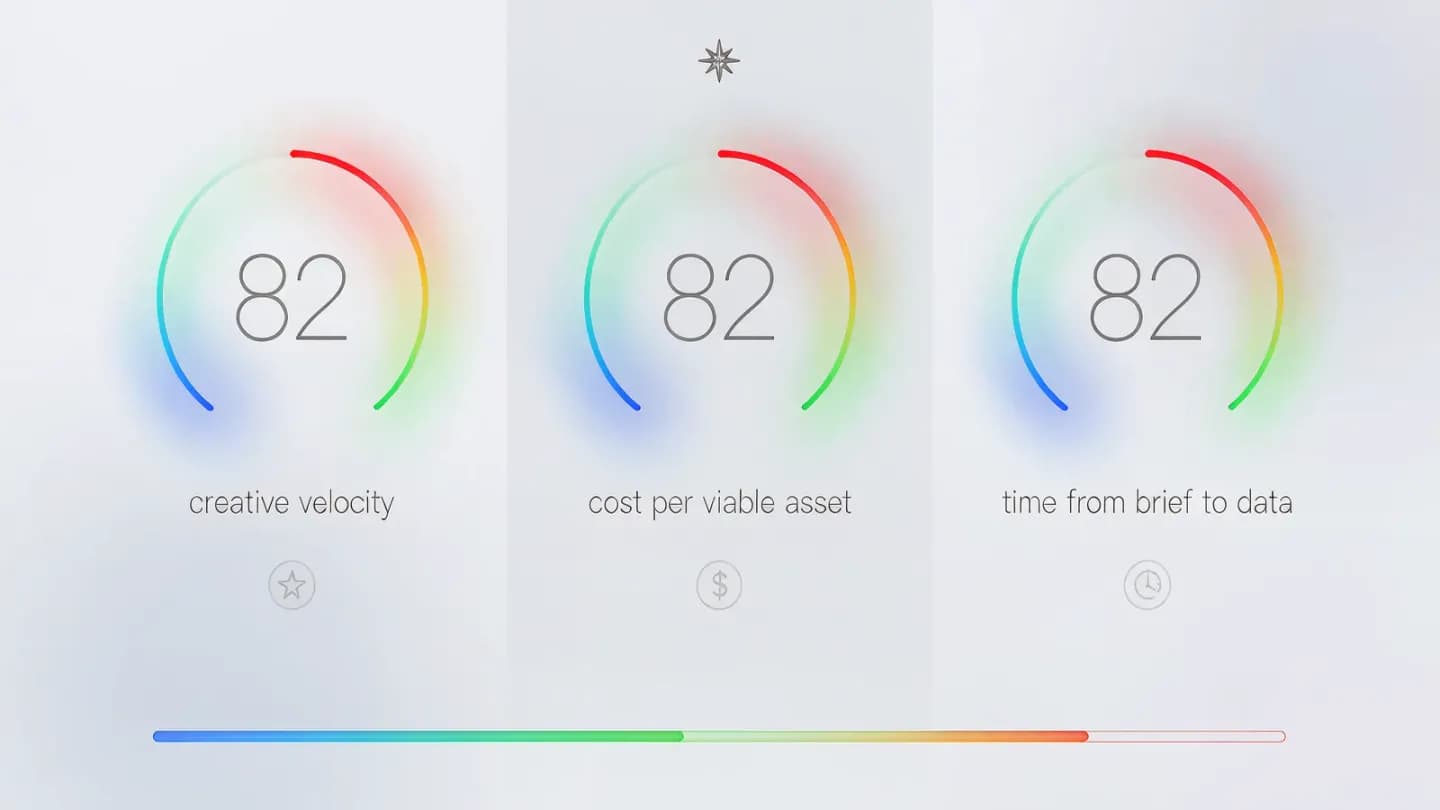
Agencies that measure learning speed track three process metrics rather than vanity counts. Creative velocity is the number of tested creative variations per client per month. Cost per viable asset is total production cost divided by the assets that pass review and perform. Time from brief to first data is how quickly a concept goes from approved brief to published and measured.
These metrics reward systems, not luck. They expose where work actually waits in approvals, in weak source assets, or in endless revisions and they make the value of a prompt library or a reference bank visible as a compounding asset. A batch of variations is only useful if the team defined what success looks like before it generated the clips.
It also reframes vendor comparisons, because price per final delivered asset matters more than sticker price per clip. The waste these metrics surface is real: agencies that force one model to do every job burn budget before they reach a validated direction. Matching the task to the right engine fast models for prototyping, quality models for approved finals cuts regeneration waste by an estimated forty to sixty percent and lifts exploration volume three to five times.
The discipline that keeps these metrics honest is anchor-first generation: build one approved direction before branching into variations. Producing twenty polished clips from a concept the client never approved is pure waste, and the teams that track cost per viable asset notice it immediately in the rejection column.
What a learning-speed operating system looks like
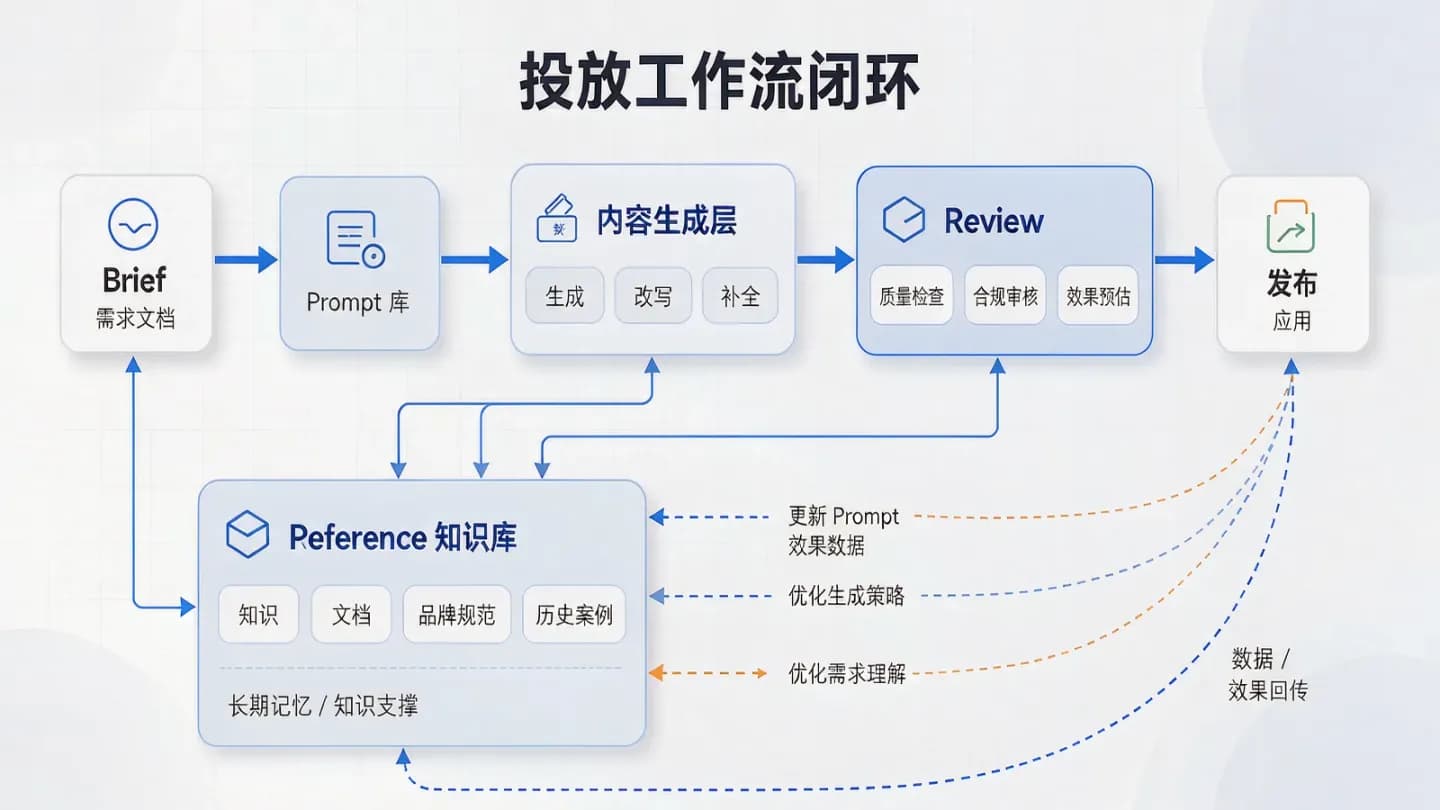
A learning-speed operating system is less about software than rhythm. It turns a client brief into a single source of truth, builds reusable reference banks and prompt libraries, runs controlled generation batches, and feeds results back into the next brief. The goal is a workflow where the next campaign starts from proven material and the marginal cost of the following one drops.
Before adding any headcount, the first move is to find the real bottleneck. Map one project from signed brief to delivery and record where work was active, waiting, rejected, or repeated. Most agencies discover the slowest stage is a missing approval gate or weak source assets, not the number of people pressing generate.
Consistency is where a disciplined prompt library earns its keep, because locked prompt patterns preserve visual language across campaigns, the same principle that makes the {{link}} a worthwhile investment rather than a one-off trick.
The same logic extends to tooling discipline, where keeping generation, editing, and review in one controllable loop mirrors what the {{link}} does for production stability at scale.
Quality is enforced by process, exactly as in traditional production. Brand reference sets, review gates, and explicit artifact standards keep AI output on-brand without relying on any one person's memory, and a two-pass internal check technical and continuity first, communication and compliance second catches the failures that erode client trust.
Consistency is where a disciplined prompt library earns its keep, because locked prompt patterns preserve visual language across campaigns, the same principle that makes the AI video prompt engineering for consistency a worthwhile investment rather than a one-off trick.
The same logic extends to tooling discipline, where keeping generation, editing, and review in one controllable loop mirrors what the hybrid AI control-net workflow does for production stability at scale.
How to start measuring learning speed this quarter
Start small and measure the right unit. Use approved deliverables, not raw generations, as the capacity metric: a deliverable is a final asset that passes creative, technical, factual, rights, and format checks. It also makes capacity planning honest, because a team's true throughput is approved exports per brief, not the number of clips a model can render in an hour.
The pattern repeats across teams that have scaled deliberately, and the most instructive examples live in the {{link}} that show how a single recurring service becomes a repeatable system before anyone adds headcount.
Fix one constraint at a time. Map a recent project from signed brief to delivery, record where work was active, waiting, rejected, or repeated, and remove the decision or handoff that repeatedly pushed work upstream. Hiring another editor will not fix a missing approval gate, and buying more generation credits will not fix a weak brief.
A weekly operations dashboard makes the loop legible: approved deliverables shipped, the stage with the most waiting time, the share of clips that reached the edit, revision rounds, and which prompt patterns repeatedly failed. Measure strategic value separately from production efficiency, because a team can pass every gate and still make safe, unremarkable work.
The agencies that compound are not the ones with the newest model. They are the ones that turn every campaign into a faster learning loop more tested directions, shorter time from brief to data, and a reusable library that makes the next project cheaper. That is the moat, and unlike a rendering queue, it does not depreciate the moment a faster model ships.
The pattern repeats across teams that have scaled deliberately, and the most instructive examples live in the AI video production case studies that show how a single recurring service becomes a repeatable system before anyone adds headcount.
Put the framework into production
These related pages connect the article’s planning advice to a specific commercial scope.
References
- Generative AI in Agency Video Production: a guide to SEO-first workflowsDomer AI
Domer AI argues that when production speed stops being the constraint, the competitive game changes to learning speed, and names three process metrics creative velocity, cost per viable asset, and time from brief to first data that predict it.
- How Agencies Scale AI Video Production Without Extra HoursCliprise
Cliprise reports that matching the task to the right model fast models for prototyping, quality models for approved finals cuts regeneration waste by an estimated 40 to 60 percent and lifts exploration volume three to five times.
- The Ultimate Guide to AI Video Generators for Agencies (2026)BAK Group
BAK Group's 2026 agency guide shows a two-person pod on a roughly $220 per month stack ships 30 or more deliverables a week, work that used to require a five-person team and $3K to $5K in traditional production.
- How Agencies Can Scale AI Video Production Without Hiring a Larger Teamimageat
imageat's scaling guide argues agencies should track approved deliverables as the capacity unit because raw generations are a misleading output metric, and scale the operating system, then the output.