
The creative-development loop used to be measured in weeks
AI video pre-production is rewriting the economics of the creative-development loop. For most of the last two decades the distance between a campaign brief and a finished asset was measured in handoffs: strategy to creative, copy to design, design to storyboard, storyboard to shoot, shoot to edit, edit to approvals. Each handoff added days, and each revision loop restarted the clock.
The constraint was not imagination; it was logistics. Every additional concept meant another pass through the same expensive chain, so the marginal cost of a second idea was nearly the cost of the first. Agencies and in-house teams rationed exploration accordingly, and the campaigns that resulted were often the safest route through the pipeline rather than the boldest idea anyone had.
That structure rewarded commitment over comparison. Because exploring a third direction meant repeating the whole chain, teams locked a concept early and defended it rather than testing it against alternatives. The cost of experimentation was the cost of production, so most brands stopped experimenting after the first viable route. The creative process became optimised for certainty, not for finding the best idea.
AI video pre-production is where the clock actually stops
AI video pre-production is where the clock actually stops. Generative tools now sit between the brief and the shoot, doing the work that used to require a room of specialists: exploring angles, visualising concepts, building storyboards, generating reference frames and resizing adaptations. The time recovered is not one task made faster; it is the waiting time between many tasks removed.
The shift shows up clearly in adoption data. Epsilon's 2026 benchmark found that 100% of marketers surveyed now use AI, with 71% primarily applying it to productivity and efficiency rather than revenue generation. Adobe's own research, cited by industry coverage, found 76% of organisations reported faster volume and speed of ideation and production because of generative AI. The tools are no longer experimental; they are infrastructure in the front of the creative pipeline.
This is also why the IAB's 2026 Digital Video Ad Spend report frames AI as an orchestration layer rather than a content button. It projects U.S. digital video ad spend will surpass $80B in 2026 and notes that nearly all buyers see a role for agentic AI, with GenAI adoption for video creative continuing to accelerate. Spend is following the workflow: as the front of the pipeline speeds up, more budget can chase the ideas that survive selection.
What changes is not just speed but the economics of comparison. When ten rough directions can be visualised in an afternoon instead of ten days, the decision about which idea to produce becomes a real choice rather than a forced bet. That is the actual value of AI video pre-production: it turns 'can we make this?' into 'which of these should we make?'

Three brands that compressed the loop
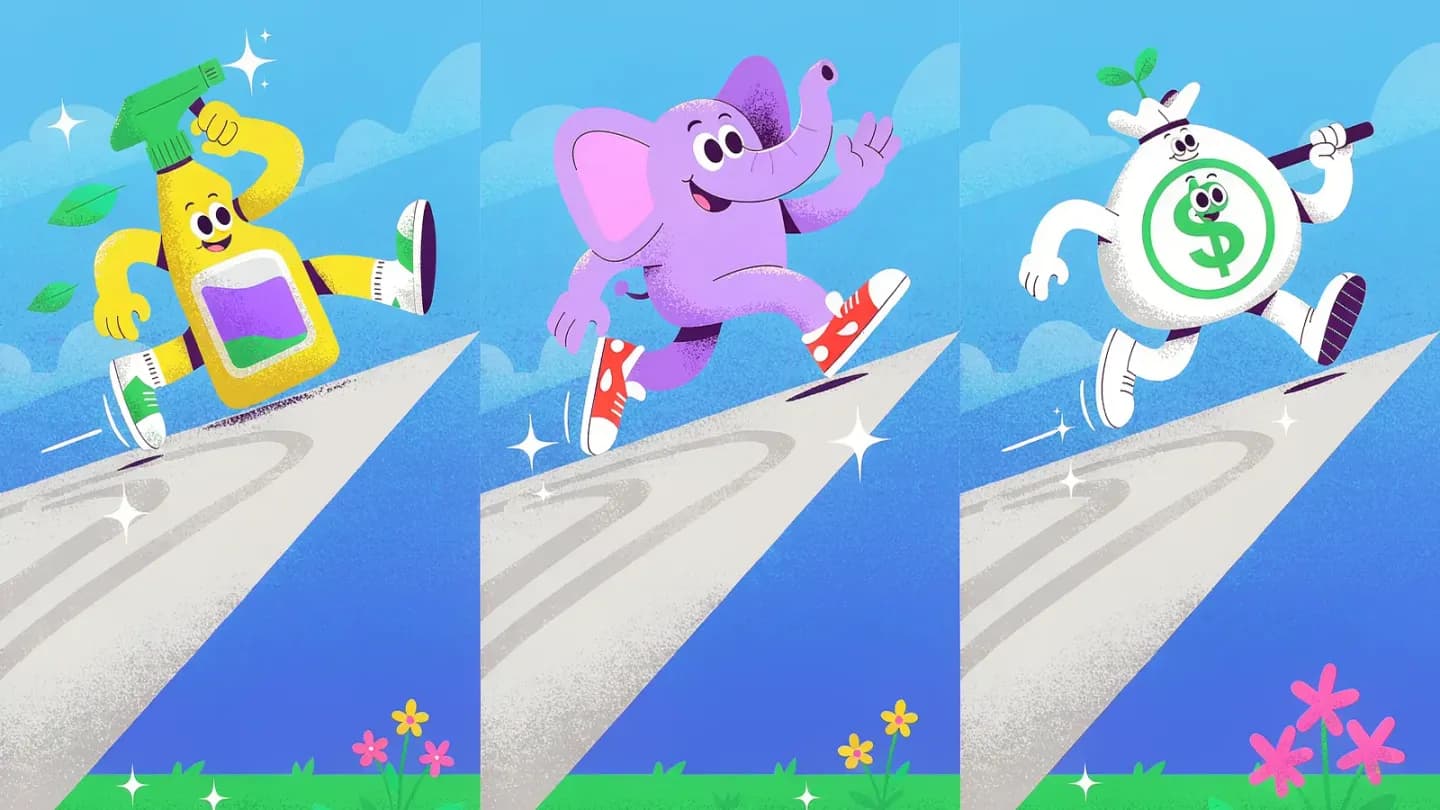
The gains are already showing up in brand workflows. Lysol, working with BCG and Google, built broadcast-ready 15- and 30-second spots for Lysol Laundry Sanitizer inside an eight-week sprint. Gemini generated and scored hundreds of concepts before the team manually selected three; Veo and Imagen then drove synthetic production. Lysol reported compressing ideation from weeks to hours and an 80% reduction in cost per asset, while its strongest AI-created asset performed almost identically to its strongest traditional one in short-term sales-lift testing.
TSB took a different path with its in-house agency Kindred, training an Adobe Firefly Custom Model on hundreds of approved images of Tiny the Elephant, the bank's brand character. Imagery that once took a studio process of up to seven weeks can now be created in roughly seven minutes. TSB also reported that revision time halved and its broader connected workflow reduced production time by 60%, because recurring brand elements no longer had to be rebuilt from scratch.
Chime compressed the loop at campaign scale. Its CMO described using Midjourney, Runway and Veo 3 to cut creative campaign turnaround by 60%, from about ten weeks to four, without adding headcount, alongside roughly 30% lower content production costs. The pattern across all three is the same: AI did not replace the final craft, it removed the slow, repeatable steps that used to sit between a brief and a shootable idea.
Faster creation shifts the bottleneck to judgement
When {{link}} across direct-response formats, the question stops being whether AI can match human craft and starts being which idea is worth making. The 2026 data makes the stakes concrete: Epsilon found only 9% of marketers use AI primarily for revenue generation even though 46% measure it by revenue gains, and AI video ROI is falling even as adoption climbs. Speed solves the production problem; it does not automatically solve the selection problem.
That context matters because {{link}}, so a faster loop only pays off if the ideas it surfaces actually convert. A team that can generate twenty directions in a day is not automatically better off than one that generated two in a week. The advantage comes from using the extra volume to make a sharper choice, then protecting that choice with the same brand, legal and performance review a slow process would have applied.
The danger is a new kind of sameness. If every competitor can generate the same volume of competent creative, distinctiveness stops coming from production capacity and starts coming from taste, strategy and the discipline to kill weak ideas early. Acceleration without a quality bar simply industrialises mediocrity faster.
When AI creative parity has arrived across direct-response formats, the question stops being whether AI can match human craft and starts being which idea is worth making.
That context matters because AI video ROI is falling even as adoption climbs, so a faster loop only pays off if the ideas it surfaces actually convert.
Speed without provenance is a liability
The fix is to bolt {{link}} onto the accelerated workflow so provenance and disclosure are checked before a clip ships. When dozens of variations are generated automatically, the risk is not that they look wrong but that no one can say where each frame came from or whether it was properly disclosed as synthetic.
C2PA provides the technical backbone here: an open standard that attaches Content Credentials to a file like a nutrition label, recording origin and edits so anyone can verify a piece of media. For commercial teams moving fast, provenance is not a compliance afterthought; it is what keeps a high-volume creative engine trustworthy once human review can no longer inspect every frame by hand.
Provenance also future-proofs the asset. A clip with verifiable Content Credentials can move across markets, platforms and agentic ad systems without re-justifying itself at every gate. One built in a hurry with no record becomes a liability the moment a regulator, a platform or a client asks a question no one can answer.
The fix is to bolt a four-check trust QC gate onto the accelerated workflow so provenance and disclosure are checked before a clip ships.

How to build an accelerated creative-development workflow
Finance will still ask for {{link}}, so instrument the loop with the revenue metrics that matter from the first concept test. Treat pre-production as a measurement surface, not just a production shortcut: log which directions were explored, which advanced, and what each cost to produce and to prove.
Track {{link}} rather than cost per asset, because a fast loop that produces ten rejects is worse than a slow one that produces one winner. Practically, that means generating many directions cheaply, scoring them against a fixed brief and brand bar, then funnelling only the survivors into the expensive production and media steps. Human judgement stays at the gate where it matters, and AI absorbs the volume it is good at.
Start small: pick one campaign and run the brief through an AI pre-production pass before any traditional production booking. Compare the directions surfaced against what the team would have committed to on day one. The test is not whether the AI was faster; it is whether the final choice was better than the one you would have made without it. The teams winning with AI video pre-production are not the ones generating the most assets. They are the ones who shortened the distance between a brief and a decision, then spent the saved time choosing better.
Finance will still ask for the budget-proof burden on generated video, so instrument the loop with the revenue metrics that matter from the first concept test.
Track cost per usable clip rather than cost per asset, because a fast loop that produces ten rejects is worse than a slow one that produces one winner.
Put the framework into production
These related pages connect the article’s planning advice to a specific commercial scope.
References
- 2026 Benchmark Study: Marketing's AI Inflection PointEpsilon
100% of marketers surveyed use AI, 71% primarily for productivity and efficiency versus only 9% for revenue generation, and 46% measure AI performance by revenue gains.
- 2026 IAB Digital Video Ad Spend & Strategy ReportIAB
U.S. digital video ad spend will surpass $80B in 2026; nearly all buyers see a role for agentic AI, with GenAI adoption for video creative continuing to accelerate.
- C2PA — Verifying Media Content SourcesC2PA
C2PA provides an open standard (Content Credentials) that records the origin and edits of digital content like a nutrition label, establishing provenance and authenticity.
- How AI Is Speeding Up Campaign Creative Before Ads Go LiveMartechAI
Lysol compressed ideation from weeks to hours with an 80% reduction in cost per asset; TSB cut a seven-week image process to seven minutes; Chime reduced turnaround 60% (10 to 4 weeks) with ~30% lower costs.