From Prompt Playgrounds to Production Floors
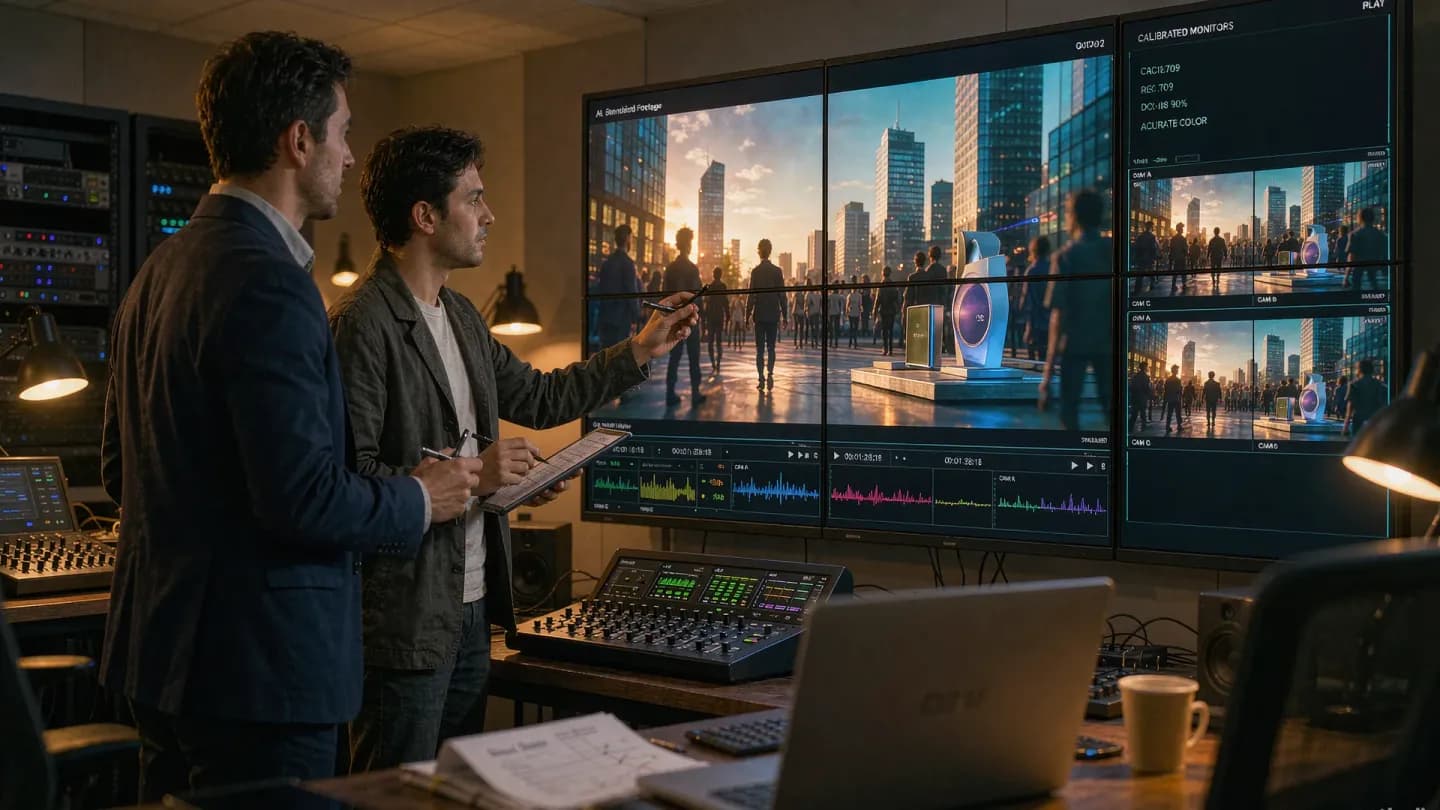
Two years ago the headline question for commercial teams was whether a generative model could produce a usable clip at all. In 2026 that question is settled, and constraint-led AI video production has become the more useful frame: the differentiator is no longer raw output but whether the output survives contact with a brand and a legal team. A model that produces a beautiful but off-brief spot is not a win if it never ships.
XR Extreme Reach's State of Ad Ops study of more than 400 US and UK advertising professionals found that 88% of marketers on both the agency and brand sides are already using or piloting AI in creative production, with nearly half using it daily. The technology has moved from novelty to infrastructure, which means the interesting work is no longer the generation itself — it is everything you wrap around it: the brand rules, the legal checks, the review gates that decide what actually ships. Treating AI as a prompt playground produced a lot of impressive demos. Treating it as a production system is the harder and more valuable problem, and it is where the 2026 advantage is actually won. The teams pulling ahead are not the ones with the flashiest prompts; they are the ones whose brand, legal, and review steps were redesigned around AI rather than bolted on after it.
Why Constraint-Led AI Video Production Wins in 2026
Cheap generation creates a new problem. When a 60-second spot that once took thirteen days and a six-figure invoice can be produced in under half an hour, the bottleneck stops being the shoot and starts being the guardrails. Off-brand or non-compliant clips are now effectively free to make and expensive to ship. The cost that matters is no longer the render; it is the revision cycle, the legal review, and the reputational risk of putting something off-tone in front of a customer who can screenshot it in seconds.
The risk is well documented. Jasper's 2026 State of AI in Marketing report, which surveyed 1,400 marketers, found that brand, legal, and compliance review is now the top scaling challenge for AI programs — ahead of output quality and data risk, and ahead of the data-privacy concerns that dominated earlier conversations. The bottleneck has clearly moved from generation to governance, and {{link}} is now the real constraint on scale.
The bottleneck has clearly moved from generation to governance, and the production-bottleneck shift is now the real constraint on scale.
What 'Constraint-Led' Actually Means
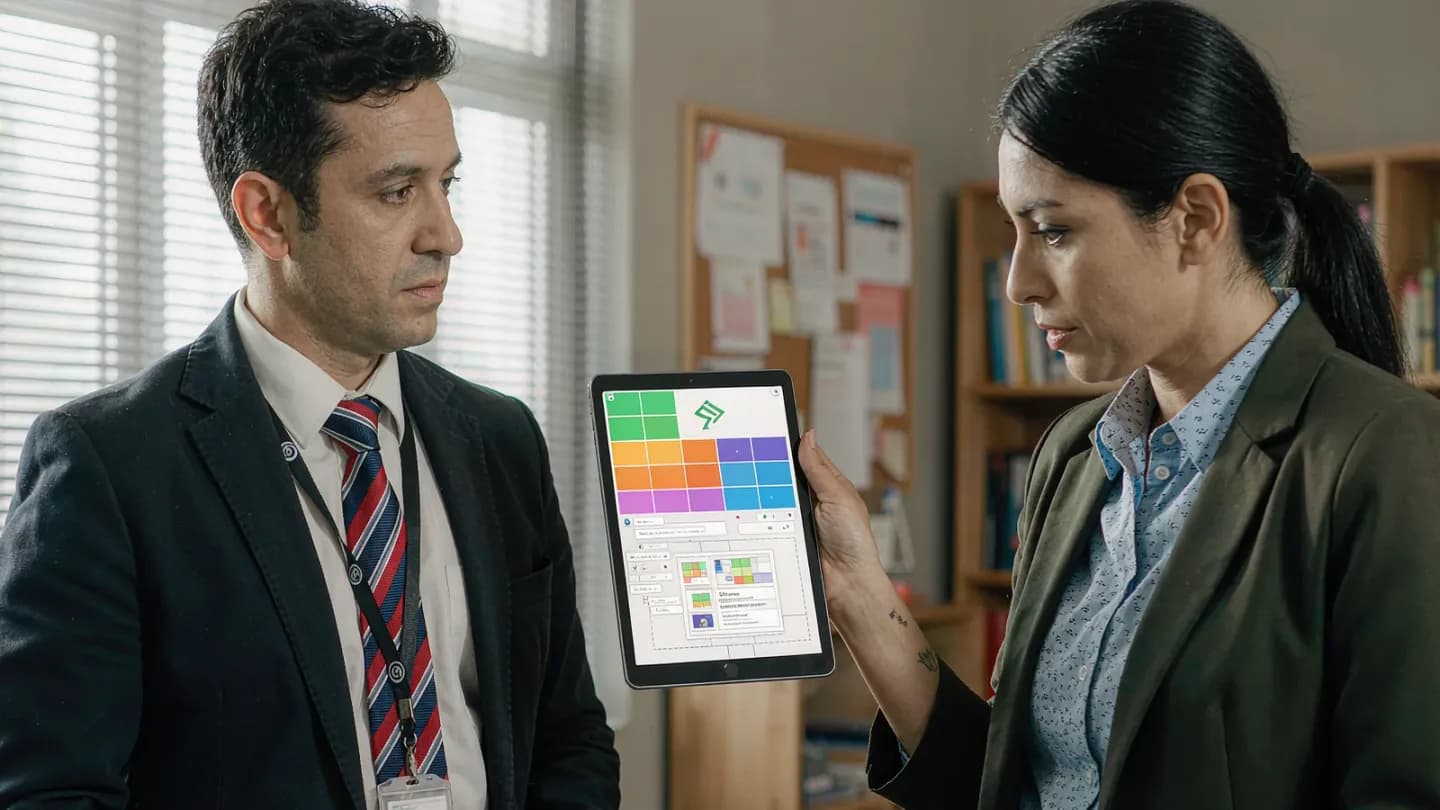
Constraint-led production is the deliberate opposite of open-ended prompting. Instead of asking a model to invent a commercial from scratch, teams feed it the assets and rules that already govern the brand: approved product shots, locked color and type systems, claims that have cleared legal, and the platform specs for each placement. The model optimizes inside the fence rather than wandering outside it. The result is not less creative — it is creative work that survives the first review instead of dying in the third, which is where most AI-generated cuts actually disappear.
The approach is moving into tooling. In September 2026, New York startup AdAI launched agents that remake an existing approved ad using a company's own brand assets and constraints rather than generating from a blank prompt, and pull performance data from Meta and Google to guide new cuts. The bet is that the hard problem was never generation quality but constraint satisfaction — producing output that obeys brand and legal rules without rounds of human rework. Early adopters describe it less as a creative tool and more as a compliance layer that keeps every cut inside the brand's approved envelope. Treating disclosure and provenance as first-class constraints is also where {{link}} becomes part of the production spec rather than a post-hoc fix.
Treating disclosure and provenance as first-class constraints is also where disclosure metadata standards becomes part of the production spec rather than a post-hoc fix.
The Numbers Behind the Shift
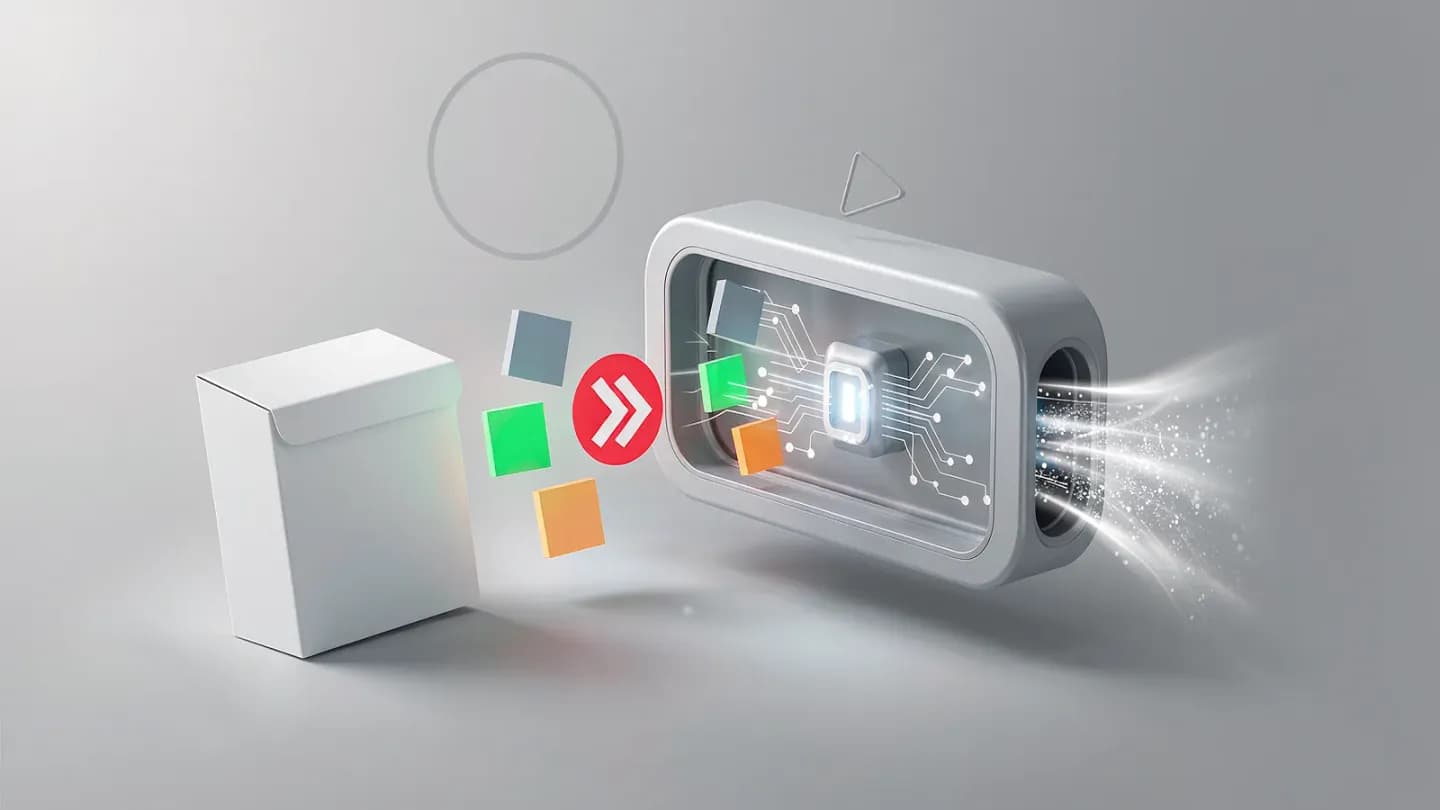
The economics explain the rush. Industry benchmarking shows generative video can cut per-minute production cost from roughly $4,500 to around $400, a 70 to 90% reduction, while compressing a 60-second spot's brief-to-final path from about thirteen days to roughly twenty-seven minutes. The shift is now mainstream: Wyzowl's 2026 State of Video Marketing survey found 91% of businesses use video as a marketing tool and 87% say it delivers positive ROI. Smaller and mid-size brands are moving fastest because the old production floor simply priced them out; now the economics make {{link}} a board-level question rather than a production-line detail.
But cost per minute is a vanity metric. The figure that actually predicts whether a campaign ships on budget is {{link}}, the share of generations that clear brand and legal review instead of dying in revisions. That is also why raw adoption numbers mislead: teams that generate the most footage often accumulate the most review debt, not the most shippable creative. Volume without constraints just moves the bottleneck from the render farm to the review queue, and the queue is where deadlines and budgets quietly bleed out. A clip that costs nothing to generate can still cost a week of senior review time, and that hidden labour is what actually breaks production calendars once volume scales.
Smaller and mid-size brands are moving fastest because the old production floor simply priced them out; now the economics make AI video budget proof a board-level question rather than a production-line detail.
The figure that actually predicts whether a campaign ships on budget is cost per usable clip, the share of generations that clear brand and legal review instead of dying in revisions.
Where Teams Get Stuck
Adoption and execution are not the same thing. The Australian Centre for AI in Marketing's 2026 benchmark, built on 126 CMO responses, found 83% of organisations still sit in the early stages of embedding AI, and 61% named AI-generated 'slop' their single biggest operational concern — the fear that faster production simply floods channels with generic creative. Roadmaps are often absent: 58% reported no documented AI plan at all, and only 6% had a fully documented one. The capability is widely available; the operating discipline is not, and that gap is exactly what separates a demo from a dependable production line. Most organisations bought the software before they designed the workflow, which is the reverse of how durable production systems are actually built.
The gap is organisational, not technical. Most teams already have the models; very few have the operating discipline — locked brand blocks, predefined legal rules, and a human review gate — that turns raw generations into deliverable creative. Without those, every new generation is a fresh roll of the dice against the brand guidelines, and the review team becomes the only thing standing between the output and the audience. More generation in that setup just produces more review debt and more rejected cuts.
Building a Constraint-Led Pipeline
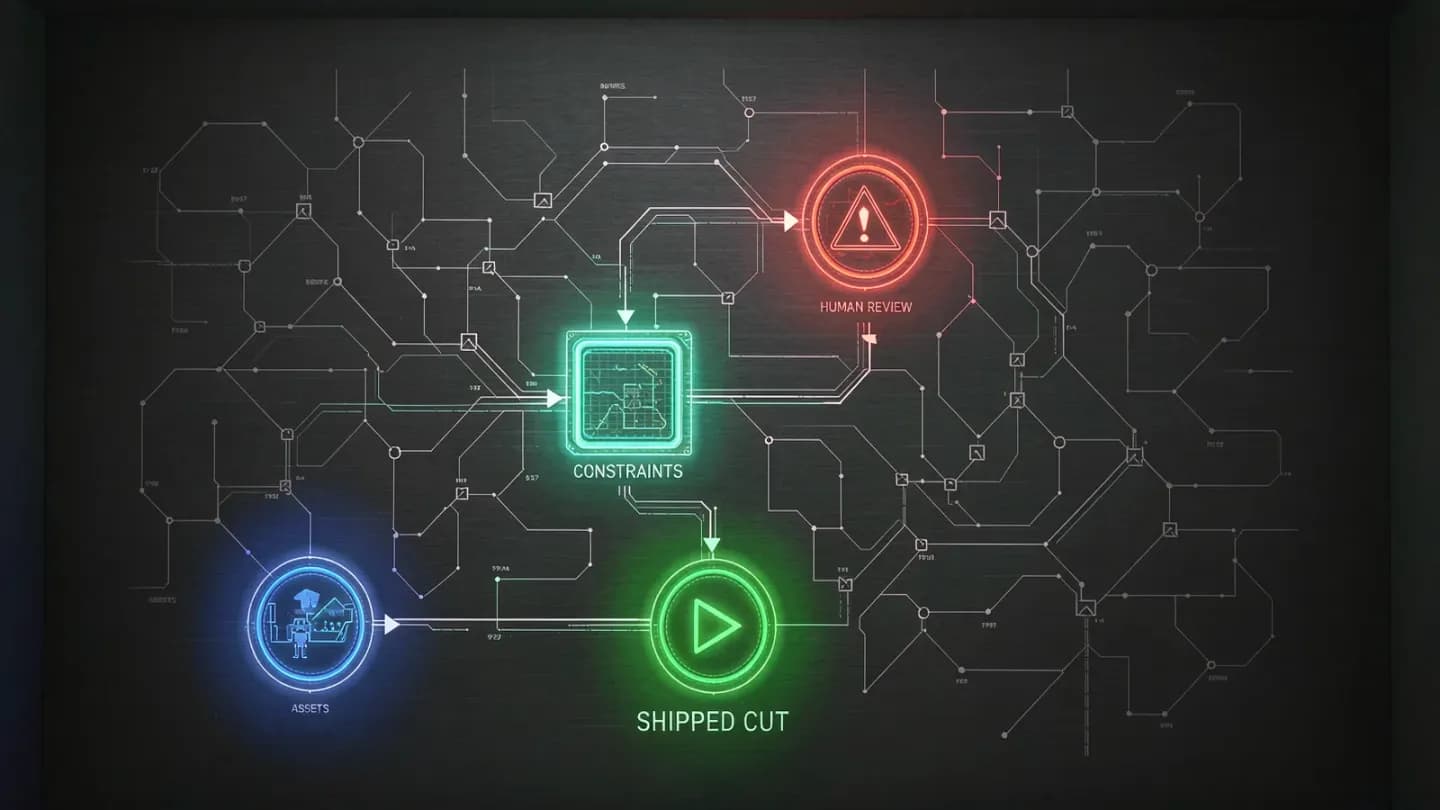
A practical constraint-led pipeline has four layers. First, lock reusable brand assets — product, character, and location references — so the model draws from approved material rather than improvisation. Second, encode legal and platform rules as hard constraints up front, not afterthoughts, so a clip that would fail review is never generated in the first place, avoiding the costliest revision of all — the one that happens after the client has already seen the cut. Third, keep a human review gate before anything ships; {{link}} is what separates a usable cut from a liability. Fourth, feed winners back as templates so the next brief starts from approved material instead of a blank canvas.
The 2026 production moat is not who can generate the most footage. It is who can generate on-brand, compliant footage reliably and at scale — turning the constraint from a brake into the very thing that makes AI video shippable in the first place. Open-ended prompting got the industry to the demo. Constraint-led production is what gets it to the campaign, and in a year where audiences and platforms are both tightening their tolerance for synthetic slop, that discipline is the difference between a clip that ships and a clip that sits in the reject folder.
Third, keep a human review gate before anything ships; an AI video trust-QC gate is what separates a usable cut from a liability.
Put the framework into production
These related pages connect the article’s planning advice to a specific commercial scope.
References
- 88% of US advertisers now use AI in creative production, led by VFX, motion graphics creation and script writingXR Extreme Reach
State of Ad Ops study of 400+ US and UK ad professionals: 88% use or pilot AI in creative production; production companies 79% adopted; task split VFX 45%, testing 44%, image creation 44%, video/motion 42%, scripting 41%, versioning 38%; US prioritizes quality/personalization, UK speed/volume.
- The State of Video Marketing 2026Wyzowl
2026 State of Video Marketing survey: 91% of businesses use video as a marketing tool; 87% say video delivers positive ROI; short-form video used by 87% of video marketers; 63% have used AI to create video.
- TikTok vs Reels vs Shorts: Short-Form Video Benchmarks 2026Socialinsider
2026 cross-platform study of 69 million videos (Jan 2025-Jul 2026): average engagement 2.60% on TikTok, 0.45% on Instagram Reels, 0.30% on YouTube Shorts; engagement down on TikTok and Reels, up on Shorts year over year.