
What the 2026 consent reset changes for AI video targeting
AI video targeting is being rebuilt from the input side. The American Privacy Rights Act takes full effect for advertising data practices on January 1, 2027, requiring opt-in consent before targeted advertising can use sensitive personal data, link activity across contexts, or lean on data-broker relationships. LiveRamp's chief executive estimated in September that 15 to 20 percent of current programmatic inventory becomes functionally untargetable without consent management and clean-room infrastructure. The variant engine does not disappear. The signals that steer it do.
The mechanics are unglamorous, which is precisely why they matter. Consent has to arrive before the advertising does. Twenty-four US states had enacted comprehensive consumer privacy laws by mid-2026, twenty of them already in force, and most follow the Virginia model: consumers can access, correct and delete their data, and opt out of targeted advertising and profiling. California remains the broadest regime, with a revenue threshold above $26 million. None of this bans personalization. It bans the assumption that a profile can be assembled without asking.
Read as a production constraint, the change is easy to state. A pipeline built to generate a thousand variants against a thousand audience segments kept its differentiation in the segment definitions. Remove the third-party signals that defined those segments and the pipeline still runs, still ships, and still produces near-identical work. The {{link}}, and that is the reason the same setup can now produce a thousand variants without a single meaningful difference between them.
The personalization engine was always a signal engine, and that is the reason the same setup can now produce a thousand variants without a single meaningful difference between them.

Why the buying stack noticed before the creative team did
Media teams met the problem first, because they were the ones holding the segment definitions. Programmatic buying spent two years pushing decisions into automated systems that bid, allocate and optimise against audience data, and those systems cannot run on a signal they no longer have. The {{link}}.
The bill is quantified now. Industry groups put the compliance cost for mid-to-large advertisers at $2 million to $15 million in the transition year, spent on consent management, clean rooms and the plumbing that proves a signal was lawful to use. LiveRamp published the blunter version of the same warning: brands that began building first-party infrastructure two years ago will be fine, and everyone else is scrambling in the first quarter. Google's Topics API becomes the default signal for Chrome-based programmatic targeting by the second quarter of 2027, and a Topics cohort is a browser-level bucket rather than a person.
Coarse signals change what creative is for. When every advertiser in a cohort receives the same message, the difference between campaigns stops living in the targeting and starts living in the asset. That is an uncomfortable inversion for teams that spent three years treating creative as the cheap, plentiful output of a generation pipeline. Under the new arithmetic the creative is the scarce, defensible layer and the distribution is the commodity.
A second consequence is easier to miss. Variant libraries were priced on the assumption that each additional version was nearly free to place, because the auction could always find a segment for it. Once the addressable pool contracts, the marginal variant stops earning its slot, and a library built for maximum coverage becomes a maintenance cost. The rational response is not fewer ideas but fewer duplicates, which is a creative judgement rather than a media one. It is also a judgement that most production dashboards were never built to inform.
The buying stack learned to automate faster than it learned to substitute.
What replaces third-party signals in AI video targeting
AB InBev's Budweiser Sessions is the clearest working example, and it was built the hard way. Over 18 months, an in-house creative team and outside partners assembled a platform that generates and localises video creative in real time across 14 markets, producing thousands of personalised variants from a single master campaign. The inputs are a bank of brand-approved footage, music and messaging. The triggers are not personal data at all. Local weather, a regional sporting fixture, a cultural event, the tone of the day's conversation. A rainy afternoon in Seattle produces an indoor-gathering spot. A sunny Saturday before a college football game in the South produces a tailgate spot.
Contextual triggers survive the consent reset because the input is a property of the moment rather than a property of a person. That is an elegant dodge, and it carries a second benefit that matters more for brand teams: the creative can be explained. Every spot still passes a human brand-safety review before release, and the company's framing was explicit that the system amplifies a creative team rather than replacing it. The disclosure story stays straightforward when the reason a variant exists is weather.
The catch is that a trigger library needs the same discipline as an audience segment. A named source, a refresh cadence, a rule for who approves a variant, and a record of why it was produced. The {{link}}, which is why a trigger library has to be governed like an asset library rather than improvised per campaign.
The same inventory logic already governs programmatic creative, which is why a trigger library has to be governed like an asset library rather than improvised per campaign.

Consented first-party capture becomes a production input
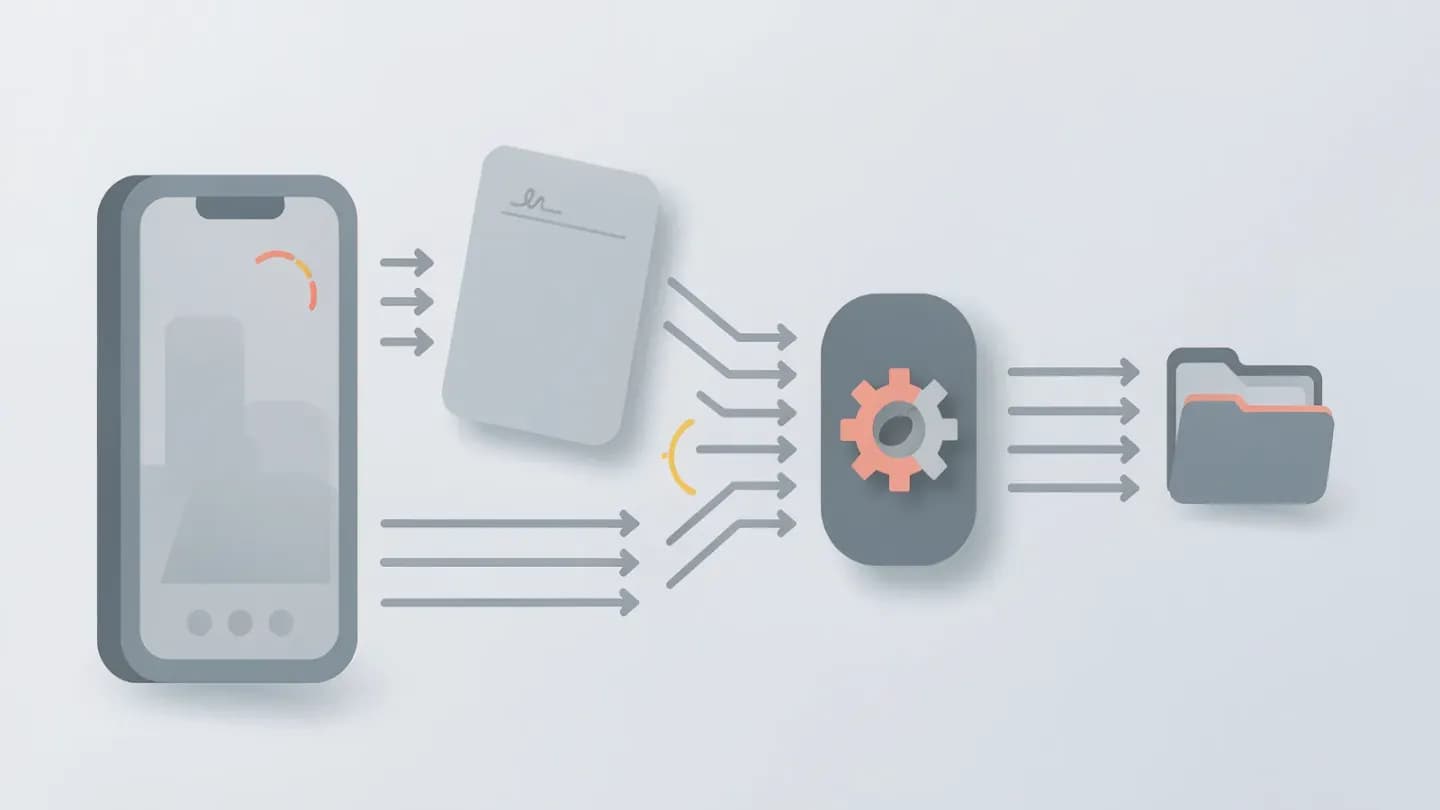
The other half of the answer is footage you control. When a brand films its own subject, its own product and its own setting on its own terms, that material is lawful input whatever happens to third-party data. The entry cost of that capture fell sharply in late August 2026, when Google's Flow studio shipped alongside Gemini Omni 1.1: a 30-second smartphone clip builds a photorealistic avatar that preserves facial geometry, eye contact and micro-expressions, and first-and-last-frame keyframing with 40-second scene extension gives a director the camera control that random generation never offered.
What changes is less the cost of capture than the paperwork around it. In a consent-driven pipeline the release becomes a production artifact with the same status as the footage: capture date, model and version, permitted uses, expiry, and the name of the person who approved it. A clip with no rights record is not an asset. It is a liability with good lighting, and it becomes expensive the moment a client asks to reuse it.
When the capture stage is planned properly, the brief gains three questions it did not previously ask. Who is on camera, and what exactly did they agree to? Which model and which version will consume this footage, and does the permission cover that use? How long does the material stay usable, and what happens to the generated variants already in circulation when the term expires? None of these are creative questions, and all of them change what a team can shoot.
Operationally that means the brief grows a stage it did not have before. Capture, record, then generate. Teams that skip the record stage will meet the problem at the worst possible moment, when a campaign has been approved, the subject has moved on, and nobody can prove what was agreed.
A production checklist before January 2027
Five things are worth doing before the deadline. Inventory the signals your variant engine actually consumes and mark each one lawful, rented or at risk. Move the at-risk ones onto contextual triggers or first-party capture. Give every consent record an owner and a home that outlives the campaign. Write the trigger rules down, because a variant that cannot be explained is a variant a legal team will pull. And re-price the production plan around fewer, better variants rather than maximum volume, since the volume was only ever cheap because the targeting was.
Measurement needs the same treatment. A smaller addressable audience changes what a test can resolve, and lift studies that were already borderline become unreadable. The {{link}}, and this one arrives with the same shape: fewer signals, and more reliance on the assets themselves as the thing being tested.
None of this makes AI video personalization illegal or impossible. It makes the input layer the deciding layer, which is where the leverage quietly moves back to the people who decide what a commercial says and shows. The model will keep generating. What it generates will increasingly be steered by the calendar, the weather and the footage a brand was allowed to shoot, rather than by a profile nobody can prove it had the right to hold.
The measurement stack has already absorbed a similar shock, and this one arrives with the same shape: fewer signals, and more reliance on the assets themselves as the thing being tested.
Put the framework into production
These related pages connect the article’s planning advice to a specific commercial scope.
References
- U.S. Ad Spend Hits $400B Milestone and the Rules Are ChangingAdTimes
Reports that the American Privacy Rights Act was signed into law in March 2026 and takes full effect for advertising data practices on January 1, 2027, requiring opt-in consent for targeted advertising using sensitive personal data categories, cross-context behavioral advertising and data broker relationships; cites a September analyst call in which LiveRamp's chief executive estimated 15 to 20 percent of current programmatic inventory could become functionally untargetable without consent management and clean room investment; puts transition-year compliance costs for mid-to-large advertisers at $2 million to $15 million; and notes Google's Topics API becomes the default signal for Chrome-based programmatic targeting by Q2 2027.
- Data Privacy Laws by Country and U.S. State (2026)CDP.com
Tracks 24 U.S. states with comprehensive consumer privacy laws, 20 of them in effect as of July 2026, with Alabama, Louisiana, Oklahoma and Vermont taking effect between 2027 and 2028; most follow the Virginia model, granting rights to access, correct, delete and opt out of sale, targeted advertising and profiling; applicability thresholds are 100,000 residents, or 25,000 where the business derives revenue from selling data; and the CCPA/CPRA revenue threshold is $26,625,000.
- Are cookie banners required in the US?ConsentStack
Compares consent models across U.S. state privacy laws and reports 23 of 27 laws in force, with opt-in consent confined to sensitive-data regimes such as Washington's MHMDA and California's CIPA wiretap statute; notes CCPA regulation section 7026(a)(4), under which a cookie banner is not by itself an acceptable method for submitting opt-out requests; and cites California's largest CCPA settlement, $1.55 million against Healthline in July 2025, over a consent banner that did not disable tracking cookies.
- 2026 IAB Digital Video Ad Spend & Strategy ReportInteractive Advertising Bureau
Puts U.S. digital video advertising spend above $80 billion for 2026 and documents generative AI creative moving into mainstream video ad production alongside the early role of agentic AI in video media buying.