What unbundling the agency model actually means
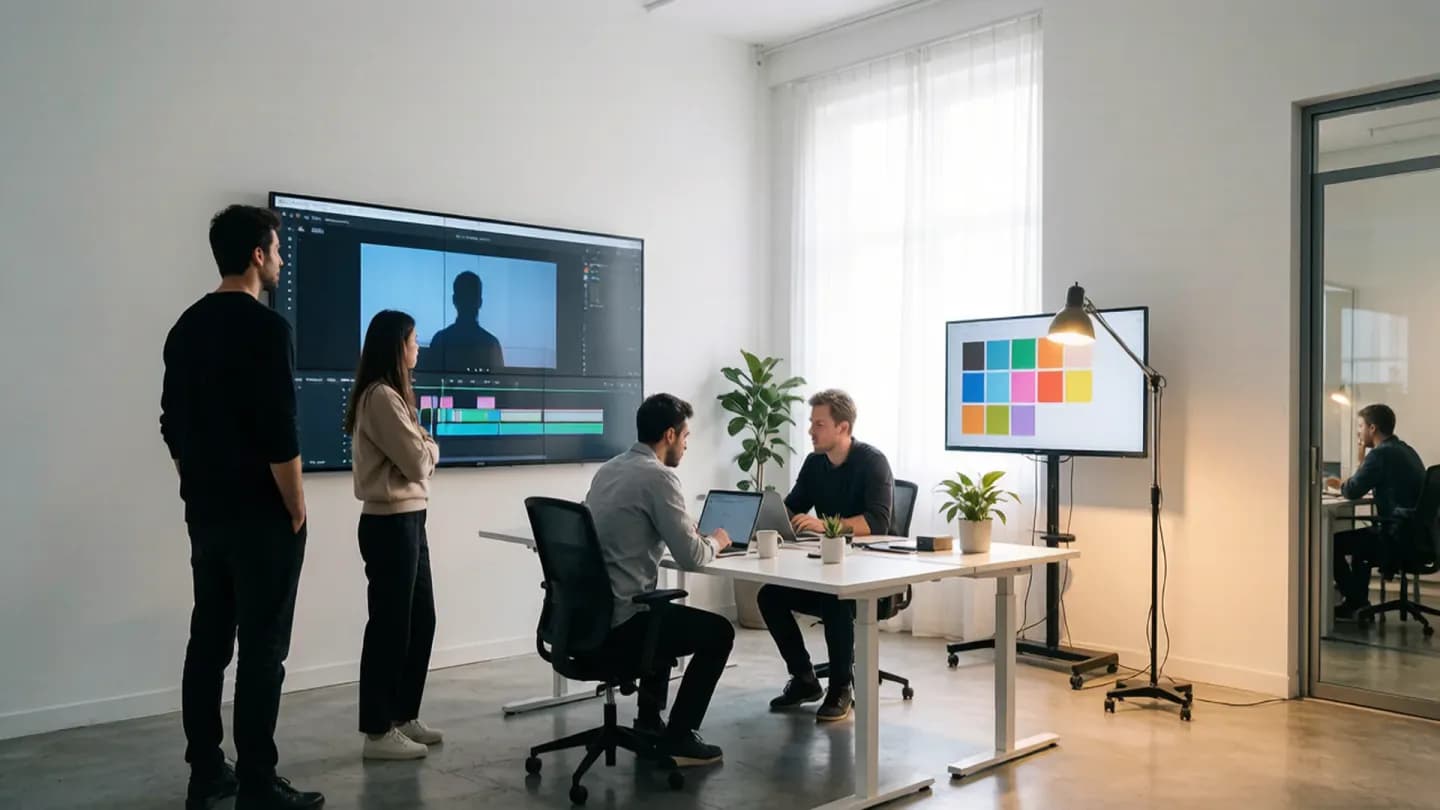
An in-house AI video studio is a dedicated brand team that plans, generates, reviews and ships video creative using generative AI — and in 2026 it has become the natural answer to an agency model that AI is unbundling. This playbook covers when to build one, what to put inside it, and how to keep the work commercially safe.
Unbundling means that the layers an agency used to sell as one package — strategy, creative, production, media — are now separable, because each one can be automated or accelerated independently. The IAB's 2026 Outlook Study makes the shift concrete: five of the six top areas of increased advertiser focus are AI-related, and two-thirds of buyers now focus on agentic AI for ad buying and campaign execution. Planning and delivery no longer require a full-service partner by default.
The agency is not disappearing; the bundle is. When a brand can brief a model, generate a cut in hours and let an agent optimize delivery, procurement starts shopping for layers rather than for a single retainer. That creates a decision that barely existed two years ago: keep paying a partner for every layer, or own some layers yourself. The rest of this article is the playbook for the second option. The unbundling also changes procurement: scope-of-work documents now name model versions and approval loops, not just deliverables.

Why brands are moving video creative in-house
The economics changed first. Generating video is now mostly a software cost rather than a headcount cost, and that flips the risk profile of production. Brands that already track spend through an {{link}} know the pattern: the exposure moved from one expensive shoot to a thousand cheap iterations, so the discipline now lives in review, versioning and approval rather than in protecting a single shoot day.
The second driver is velocity. A variant that takes three weeks externally can take a day internally when there is no briefing queue, no traffic department and no internal agency rounds. That speed matters because creative fatigue on paid social is a first-order budget problem; a brand that refreshes creative on its own cadence stops paying for the bottleneck between brief and delivery. Self-service platforms have removed the last excuse: tools once reserved for enterprise teams are now available to small and mid-size brands, so the capability gap that used to justify outsourcing is closing.
The third driver is ownership. When generated video becomes commercially safe and legally low-risk, the main reason to outsource weakens. Adobe states that videos generated with its Firefly Video Model are designed to be safe for commercial use because the model is trained on licensed content and public-domain material. A brand that controls its model access, its assets and its review process keeps more of the value in-house and builds a capability it can compound.
Brands that already track spend through an AI video budget risk profile know the pattern: the exposure moved from one expensive shoot to a thousand cheap iterations, so the discipline now lives in review, versioning and approval rather than in protecting a single shoot day.
What an in-house AI video studio should contain
A studio is not a tool subscription; it is a repeatable operating model with three layers. The first layer is a prompt-and-asset library that encodes the brand — product shots, characters, locations, camera language — so generated output starts on-brief instead of being rescued in post. The second is a review and approval loop with named owners. The third is a measurement feed that records what each variant cost and did.
The review loop is where most studios fail, because the bottleneck in AI video is no longer generation; it is approvals, versioning and handoffs. A small team of four or five — a creative director, a prompt engineer, an editor, a producer and a legal reviewer — can outpace an agency team many times its size when the loop is explicit and the prompt library is owned.
The measurement feed closes the loop. Every shipped variant should carry the same metadata as any paid asset, and the quality gates must be applied before generation volume explodes. A {{link}} demonstrates the pattern: a direct-to-consumer brand rebuilt its creative around daily batch generation, with QA and brand-safety controls that stop it shipping slop. The same skeleton scales to a mid-size studio.
A DTC brand's AI video engine demonstrates the pattern: a direct-to-consumer brand rebuilt its creative around daily batch generation, with QA and brand-safety controls that stop it shipping slop.

The build-versus-buy decision
In-housing is not a universal answer. Agencies still win where strategy, cultural fluency or regulatory depth matters more than velocity — and the agency side is responding by embedding AI itself. In February 2026, Serviceplan Group became the first of the world's largest agency groups to standardize AI for creative work across its global operations, aiming for greater scalability without linear cost growth. The group operates more than 43 locations and 6,500 professionals, making it the clearest proof that even incumbents now treat AI as core infrastructure rather than an experiment.
The decision rule is about ownership of the critical layer, not cost alone. Build when your brand depends on a distinctive, defensible creative process and you can staff the loop. Buy when the layer is commodity, when the work is campaign-shaped rather than always-on, or when the regulatory surface is complex enough that a specialist partner is cheaper than building expertise from scratch.
There is also a middle path: the brand owns the prompt library, the review loop and the data, while an agency runs a {{link}} to produce at scale. Teams that reject full in-housing often still adopt a producer-led structure because it keeps one accountable owner over a machine-assisted pipeline, and it preserves the strategic relationship without paying for every production hour.
There is also a middle path: the brand owns the prompt library, the review loop and the data, while an agency runs a producer-led AI video workflow to produce at scale.
Keeping generated work commercially safe
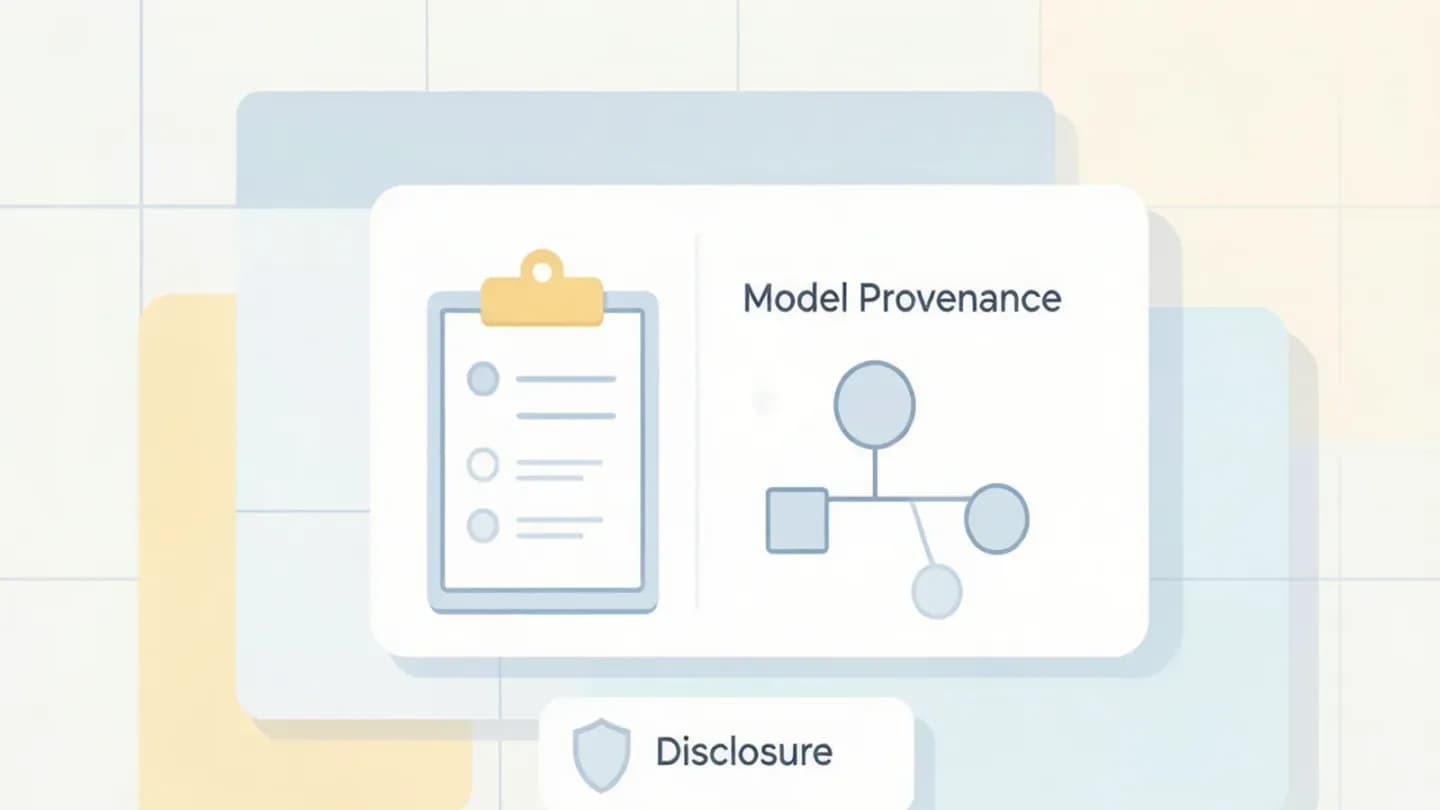
The cheapest studio is the one that never has to pull a spot. Commercial safety has three parts: training provenance, output rights and disclosure. Provenance is what the model was trained on; output rights is what you are licensed to do with the result; disclosure is what platforms and regulators expect you to label. Each part maps to a named owner on the review loop.
On provenance, the reference standard is C2PA, the Coalition for Content Provenance and Authenticity, which defines how AI-generated content carries verifiable metadata about how it was made. A legal reviewer should demand two things from any vendor before the studio commits to it: a documented training-data position, and output that ships with Content Credentials or an equivalent provenance record. The studio's vendor matrix must therefore list training data, provenance support and disclosure defaults side by side.
Disclosure rules differ by market, so cross-border teams should treat them as a checklist rather than an afterthought. Following a {{link}} keeps the studio on the right side of the claim: what the frame depicts is an advertising claim, and the studio owns the substantiation trail for every generated product shot it ships.
Following a rights-safe AI video playbook keeps the studio on the right side of the claim: what the frame depicts is an advertising claim, and the studio owns the substantiation trail for every generated product shot it ships.
A pragmatic rollout path
Start with a bounded pilot, not a reorganization. Pick one always-on creative stream — product video, paid-social variants or localized versions — and run it through the studio for four to six weeks while the agency handles everything else. The pilot should prove the loop, not the technology; the tools already work, what needs testing is the team's cadence.
Define the success metrics before the pilot: cost per usable variant, days from brief to delivery, and the share of variants that beat the incumbent in a controlled test. Compare those numbers against the previous baseline, and let the data — not the enthusiasm — decide whether the studio expands to more streams and more markets.
Expect the pattern to repeat. Cheaper generation, agentic planning and commercially safe models will keep pulling new layers inside the brand's own walls, and a studio that treats its prompt library, review loop and measurement feed as durable assets will compound long after any single model changes. Creative freshness becomes a discipline of its own: a brand that maintains a {{link}} stays ahead of paid-social fatigue without waiting for an external partner to notice.
Creative freshness becomes a discipline of its own: a brand that maintains a AI video creative refresh cadence stays ahead of paid-social fatigue without waiting for an external partner to notice.
Put the framework into production
These related pages connect the article’s planning advice to a specific commercial scope.
References
- IAB 2026 Outlook Study Forecasts 9.5% Growth in U.S. Ad Spend, Fueled by Digital Growth, Major Cyclical Events and Accelerating Adoption of Agentic AIInteractive Advertising Bureau (IAB)
Five of the six top areas of increased advertiser focus in 2026 are AI-related, and two-thirds of buyers now focus on agentic AI for ad buying and campaign execution.
- Serviceplan Group Deploys Creative AI Across Global Ops with Luma AIServiceplan Group / House of Communication
Serviceplan became the first of the world's largest agency groups to standardize AI for creative work at scale, aiming for greater scalability without linear cost growth.
- C2PA: Coalition for Content Provenance and AuthenticityCoalition for Content Provenance and Authenticity (C2PA)
C2PA defines the open standard for verifiable content provenance, letting brands attach machine-readable metadata to AI-generated video that records how it was made.