What branded micro-drama actually means in 2026
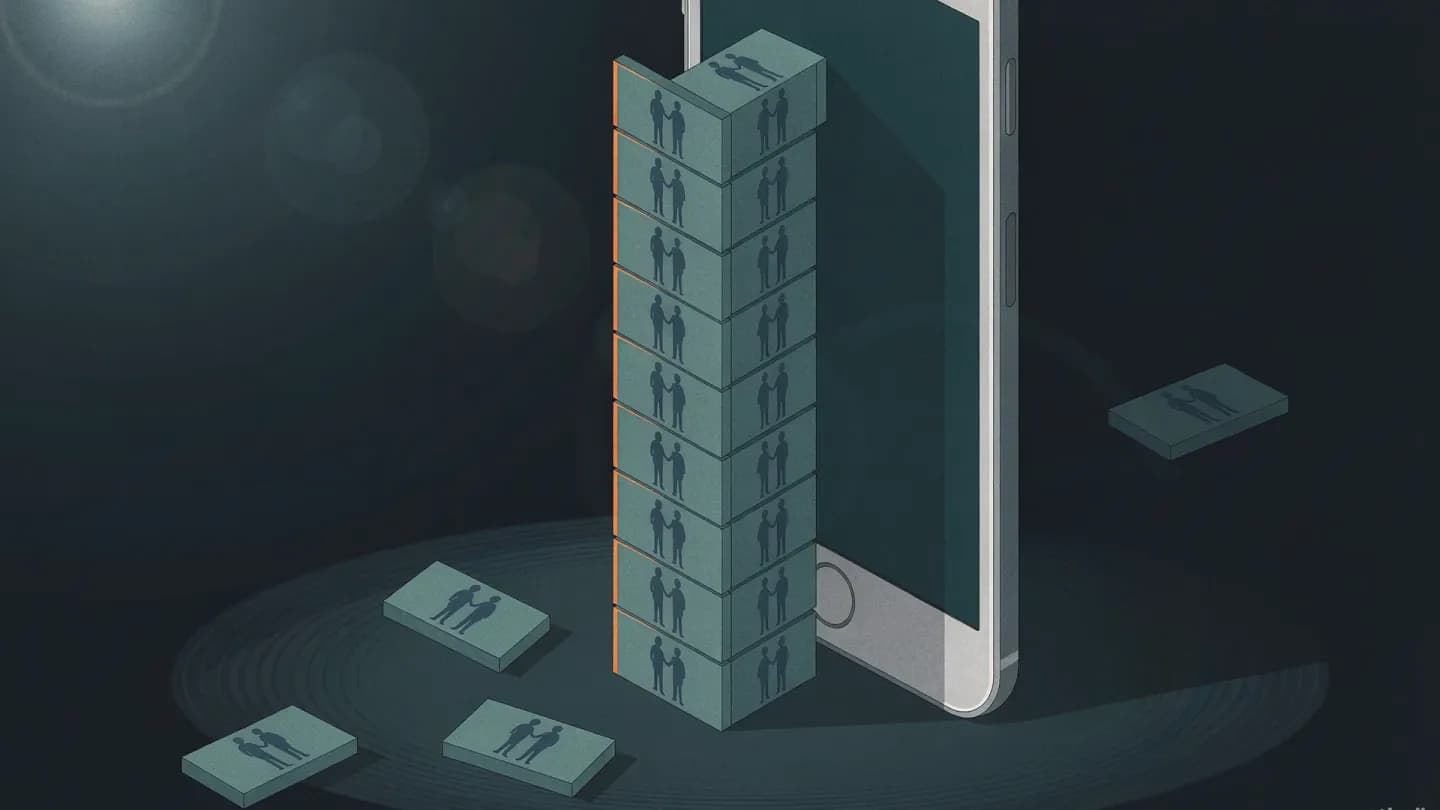
Branded micro-drama is a vertical, episodic series a brand commissions or sponsors: roughly 50 to 80 episodes, one to three minutes each, released on a daily or weekly cliffhanger cadence, distributed first inside short-drama apps and then cut down for social feeds. The format matters because the unit of purchase changed. In 2026 audiences choose a story by actor, series and studio as much as by premise, which turns a single content spend into a multi-season asset decision.
Two different motions get filed under the same label, and confusing them wastes budget. Commissioning a branded micro-drama means owing the script, the cast, the renders and the finished season. Buying inside the format means placing creative in an app that already has an audience and a release calendar. The first is a content investment with an IP balance sheet; the second is media buying with a narrative wrapper. Most teams that report disappointment tried to run the second motion with the first motion's paperwork, or the reverse.
The production spec is now standardised enough to plan against. Vertical 9:16, subtitle-first with sound-off legibility assumed, 60 to 90 seconds per episode, a season long enough to sustain 30 to 60 days of release, and a cliffhanger at every episode boundary rather than at every scene. A season is written, cast and generated as one unit, because characters, wardrobe and sets have to survive dozens of shots spread across dozens of episodes without drifting.
Why the retention numbers changed the brief
The reason brands moved is viewing behaviour, not production capability. ShareChat and Moj's State of Microdrama report, produced with Kantar, counted roughly 100 million monthly microdrama viewers in India alone generating about 1.2 billion episode views a day, with 86% of viewers spending at least 15 minutes a day inside the format and 54% returning to the same story on the same day. The average viewer sits for about 55 minutes a day and consumes more than 80 episodes.
Episode-to-episode continuation is the number that matters most for a brand. On ShareChat and Moj, roughly 75 of every 100 viewers shown episode one continue to episode two, which means the recommendation engine and not a paid impression is doing the carrying. A brand inside that loop is buying repeated exposure across a season rather than a single 10- or 20-second impression, and the association compounds episode by episode instead of resetting with every swipe.
That is also why the format cannot be judged on clip performance: a vertical clip lives and dies inside one swipe, which is the mechanism behind {{link}}, while a series has a second, third and fortieth chance to land the same message with the same characters.
That is also why the format cannot be judged on clip performance: a vertical clip lives and dies inside one swipe, which is the mechanism behind the memory problem that fragmented clips create, while a series has a second, third and fortieth chance to land the same message with the same characters.
The cost collapse stopped at production
AI removed the production excuse and left the distribution problem untouched. Appark's 2026 market analysis, cross-checked against DataEye and Sensor Tower, puts domestic AI micro-drama cost per finished minute at a few hundred to a thousand yuan, down from roughly 4,000 to 5,000 yuan in November 2025, a drop of about 80% in under a year. In the first quarter of 2026 the industry released about 128,000 micro-dramas, and roughly 122,000 of them were AI-made.
Supply did not convert into winners. Across Douyin, 221,900 new AI titles arrived in the first half of 2026 and 1,055 of them passed 100 million plays, a 0.47% hit rate. That arithmetic is survivable only because a failure has become cheap, which is why volume-driven teams treat output as an option portfolio rather than a slate. The filter is narrower than the supply suggests, and branded micro-drama belongs on {{link}}.
Where the money actually goes is distribution, and the app data shows it. Over twelve months ReelShort's monthly revenue fell from about $42 million in August 2025 to $28.5 million in July 2026, a 32% decline, while DramaBox held between $28 million and $32 million a month and peaked at $35.6 million in July. Local-language originals rose from 27% to 46% of overseas supply as teams stopped exporting translated cuts and started generating in-market versions. The cheapest output in the industry, VibeShort's fully AI slate, went from zero to $7.7 million a month on iOS in five months, and it did that on testing volume rather than on one launch.
The filter is narrower than the supply suggests, and branded micro-drama belongs on the briefs where generative video earns its keep.
Micro-drama became a media channel, not just a format
The format has also become a place to buy. Mintegral's H2 2026 non-gaming app report found microdrama app downloads up 95.5% year over year in the first half of 2026 to 1.45 billion, against 16.6% growth for non-gaming apps overall, with Southeast Asia contributing 518 million downloads and Latin America 355 million. Active advertisers on those apps rose 132% and creative output rose 151%, which is the profile of a channel being industrialised rather than a trend being sampled.
Creative density is the tell. Microdrama apps carried an average of 1,887 ads per active advertising app, the highest density of any app category measured, and the only category that cleared 1,100 in three separate regions. A brand entering the format is therefore competing for the same slot against teams shipping hundreds of variants a month, and the pilot that used to be a single hero episode now has to be planned as a continuous stream of cuts.
Money inside the story behaves differently from money around it. Only 38% of viewers paying for AI-made comic drama also pay for live-action drama, so the format is adding paying viewers rather than shuffling existing ones, which is the same dynamic that makes {{link}} worth tracking rather than dismissing as a novelty.
Money inside the story behaves differently from money around it. Only 38% of viewers paying for AI-made comic drama also pay for live-action drama, so the format is adding paying viewers rather than shuffling existing ones, which is the same dynamic that makes the commerce layer around AI video worth tracking rather than dismissing as a novelty.

The brief that survives those numbers
Commission a season, not a spot. A branded micro-drama brief should name the season length, the episode runtime, the release cadence and the number of episodes that must exist before launch, because fifty episodes generated as one batch and released over six weeks behave nothing like fifty assets pushed on a schedule. Fixing the release calendar first also forces the budget conversation early, while there is still room to move money between production and distribution.
Approve an anchor before the run. Generate three episodes end to end, lock characters, wardrobe, grade and caption style against agreed reference frames, and only then open the rest of the season. Own the renders: character sheets, the prompt library and the finished masters should transfer to the brand, because the second season is where the cost advantage actually appears. A season whose assets stay with the vendor is a rental, and it renews at the vendor's price.
Set the measurement before episode one ships, and measure continuation rather than views. Episode-two completion, same-day return and season completion tell you whether the story is carrying the brand, while a view count on the first episode will flatter almost any cut. That restraint is the same discipline behind {{link}} — decide in advance what would make the programme worth renewing, and what would end it.
That restraint is the same discipline behind measuring upper-funnel impact — decide in advance what would make the programme worth renewing, and what would end it.
The compliance gate China already installed
The format's home market has already answered the labelling question, and the answer is a pre-production requirement. China's labelling measures for AI-generated content, issued by the Cyberspace Administration of China together with three other ministries and effective 1 September 2025, require a visible mark at the start of a video and around the playback window, an implicit mark in the file's metadata recording the provider and a content identifier, and platform-side verification of that metadata before anything is published.
Two clauses change how a season gets produced rather than how it gets finished. Users publishing generated content must actively declare it and use the platform's own labelling tools, and removing, altering, forging or hiding a required label is prohibited, as is supplying tools that help someone do it. For a brand releasing an episodic season across several platforms, the mark and the metadata are therefore part of the deliverable, not something a distributor adds on the way out.
None of this is hypothetical for teams already running the format. It is the same sequencing the rest of the pipeline now follows: lock the format and the story bible, decide how the season is measured, and treat provenance as a production input that ships with every episode. The brands getting real value from branded micro-drama in 2026 are the ones whose second season is cheaper, better and easier to clear than the first.
Put the framework into production
These related pages connect the article’s planning advice to a specific commercial scope.
References
- AI Short Drama Market Analysis 2026: Who Is Actually Making MoneyAppark
Domestic AI micro-drama cost per finished minute fell from roughly 4,000-5,000 yuan in November 2025 to a few hundred to a thousand yuan in 2026; about 128,000 micro-dramas launched in Q1 2026 of which roughly 122,000 were AI-made; Douyin added 221,900 AI titles in H1 2026 and only 1,055 passed 100 million plays (0.47%); ReelShort monthly revenue fell from about $42M in August 2025 to $28.5M in July 2026 while DramaBox peaked at $35.6M.
- Short Drama App Downloads Surge 95.5% as Emerging Markets Drive Global Growth (H2 2026 Global Non-Gaming App Trends Report)Mintegral
Microdrama app downloads grew 95.5% year over year in H1 2026 to 1.45 billion against 16.6% for non-gaming apps overall; Southeast Asia contributed 518 million downloads and Latin America 355 million; active advertisers rose 132% and creative output 151%; microdrama creative density reached 1,887, the highest of any app category.
- ShareChat & Moj's Microdrama Report by Kantar Signals New Opportunity for Brandsexchange4media
The State of Microdrama in India report finds about 100 million monthly microdrama viewers generating roughly 1.2 billion episode views a day, 86% of viewers watching at least 15 minutes daily, 54% returning to the same story the same day, an average of about 55 minutes a day and more than 80 episodes per user, and roughly 75 of every 100 viewers continuing from episode one to episode two.
- 关于印发《人工智能生成合成内容标识办法》的通知Cyberspace Administration of China
China's labelling measures, effective 1 September 2025, require a visible label at the start of a video and around the playback window, an implicit label in file metadata recording the provider name or code and a content identifier, platform-side verification of that metadata before publication, and they prohibit users from removing, altering, forging or hiding a required label.