
What the ByteDance World Model Actually Does
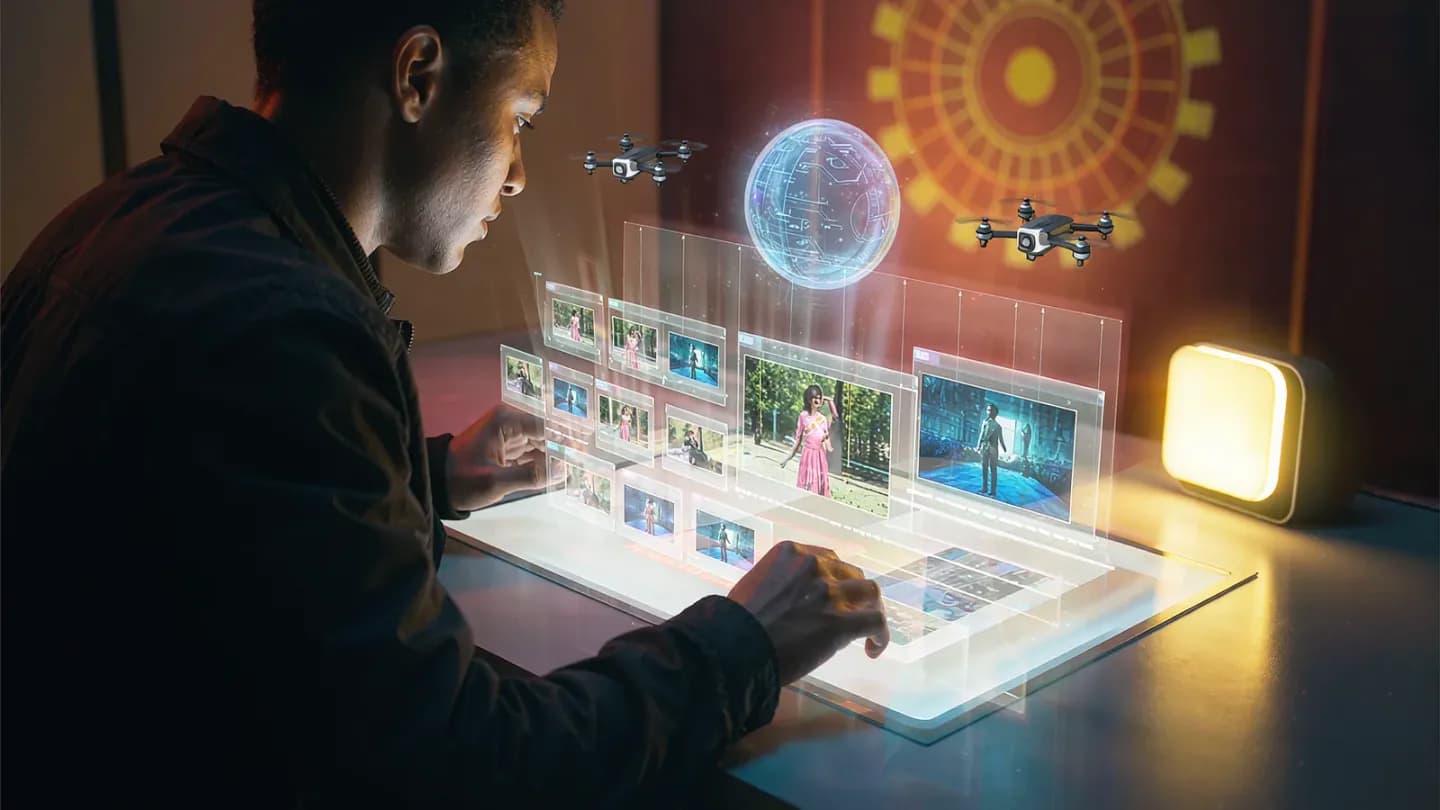
The ByteDance world model, built on the company's Seedance video engine, is a real-time spatial video system reported in early September 2026. Briefings describe cloud rendering at roughly 20 frames per second with latency near 0.05 seconds, so a viewer's voice command or hand gesture can reshape a three-dimensional scene as it plays. Unlike a conventional text-to-video prompt that produces a fixed clip after a render job completes, this approach treats the world as a live, queryable space that updates with input. The implications are immediate for formats that already depend on interaction. Live commerce, short-form drama, and lightweight game-like brand experiences can now be generated and modified on the fly rather than produced weeks in advance and shipped as a finished file. That single change moves generative video from a discrete production step into a continuous runtime, and it changes who can participate. When the cost of a new camera angle is a sentence rather than a reshoot, the creative surface area expands for teams of every size. It also reframes the competitive question from which lab has the best model to which team can direct a model fastest, because the differentiator becomes creative direction rather than raw generation capacity. For brands already running AI-assisted production, the interesting question is no longer whether real-time generation is possible but how to govern it, because the constraint shifts from what can be rendered to what should be shipped.
That speed reframes what generative video can mean for everyday content, not just polished demos. This launch fits the wider trend of {{link}}, where a handful of platforms race to own the full generation stack from model to delivery.
This launch fits the wider trend of AI video model consolidation, where a handful of platforms race to own the full generation stack from model to delivery.
Why Real-Time Cloud Rendering Changes Everything
Traditional generative video renders a fixed clip only after a prompt is submitted, which means any artifact it bakes in must be caught and re-rendered later in a separate pass. Real-time rendering inverts that order: the scene responds to input continuously, so the model can correct, extend, or branch a shot while the viewer is still watching. For creators, this unlocks interactive formats that were technically possible but impractical at scale, such as virtual showrooms that react to a shopper's gaze or narrative scenes that change with audience choices. The experience starts to feel less like watching a video and more like inhabiting a responsive space that answers back. When iteration becomes instantaneous, the bottleneck shifts from compute to creative judgment, and the teams that thrive are the ones with a clear point of view rather than the ones with the largest render farm. The practical payoff is a tighter loop between a creative idea and its on-screen result, which means more ideas get tested and the weak ones get discarded before they ever reach a budget approval meeting. The same capability also lowers the cost of personalization, since a base scene can be re-rendered for different audiences without a separate production, provided the creative brief stays consistent across every variant.
Latency alone does not solve the harder problem of {{link}}, which still decides whether synthetic footage reads as professional rather than uncanny. Speed gets the clip on screen; craft keeps the audience from scrolling past.
Latency alone does not solve the harder problem of AI creative quality gap, which still decides whether synthetic footage reads as professional rather than uncanny.

What This Means for Creator Workflows
For solo creators and small teams, cloud rendering lowers the hardware bar because the heavy compute lives on remote servers instead of a local workstation. A creator can iterate on a scene with natural-language or gesture input instead of owning a render farm, compressing what used to be a multi-day production loop into minutes. That democratization is the headline, but the deeper shift is operational: iteration becomes cheap, so the cost of exploring ten creative directions drops to nearly nothing. Teams can afford to be wrong quickly and converge on the right cut far faster than a traditional pipeline allows, because the penalty for a bad first attempt is a regenerated take rather than a booked studio day. The bottleneck moves from compute to judgment, and the skills that matter become taste, pacing, and a clear brief rather than access to expensive equipment. A small brand can now brief a model the way it would brief a freelancer, review dozens of variations before lunch, and ship the one that actually lands, all without a production company in the loop. The catch is that cheap iteration can drift without a brief, so the most effective teams pair real-time generation with a written creative direction the model is measured against, not just a pile of raw outputs.
Brands should plan for {{link}}, where the algorithm and the creative format are built together rather than bolted on after the fact. The teams that win will treat the model as a production partner, not a one-click export button.
Brands should plan for platform-native AI video ads, where the algorithm and the creative format are built together rather than bolted on after the fact.
The Budget and ROI Equation
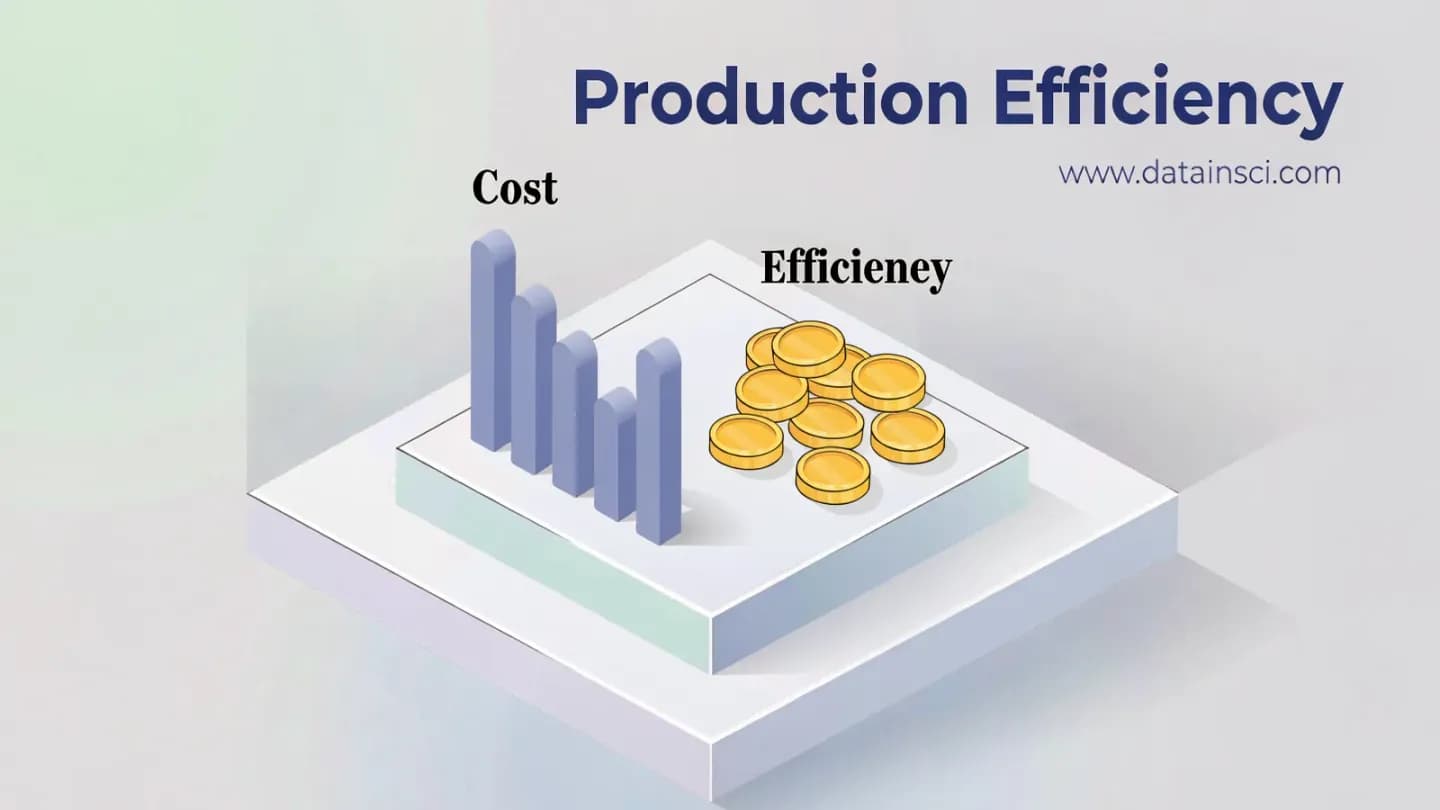
Faster iteration changes unit economics in ways that matter to finance teams. When a usable clip costs less compute and fewer reshoots, more concepts can be tested for the same budget, and the marginal cost of a variant trends toward zero. That is the promise behind the surge in AI-assisted production: more experiments, tighter feedback loops, and a portfolio of creative that improves with each run instead of each quarterly shoot. The risk is the opposite trap, where unlimited generation quietly burns compute on low-yield variations that no one actually reviews or retires. Without a stop rule, a real-time model can spend its efficiency gains on noise rather than signal, leaving the budget unchanged while the clip count explodes and the review queue backs up. The fix is governance, not less generation: set a clear definition of a usable clip, count only the assets that pass review, and treat the model as a variable-cost line item that still needs the same discipline as any other production spend. Measuring the model like any other production vendor also makes the spend easier to defend internally, because finance sees a cost per usable asset rather than an open-ended compute bill with no clear deliverable attached.
Teams that want to stay efficient can borrow the discipline of {{link}}, tying every generation attempt to a measurable return. The real metric is {{link}}, because a fast render that needs ten retries is not actually cheaper than a slower one that nails it on the second try.
Teams that want to stay efficient can borrow the discipline of AI video budget proof, tying every generation attempt to a measurable return.
The real metric is cost per usable clip, because a fast render that needs ten retries is not actually cheaper than a slower one that nails it on the second try.
Trust, Disclosure, and Where It Lands First
Real-time synthetic video raises the stakes on disclosure. When a scene is generated and modified live, audiences deserve to know what is real, which makes provenance metadata a core part of the deliverable rather than an afterthought bolted on at publish time. Standards that attach tamper-evident origin information to media are no longer a nice-to-have; they are the baseline that lets interactive AI video stay trustworthy as it scales across platforms and markets with different rules. A generated world that reacts to a viewer is compelling precisely because it feels real, and that is exactly why labeling it honestly matters more, not less, than it did for static clips. Regulators in several markets are already moving from voluntary guidance to explicit labeling requirements, so building disclosure into the pipeline now is cheaper than retrofitting it after a compliance deadline, and it protects the audience relationship that makes interactive formats valuable in the first place. Treated as a first-class part of the workflow rather than a compliance headache, disclosure can even become a trust signal that differentiates a brand from competitors who ship synthetic video with no provenance at all.
Expect the first production-grade uses in gaming, live commerce, and short-form drama, where interaction is already part of the format. The technology will earn trust the same way earlier AI video did: through consistent, labeled, and genuinely useful output that respects the audience instead of tricking it.
Put the framework into production
These related pages connect the article’s planning advice to a specific commercial scope.
References
- Video Marketing Statistics 2026Wyzowl
63% of video marketers used AI tools to create or edit video in 2026, up from 51% in 2025.
- Video Marketing Statistics 2026: ROI, Short-Form, AI & Conversion DataLoopex Digital
US digital video ad spend reached $72.4B in 2025, up 14% year over year, and AI-driven video showed an 82% increase in ROI versus traditional workflows.
- IAB 2026 Digital Video Ad Spend Strategy ReportIAB
IAB's 2026 reporting frames digital video as the fastest-growing ad channel and treats transparency and disclosure as baseline requirements for brand-safe AI creative.