
Live sports now has a creative trigger, not just a media buy
Live sports video advertising changed shape in September 2026: live game data can now trigger and rewrite an ad while the match is still being played. That moves the production bottleneck off the shoot and onto the variant library, because a creative that has to move with the score has to be pre-built, pre-approved and safe to serve in any emotional state.
Sports advertising spent a century on fixed scheduling: the same spot runs whether the game is scoreless or a fan is on the edge of a seat. On 10 September 2026 that assumption broke. Genius Sports' Moment Engine, which reads and classifies live game data feeds, went live inside StackAdapt's buying platform alongside Equativ's creative technology, so buyers can now activate during a game's peak emotional moments and let dynamic creative optimisation align the message with what the crowd is feeling.
What changed is the signal, not the audience. Audience data answers who to reach; live game data answers when they are most engaged. The same announcement put numbers on the second-screen habit that makes the timing usable: 84% of sports fans use a companion screen during a broadcast, and fans are 91% more likely to pay attention to an ad that carries a relevant live score. Equativ's Sports Ticker overlays live scores and upcoming matchups onto existing connected-TV, video or display creative without a rebuild, and the turnkey route ships as pre-built Deal IDs inside the marketplace.
The teams best positioned for this are the ones that already run {{link}}, where a generated asset is treated as inventory the platform can version, serve and retire without a re-shoot. Live sport simply gives that inventory a heartbeat.
The teams best positioned for this are the ones that already run AI video as programmatic inventory, where a generated asset is treated as inventory the platform can version, serve and retire without a re-shoot.
Why generative video is the only production model that fits the clock
A trigger is only as useful as the asset behind it. A conventional cycle cannot answer a three-minute window: writing, shooting, grading, legal review and traffic take days, and the tail of that chain is the part that does not compress. Generative pipelines produce frames in minutes and version without a re-shoot, which is why the trigger layer and the generative layer arrived in the same season.
Live sport is the counter-example to {{link}} - the one environment where a large audience still chooses to watch in the same second, and where an ad that arrives inside that second is not treated as an interruption. That is also why the tolerance for a wrong-toned ad is lower here than anywhere else in the plan.
The market is paying for that environment. The IAB's 2026 digital video report puts US digital video ad spend above $80 billion this year, still outpacing the broader ad market, and it names two things buyers remain short of: confidence in inventory quality, and proof of performance from generative creative. Live sports sits at the intersection, which makes it the most expensive place in the plan to be wrong.
The gap that follows is operational rather than technical. Every team can generate a clip; almost none can generate, review, approve and traffic a clip inside a stoppage. That is a library problem and a governance problem, and neither one is solved by a better model.
Live sport is the counter-example to the 2026 reach-attention inversion - the one environment where a large audience still chooses to watch in the same second, and where an ad that arrives inside that second is not treated as an interruption.
The biggest failure mode is a score-agnostic cut
The obvious mistake is to build one sports ad and let the trigger decide when to fire it. A celebration cut served after an interception does not read as contextually relevant; it reads as tone-deaf, and the same dynamic creative optimisation that made the firing possible will spread that reading across every channel the deal covers, at the worst possible moment.
The fix is to stop treating the creative as a single asset and start treating the emotional state as a parameter. Win, draw and loss states need separate copy, separate music beds and separate end cards, all approved before the first whistle. The trigger then selects a state rather than rewriting a message, which is a far smaller and far safer operation.
There is a second-order benefit. Once states are explicit, creative testing stops being a guess about which tone lands. The same variant library that feeds a live trigger also feeds the post-match report, so the win-state cut that outperformed across three fixtures becomes the version that gets produced first next season.
The failure mode has a cousin: a state that is technically correct but commercially unusable. A loss-state cut that leans on gallows humour will be approved by nobody, and a draw-state cut that reads as a consolation prize can insult a fan base. Write the states to the emotional range the brand can actually own.

Build the variant library before the whistle
In practice, the week before a fixture produces more work than the match itself: three emotional states, each cut in the two formats a sports deal actually needs - a 16:9 connected-TV master and a 9:16 companion-screen cut for the fans holding a phone - plus a mute-safe version of each, because one of the two screens is usually silent.
Automated {{link}} will produce the aspect ratios, but a scoreline that reads 2-1 with ten seconds left still has to be authored as a distinct state rather than derived at serve time.
The rest is governance. Every state needs a kill switch, because a fixture can be abandoned, postponed or overtaken by a news event mid-match, and a celebratory cut rotating through a stoppage is a brand risk that no optimisation score will catch. Approvals also have to be granted to states rather than to individual renders, or the review queue becomes the new bottleneck and the trigger arrives late.
Budget accordingly. The upfront cost of a live-sports programme is not the generation; it is the combinatorial set of states, formats and approval hours sitting behind the trigger. Teams that plan for six to nine approved assets per fixture rather than one are the teams that can actually use the capability they just bought.
Automated platform-side reframing will produce the aspect ratios, but a scoreline that reads 2-1 with ten seconds left still has to be authored as a distinct state rather than derived at serve time.
Provenance does not survive a serve-time render
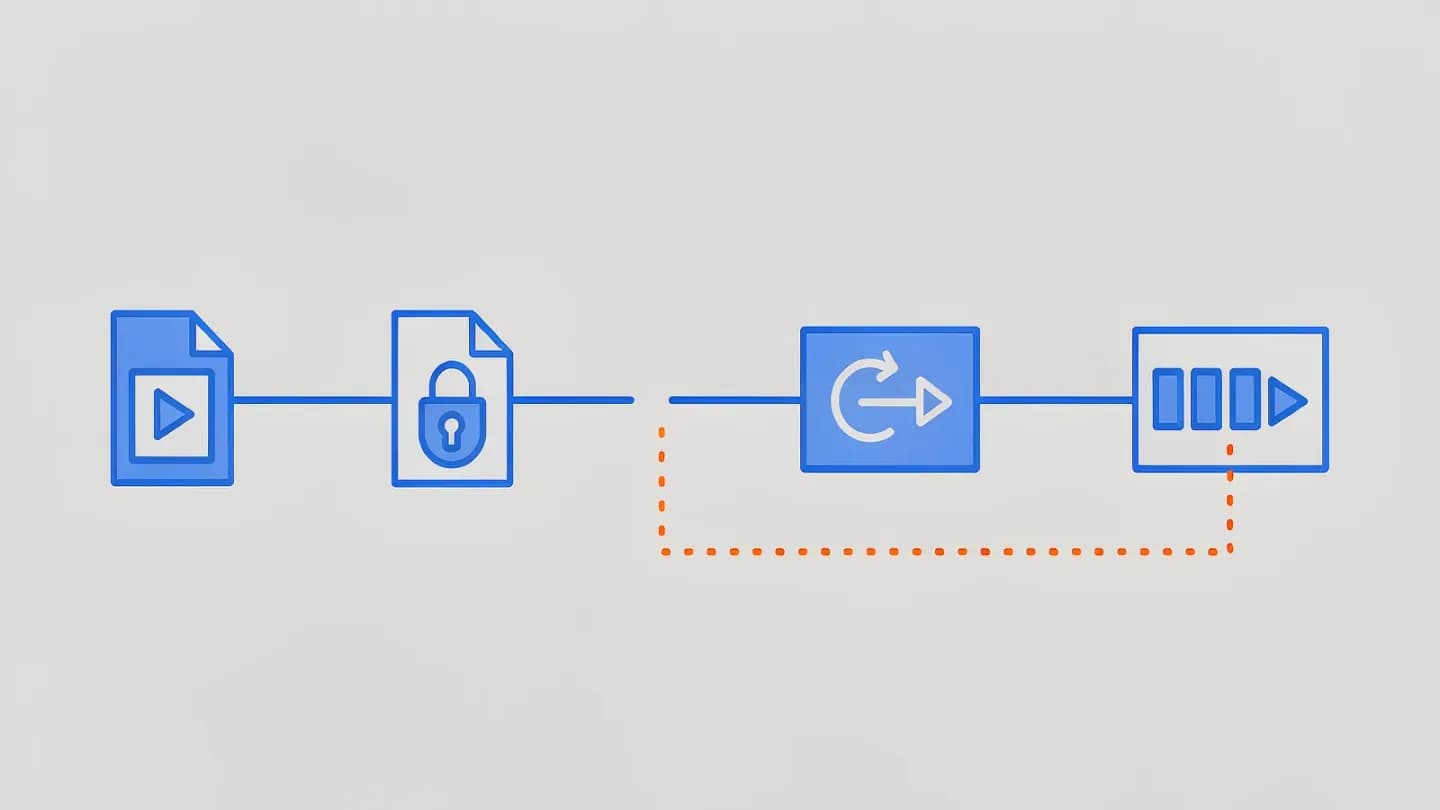
There is a compliance edge that few teams have priced in. When the creative is assembled at serve time, the asset that reaches the viewer is a render that did not exist when the file was cleared. The C2PA specification is explicit that a hard binding is a cryptographic hash identifying one asset, and that it matches no other asset - not even renditions produced from it. Re-encoding or scaling counts as a non-editorial transformation, an asset rendition, which is exactly what a serve-time composition is.
Soft bindings are the layer that survives. A fingerprint or an invisible watermark is computed from the content rather than the raw bytes, and the specification names soft binding as the mechanism for identifying derived assets and renditions. Any team shipping generated sports creative should confirm that its disclosure record and provenance data travel with the assembled render, not only with the master it came from.
The athlete in the frame is the one element that cannot be generated on the fly, which is why {{link}} matter more in live sport than in any other vertical: league, team and personality rights are the reason a trigger can restate a score but rarely re-cast a face.
Verification in this environment is improving without being solved. DoubleVerify's 2026 streaming TV insights document real gains in transparency, fraud and viewability across connected TV while noting that work remains - which matters more when the ad being verified was composed seconds before it was served.
The athlete in the frame is the one element that cannot be generated on the fly, which is why rights-cleared generative platforms matter more in live sport than in any other vertical: league, team and personality rights are the reason a trigger can restate a score but rarely re-cast a face.
The live sports video advertising brief in six lines
Strip it down and the brief is short. Name the emotional states, and cap them at three. Approve the states, not the renders. Author the vertical cut instead of deriving it. Attach a kill switch to every state. Keep the human element inside its licence. Confirm that provenance travels with the assembled render.
Then set the operating rhythm: a pre-match lock, an in-play watch with a named person holding the kill switch, and a post-match review that promotes the state which performed into next week's default library.
None of this replaces the craft of a sports spot. It sits underneath it, the way a delivery specification sits underneath an edit. But in an environment where the creative is expected to move with the game, the advantage belongs to the team whose pipeline was already built to be triggered - and whose approvals were signed before anyone knew the score.
Put the framework into production
These related pages connect the article’s planning advice to a specific commercial scope.
References
- 2026 IAB Digital Video Ad Spend & Strategy ReportIAB
US digital video ad spend will surpass $80 billion in 2026 and continues to outpace the broader ad market, while confidence in inventory quality remains a challenge and advertisers want more proof of performance from generative creative.
- Genius Sports and Equativ Bring Live Sports Moment Targeting to StackAdaptEquativ
Genius Sports' Moment Engine covers more than 400 leagues and federations; 84% of sports fans use a companion screen such as mobile during a broadcast and fans are 91% more likely to pay attention to an ad featuring a relevant live score.
- Must-CTV: Streaming's Shift From Promise to Performance (2026 DV Global Insights)DoubleVerify
DoubleVerify's 2026 streaming TV insights report details improvements in transparency, fraud and viewability across connected TV while setting out where gaps remain.
- C2PA Technical Specification 2.1Coalition for Content Provenance and Authenticity
A hard binding is a cryptographic hash that matches only one asset and no other, not even renditions produced from it, while a soft binding is computed from digital content and is the mechanism for identifying derived assets and asset renditions.