
Why AI Video Keeps Breaking Brand Consistency
AI video brand consistency means keeping products, characters, and locations identical across generated scenes, and new tools like MNTN's QuickFrame AI now make it a reusable system rather than a per-clip gamble.
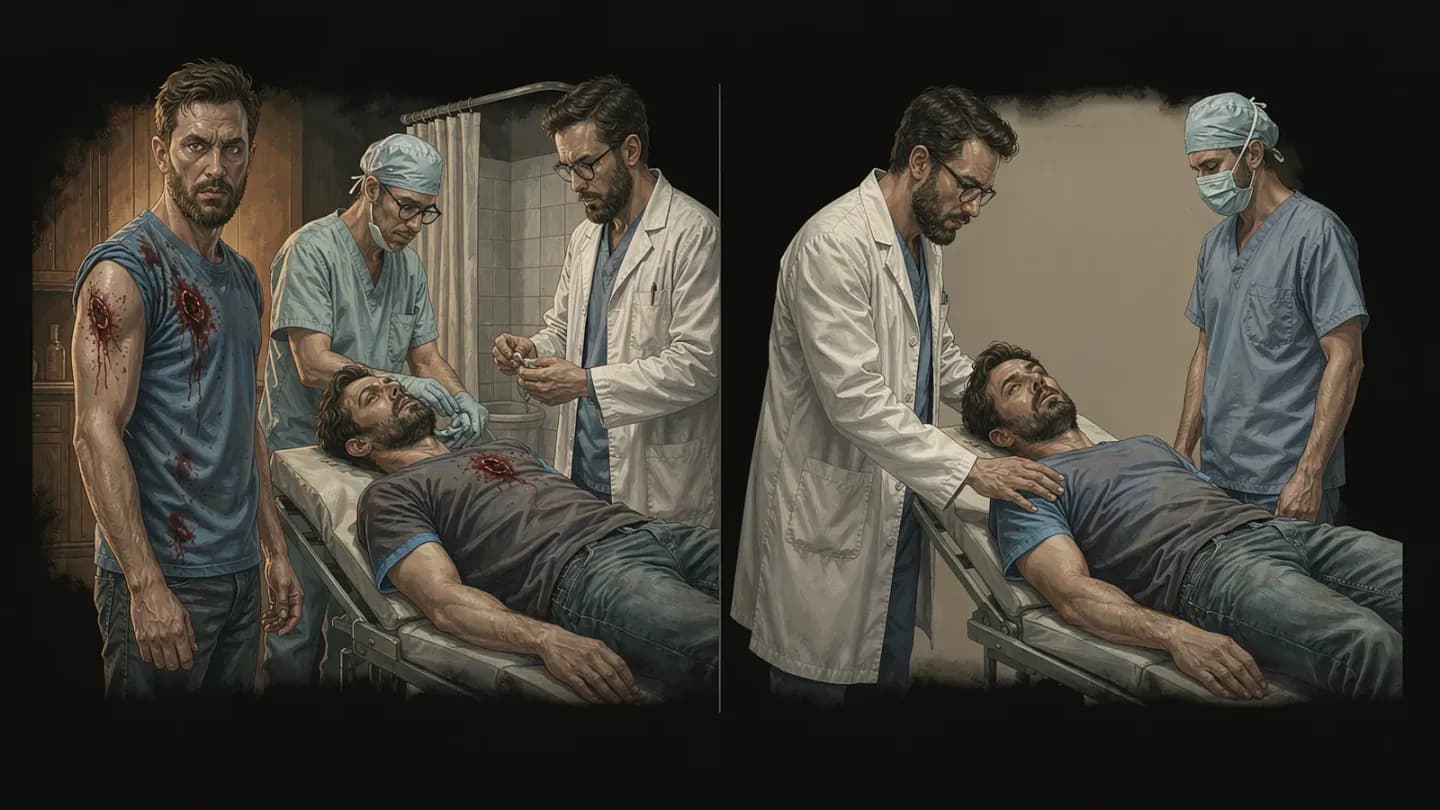
The cracks show up fast. A location subtly shifts from scene to scene. A character's shirt turns from teal to blue between cuts. A product logo looks like it is melting. These continuity quirks break immersion and signal to the audience that the video was generated by AI, which is the opposite of the polished brand impression most marketing teams are paid to protect. In a feed where viewers decide in the first second whether to keep watching, that uncanny tell is expensive.
It matters because brand equity is built on repetition. When a logo, package, or spokesperson drifts between versions, recognition and recall erode. At the scale most video programs now run, dozens of cutdowns, localized variants, and platform edits spawn from a single brief, and manual continuity checks do not scale. The inconsistencies multiply quietly until a brand's own library looks like it was made by ten different vendors. Consistency is the difference between a campaign and a coherent identity. The cost of inconsistency is not just aesthetic: a viewer who notices a flickering logo questions the rest of the message, and trust, once cracked, is the most expensive thing to rebuild.
What MNTN's QuickFrame AI 'Subjects' Actually Does
MNTN's QuickFrame AI tackles this with a feature called Subjects. Marketers create consistent products, characters, and locations from a text prompt, a visual reference, or a product URL, and the system stores them in a central, reusable library with profiles and metadata. The asset then drops into any new video without re-generation, so the second spot a team makes already inherits the exact product, cast, and setting of the first. That is the core promise: build the world once, reuse it everywhere.
QuickFrame is one example of {{link}}, where generation, reference libraries, and delivery collapse into a single system. Inside the editor, a marketer directs product placement, character movement, scene tone, and shot style the way a director would guide a cast and crew, which keeps the output on-brand without surrendering speed. Export paths push finished creative straight into MNTN, TikTok Ads Manager, Meta Ads Manager, and Google Ads Manager, so the consistent asset does not get redesigned at every channel boundary.
The bigger shift is from one-off generation to a reusable brand system. Instead of reinventing the product, cast, and setting for every campaign, the world a brand builds stays consistent across each video. When assets are systematized this way, provenance also becomes tractable: standards like C2PA's Content Credentials let creators attach metadata describing who made a clip and which tools were used, so viewers and platforms can see whether a piece of media was AI-generated or edited. Consistency and disclosure stop being separate chores and become properties of the same asset.
QuickFrame is one example of AI video suite consolidation, where generation, reference libraries, and delivery collapse into a single system.
Reference-Driven Control: The Backbone of AI Video Brand Consistency
The technique behind reusable brand assets is {{link}}, where locked reference files keep every generated frame on-model. Rather than describing a character in words each time, you hand the model a canonical image and say keep this. The reference acts as a constraint, pinning the parts of the frame that must not change while leaving motion and composition to the generator. Done well, it removes the single biggest source of variance in AI video.
Prompt-only generation treats every render as a fresh guess, which is why two attempts at the same line rarely match. Reference-driven control flips that dynamic: the model conditions on fixed assets, so a product's shape, color, and logo stay put across shots. It is the same idea behind image-to-video pipelines and character sheets, and it is fast becoming table stakes for any brand running video at volume. The teams winning on consistency are the ones treating references as first-class production assets.
There is a governance upside too. When references are explicit assets, they can be reviewed, approved, and retired like any other brand guideline. Legal and brand teams get a single place to confirm that a product is represented correctly before it ships to a hundred variants.
The technique behind reusable brand assets is reference-driven control for AI video, where locked reference files keep every generated frame on-model.
How Model Drift Undermines On-Brand Video
What looks like a random glitch is usually {{link}}, where model updates shift faces and products between renders. Even an identical prompt can return a different person or package after a backend model swap, because the generator's notion of your brand is only as stable as the weights behind it. Drift hides in plain sight: a slightly different jawline, a warmer product color, a logo with softer edges.
Drift is worse at scale because volume amplifies variance. A single hero film might be hand-tuned by a senior editor, but a program of hundreds of localized variants rarely gets that attention, so small inconsistencies compound into a visibly off-brand library. The fix is operational rather than creative: pin model versions, lock references, and version assets the way a software team versions code. Treat your brand's visual assets as a release, not a stream of one-off experiments, and drift becomes a manageable risk instead of a creeping failure.
The practical guardrail is a reference registry. Every canonical product, actor, and location gets an ID, a locked file, and an owner. New videos pull from the registry instead of prompting from memory, which is how consistency survives staff changes and tool upgrades.
What looks like a random glitch is usually model drift in AI video, where model updates shift faces and products between renders.
The Production Economics of Reusable Brand Assets
Reuse is also the fastest lever on {{link}}, because a stored asset costs nothing to drop into the next spot. The first build is the expensive one; every reuse after that is nearly free. For a brand producing weekly social cutdowns, that compounding saving is the difference between an AI video program that pays for itself and one that quietly burns budget on redundant generation.
The budget pressure is real. IAB projects U.S. digital video ad spend will surpass eighty billion dollars in 2026, growing eleven percent year over year, with two-thirds of buyers already live, testing, or planning agentic AI for video. When that much money flows into AI-generated creative, consistency failures directly waste spend: a regenerate triggered by a stray logo is a tax on every variant. A reusable asset library is how teams protect that investment, turning a per-clip cost center into a shared, amortized foundation.
Reuse also unlocks experimentation that would be too costly otherwise. Because the base assets are free to redeploy, teams can spin up ten hook variations or five localized endings without multiplying production cost, then let performance data pick the winner.
Reuse is also the fastest lever on AI video production cost, because a stored asset costs nothing to drop into the next spot.

Measuring Consistency as a Creative KPI
Teams that track asset reuse and error rate can benchmark against {{link}} from comparable brand programs, turning a vague does this feel on-brand question into a number. Useful signals include asset reuse rate, the share of videos built from locked references, and a continuity error rate measured by sampling renders for drift.
Consistency is no longer a talent problem solved by a senior editor; it is a systems problem solved by locked assets, versioned references, and measurable reuse. Tools like MNTN's QuickFrame AI make that operable for teams without a film crew, which is the point. Brand consistency at scale should be a setting, not a daily gamble, and the platforms winning the next year of AI video will be the ones that treat it as infrastructure rather than luck.
The brands pulling ahead are not the ones with the most AI video; they are the ones whose AI video looks like one brand. That coherence is engineered, not accidental, and it starts with treating consistency as a metric someone owns.
Teams that track asset reuse and error rate can benchmark against commerce AI video KPI cases from comparable brand programs, turning a vague does this feel on-brand question into a number.
Put the framework into production
These related pages connect the article’s planning advice to a specific commercial scope.
References
- QuickFrame AI Launches Subjects to Simplify Creative ConsistencyMNTN
MNTN's QuickFrame AI 'Subjects' lets marketers create consistent products, characters, and locations from a text prompt, visual reference, or product URL, stored in a central reusable library with profiles and metadata for reuse across videos.
- U.S. Digital Video Ad Spend to Surpass $80B in 2026IAB
IAB projects U.S. digital video ad spend will surpass $80 billion in 2026, growing 11% year over year and nearly 20% faster than the total ad market, with two-thirds of buyers live, testing, or planning agentic AI for video.
- C2PA | Verifying Media Content SourcesC2PA
C2PA's Content Credentials attach provenance metadata describing who created a piece of media and which tools were used, so viewers and platforms can see whether content was AI-generated or edited.