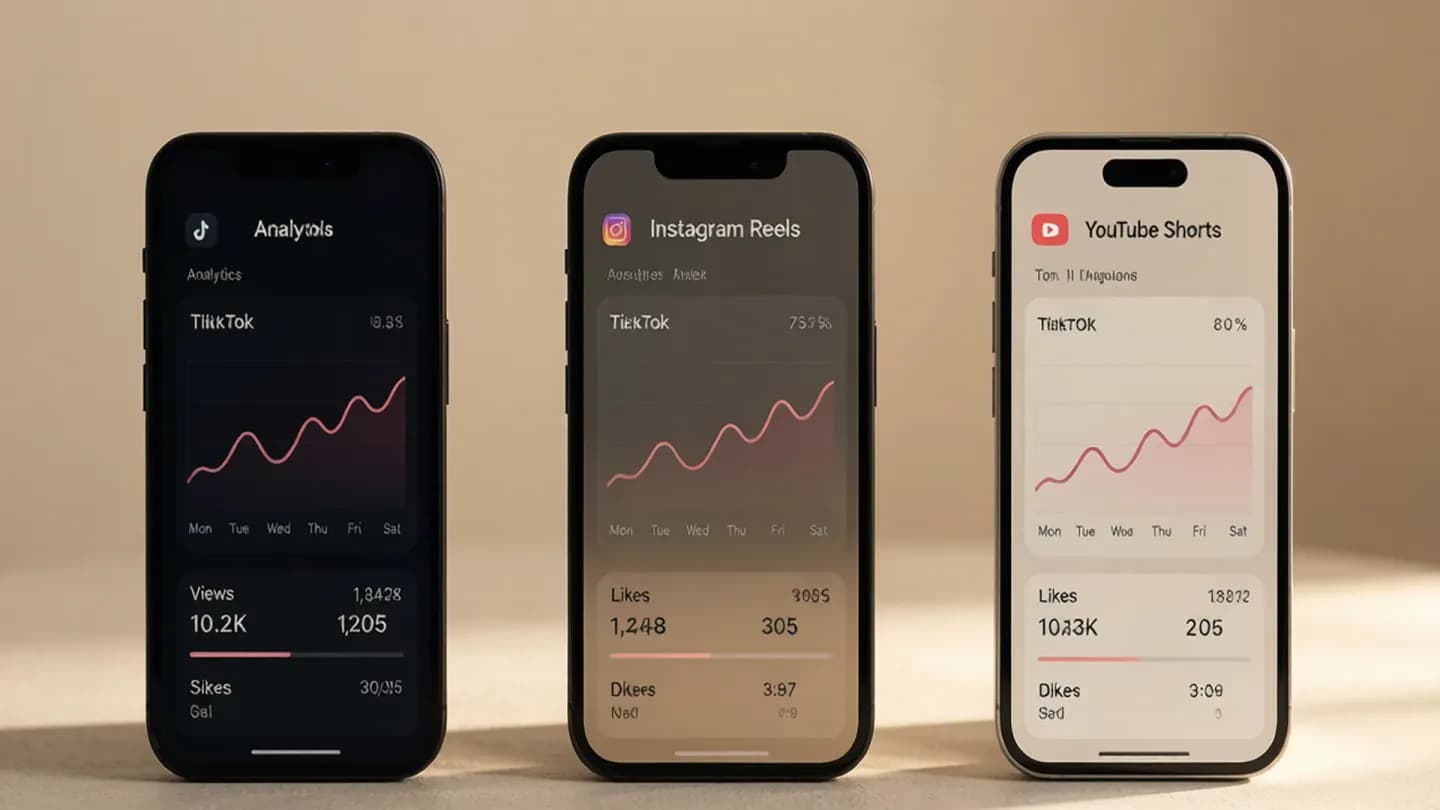
The 2026 Engagement Gap Between TikTok, Reels, and Shorts
These short-form video platform benchmarks for 2026 show that TikTok, Instagram Reels, and YouTube Shorts reward completely different actions. The mistake most teams make is treating them as one format and optimizing for a single engagement number. The fix is to pick the channel by the business outcome you need, not by which app posts the highest engagement rate.
TikTok engagement jumped 49% year over year to about 3.73% average, while YouTube Shorts sits near 0.78% and Instagram Reels around 0.48% (roughly flat). Those numbers describe discovery power, not business value. TikTok's surge comes from a search-behavior shift: users now open the app to find restaurants, product comparisons, and niche expertise instead of typing the query into a search box.
The platform averages also hide a {{link}} that should reset how teams read raw view counts. Views can climb while watch time and engagement fall, so a high view count on one platform is not the same asset-quality signal it was two years ago. Benchmark each channel against its own job, never against a cross-platform average that mixes three different algorithms.
The platform averages also hide a reach-attention inversion that should reset how teams read raw view counts.

Why Monetization Flipped the Ranking
Engagement rate is a vanity metric next to cash. YouTube Shorts creators earn roughly three to four times more per thousand views than TikTok creators ($0.05 to $0.15 versus $0.02 to $0.04), even though Shorts engagement looks weak on paper. Shorts serves ads between videos in the feed, which makes it a distinct monetization surface from long-form and from TikTok's creator-fund model.
Instagram tells the opposite story. Likes fell about 15% and comments about 16% year over year, but shares rose 12% as engagement migrated into DMs and saved folders. A Reel with 500 likes and 200 saves now outranks one with 2,000 likes and 20 saves, because the algorithm reads saves and shares as content worth revisiting. Plan Reels for community and conversion, not for a likes leaderboard.
The practical split is clear once you stop ranking platforms by a single percentage. TikTok wins attention but pays creators the least per view; Shorts pays the most per view but demands patience; Reels pays through conversion and community, not through a visible engagement score. Read the payout model before you set the KPI, because the KPI you choose silently picks the platform for you.
A useful habit is to report each platform with its own scorecard instead of a shared dashboard. TikTok: hooks, saves, and follower conversions in week one. Reels: saves, shares, and link clicks. Shorts: RPM, subscriber conversions, and 30-day view accumulation. When the scorecard matches the payout, the team stops arguing about which platform is winning and starts funding the one that matches the quarter's goal.

Short-Form Video Platform Benchmarks: Pick the Channel by Goal
The decision rule is simple. Use TikTok for discovery-driven audience building: its interest graph rewards systematic posting (about five times weekly) and pattern-tested hooks over production polish. Use Instagram Reels for community and conversion-focused funnels, where saves and shares compound reach. Use YouTube Shorts for monetization and long-term asset building, because its search-plus-recommendation hybrid gives clips a shelf life measured in weeks, not the 48 hours TikTok grants a video before reach decays.
Match the format to the job before you brief a single frame. A product-launch teaser belongs on TikTok for reach; a how-to tutorial belongs on Shorts for search discovery; a behind-the-brand story belongs on Reels for community. Teams that post the same cut everywhere leave performance on the table, because each algorithm optimizes for a different signal and penalizes content that feels out of place in its feed.
If you only have budget for one platform this quarter, let the business goal decide. A brand launching a new product with no audience should default to TikTok for cheap reach. A brand with a loyal following trying to convert should default to Reels. A brand building a searchable help library should default to Shorts. The benchmark data exists to confirm the default, not to overrule it.
Build for Sound-Off and the Shorts Shelf Life
Most social video is watched without sound, so on-screen text and burned-in captions are not optional. WCAG 2.2 requires captions on prerecorded synchronized media (Success Criterion 1.2.2), and the same logic applies to ad cuts: if the hook depends on audio, half your audience misses it on a muted feed. Design supers and captions into the brief, not as a post-export afterthought that an editor has to retrofit.
Shorts also rewards patience. A clip can sit at low views for 24 to 72 hours and then spike when a search query or a related video picks it up. That delayed ramp means Shorts content has the highest lifetime value per video for search-driven niches, so resist the urge to judge a Short by its first-day numbers the way you would a TikTok post that is already dead by hour 50.
Caption workflow matters as much as the creative. Burn-in captions survive every platform and every muting default, while sidecar subtitle files get stripped by some editors and aggregators. For ad cuts, lead with the claim in text on screen for the first three seconds, because that is the window where a muted scroller decides to stay or swipe.

YouTube Plays Two Jobs at Once
Every YouTube upload forces a {{link}} that changes how you brief, cut, and tag the same footage. A Shorts cut optimized for the Shorts feed is a different animal from the long-form version built for watch time and subscriptions. Shooting once and editing twice, vertical for Shorts and 16:9 for the main upload, captures both the discovery spike and the loyal audience the platform pays you to keep.
Treat the two outputs as separate assets with separate jobs rather than one video in two shapes. The Shorts cut earns discovery and ad-share revenue; the long-form cut earns watch time, subscriptions, and search ranking. Briefing them together from the same shoot saves production cost, but the edit, hook, and caption strategy must be tailored to each surface, or the long-form version drags down the Shorts performance and vice versa.
Every YouTube upload forces a Shorts versus long-form decision that changes how you brief, cut, and tag the same footage.
Set a Kill Cadence Before You Scale
Every winning short has a shelf life. Monitor frequency, declining click-through, and rising CPM as fatigue signals, and keep replacement creative two to three weeks ahead of what is running. A documented {{link}} is what stops a winning Short from quietly draining budget as frequency climbs. Set a kill threshold, for example pause a cut that misses a minimum CTR after a fixed spend, and enforce it without sentiment.
Tie the kill rule to {{link}} rather than likes, and the platform's algorithm rewards the right signal. Save rate and shares predict purchase intent better than view counts, so build the dashboard around qualified views (50% or higher completion) and revenue-assisted conversions. The 2026 IAB video report puts two-thirds of buyers already using GenAI for video creative, which means variant volume is now cheap; your edge is the discipline to retire losers fast, not the ability to make more.
Volume without a kill rule is how brands flood feeds with cheap synthetic cuts and erode their own equity. The 2026 buyer-side data shows the market is already saturated with GenAI assets, so the differentiator is not more variants but a tighter loop between a cut's first-week signal and the next brief. Write that loop into the workflow before the next campaign, not after the budget is spent.
A documented creative refresh cadence is what stops a winning Short from quietly draining budget as frequency climbs.
Tie the kill rule to video metrics that predict revenue rather than likes, and the platform's algorithm rewards the right signal.
Put the framework into production
These related pages connect the article’s planning advice to a specific commercial scope.
References
- Understanding Success Criterion 1.2.2: Captions (Prerecorded) - WCAG 2.2W3C Web Accessibility Initiative (WAI)
WCAG 2.2 requires captions on all prerecorded synchronized media (Success Criterion 1.2.2), establishing captions as a baseline for video consumed without sound.
- YouTube Shorts monetization policiesYouTube Help Center (Google)
YouTube Shorts serves ads between videos in the Shorts feed and pays creators from that pool, making Shorts a distinct monetization surface from long-form uploads.
- 2026 IAB Digital Video Ad Spend & Strategy Report: Business Outcomes Are Just the BeginningInteractive Advertising Bureau (IAB)
The 2026 IAB Digital Video Ad Spend Report finds nearly two-thirds of buyers now use GenAI for digital video creative, up from half in 2025, with one-third of ad assets leveraging GenAI this year.