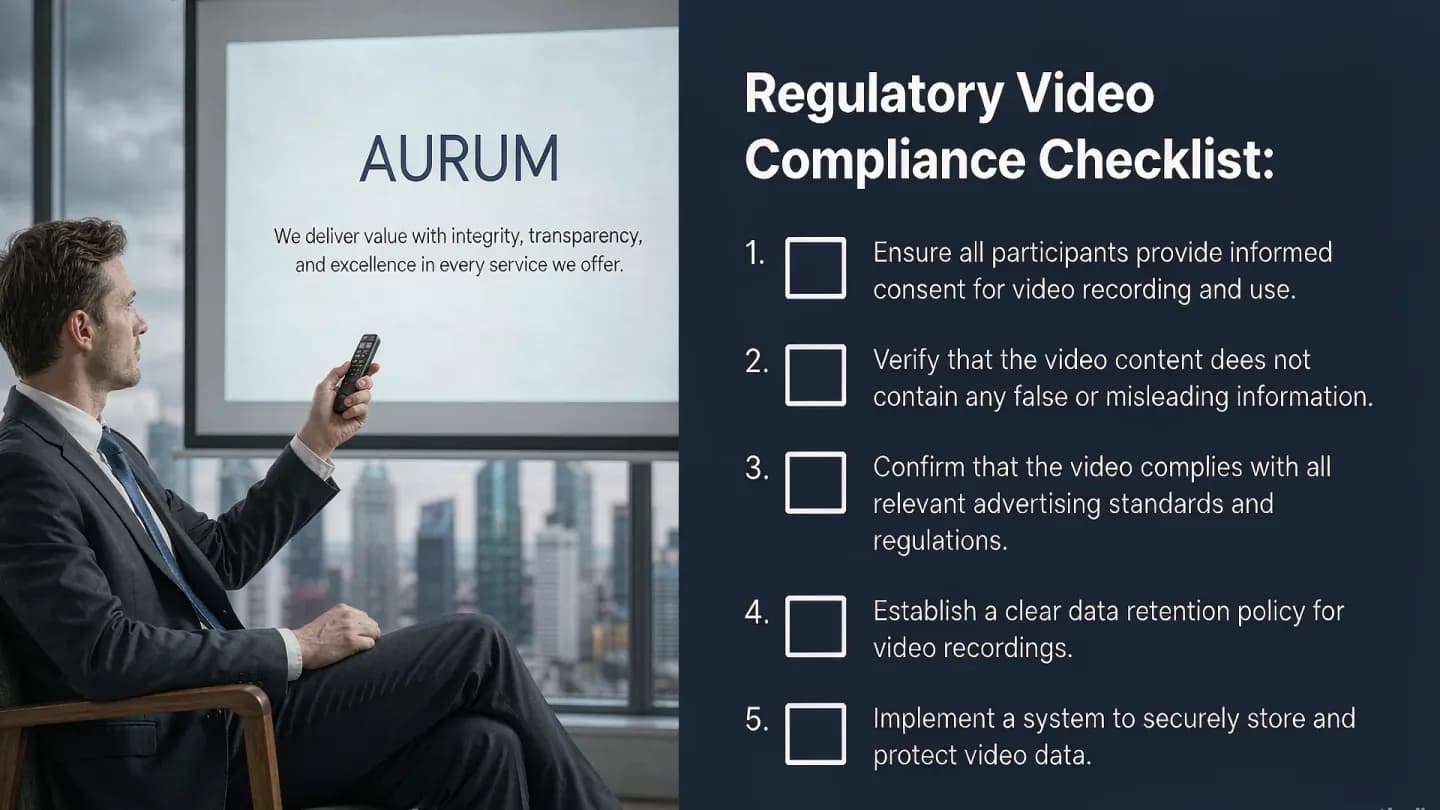
The AI video compliance gap hiding in plain sight
AI video compliance is no longer optional for finance, health, and pharma brands: a generated frame is a commercial claim that regulators can challenge like any other. This guide shows the pre-ship controls teams need—FINRA, FTC, ASA, and EU rules—to ship synthetic video without crossing a regulated line.
Most teams still treat generative output as creative production. They brief a model, generate a batch of variants, and push the best cut to paid social. In an unregulated category that workflow is fine. In a regulated one it skips the review step that separates an ad from a liability. A synthetic spokesperson who misstates a fee, a generated demo that overstates a clinical result, or an invented label on a product shot can each trigger enforcement.
What counts as a claim in a video frame? Any number, result, comparison, or endorsement the viewer could take as fact. A generated on-screen statistic, a before-and-after transformation, or a synthetic customer endorsement each carries the same weight as a written claim—and the same duty to be true.
The problem compounds because generation is fast and review is slow. A pipeline that ships fifty variants a week can outrun a legal team approving one asset at a time. The answer is not to slow generation down—it is to move the compliance check into the pipeline, with the same guardrails applied to AI frames as to filmed ones. The brands that scale AI video safely in 2026 treat compliance as a design constraint, not a final review.
The good news is that the rules are not new. Regulated industries already know how to substantiate claims and approve communications; generative video only changes the volume and speed. Teams that port their existing compliance discipline into the pipeline keep the same legal footing while gaining the output advantage that drew them to AI video in the first place.
Finance: what FINRA Rule 2210 expects from generated video
For broker-dealers and registered investment advisers, FINRA Rule 2210 sets the floor. Every communication with the public must be fair, balanced, and not misleading, and retail communications generally need principal approval before use. An AI-generated video ad is still a communication with the public, so the same approval duty applies even when no camera was rolled.
That duty touches the details generative tools invent. A synthetic host who quotes a return, an animated chart that implies a trend, or an avatar who implies a guarantee are all representations a principal must clear. The model has no memory of your compliance calendar, so the burden stays on the team to confirm every depicted number and claim before the clip ships.
Keep the approval workflow intact. Route generated finance creative through the same principal sign-off as a filmed spot, and record the sign-off against the asset. Generation speed is not a reason to skip the step regulators already require, and a generated clip with no recorded approval is harder to defend than a filmed one with a full file.

Health and pharma: a synthetic demo is still a regulated claim
Health and pharma brands face the strictest claim environment of all. A generated video that shows a medication easing a symptom, a device delivering a result, or a supplement transforming appearance is making a claim—and under the FTC Act and the EU Unfair Commercial Practices Directive that claim must be substantiated before it runs. The FDA oversees prescription promotion in the US, but the underlying duty to tell the truth about what a product does not change because the footage was synthesized.
Generative tools make unsubstantiated depictions cheap to produce, which raises the temptation and the risk together. A clip that implies a benefit the clinical file does not support is the kind of gap enforcement teams look for first. The control is the same one traditional production uses: lock the claim to the evidence before the frame is generated, not after.
Fair balance still applies. Health creative must present benefits and material risks together, and a polished synthetic scene can hide the risk information a filmed ad would show. Build the risk disclosure into the brief so the model cannot silently drop it, and treat the prompt as a claim brief: if a benefit cannot be tied to a study or an approved indication, it should not appear in the scene.

The substantiation rule that travels across jurisdictions
Strip away the jurisdiction names and one rule is constant: hold reliable evidence for every objective claim before the ad publishes. The FTC applies this to US advertisers, the UK ASA requires marketers to hold documentary evidence for each claim under the CAP Code, and the EU bans misleading commercial practices that a consumer could not verify. AI changes the speed of production; it does not change the duty to substantiate.
For creator-style and social formats the same standard applies. A synthetic testimonial, an AI UGC clip, or a generated before-and-after is still an assertion a regulator can test against your files. For creator-style formats, a performance playbook keeps AI UGC within the same claim rules. {{link}}
The cost of getting this wrong is not theoretical. A single unsubstantiated claim in a high-reach campaign can draw an inquiry across multiple jurisdictions at once, because the same clip runs everywhere. One evidence file per claim is cheaper than one investigation per market, so the practical takeaway is to build one evidence checklist and attach it to every asset, generated or filmed.
For creator-style formats, a performance playbook keeps AI UGC within the same claim rules. UGC ad performance playbook
A pre-ship compliance gate for AI video
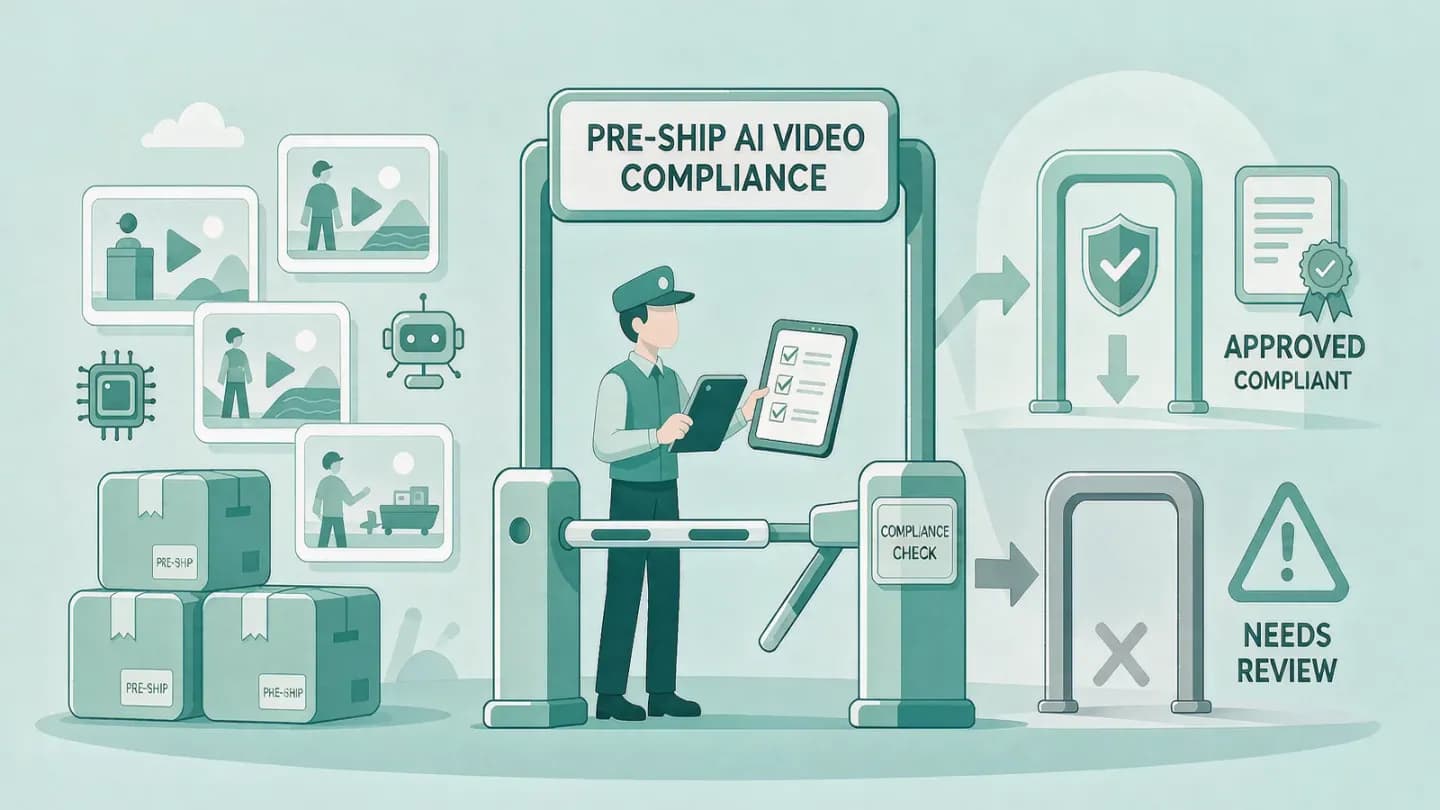
Operationalizing the above means adding a compliance gate to the production pipeline, not bolting it on after a crisis. The gate should run before any regulated clip is published and should cover the claims the frame makes, the disclosures it carries, and the accessibility of what it shows.
A four-checkpoint review catches provenance, disclosure, aesthetic, and accessibility gaps before a regulated clip ships. {{link}} Provenance confirms how the asset was made, disclosure flags synthetic content where rules require it, aesthetic checks the depicted claim against the brief, and accessibility confirms captions and audio description are in place.
Provenance helps here too. Recording how an asset was generated with C2PA metadata gives reviewers a fast way to confirm what is real and what is synthetic, which shortens the gate without weakening it. Keep the gate lightweight so it survives volume: automated pre-checks for claims and disclosures, then a single fast human sign-off for net-new concepts, lets a team ship dozens of compliant variants a week without a bottleneck.
A four-checkpoint review catches provenance, disclosure, aesthetic, and accessibility gaps before a regulated clip ships. AI video trust-QC gate
Build a governed library brands can reuse
The most efficient compliance program is one you do not have to repeat. By clearing a set of assets once and reusing them, teams shrink the review surface for every later campaign. Defining products, characters, and claims once lets teams compose new cuts without re-clearing approved assets. {{link}}
Templates extend the same idea to whole campaigns. Template engines turn a single brand brief into a merchant-ready library of on-brand variants. {{link}} Each variant inherits the pre-cleared claim set, so a new cut is a recombination of approved parts rather than a fresh compliance question.
Ownership matters as much as tooling. Assign a named owner for the claim set and the gate, so the compliance decision is a person's call and not a default setting nobody reviews. Start small: clear one hero claim and one product shot, then let every later variant inherit them. The library grows as a by-product of shipping, and the review load stays flat while output climbs.
Defining products, characters, and claims once lets teams compose new cuts without re-clearing approved assets. reusable brand blocks
Template engines turn a single brand brief into a merchant-ready library of on-brand variants. AI video co-creation templates
Put the framework into production
These related pages connect the article’s planning advice to a specific commercial scope.
References
- FINRA Rule 2210: Communications with the PublicFINRA
FINRA Rule 2210 requires that every communication with the public be fair, balanced, and not misleading, and that retail communications be approved by a principal before use—a bar that applies to AI-generated video ads run by broker-dealers.
- FTC: Advertising and MarketingFederal Trade Commission
The FTC holds advertisers to a substantiation standard: objective claims about a product must be supported by reliable evidence before publication, and this duty applies equally to depictions generated by AI.
- ASA and CAP regulation of advertisingAdvertising Standards Authority (UK)
The UK ASA enforces the CAP Code, under which marketers must hold documentary evidence for every claim and AI-generated ads are subject to the same truthfulness and substantiation rules as traditional creative.
- Consumer protection law — Unfair Commercial Practices DirectiveEuropean Commission
The EU Unfair Commercial Practices Directive bans misleading commercial practices, including claims a consumer could not verify, which extends to assertions depicted in AI-generated video across EU markets.