
Why AI UGC ads are suddenly a performance conversation
Do AI UGC ads actually work? In 2026 the answer is yes for well-built creative: studies now put AI-generated user-generated-content ads at click-through parity with human-created UGC, and a repeatable production playbook lets lean teams scale authentic-style creative without booking a creator for every shoot.
The shift is not about quality catching up in the abstract. It is about volume. A single human creator video can cost two hundred to five hundred dollars and take a week; the same budget in generative video can produce dozens of test variations the same day. That economic step-change is what moved AI UGC from novelty to a performance lever that paid-social teams actually test and iterate on. For commerce teams that live or die on creative volume, the math rewrites the weekly plan: instead of three assets from one shoot, you can field thirty cheap hypotheses and let the auction pick the winner.
But parity is not a free pass. The same research that shows AI matching human creative also shows the result depends almost entirely on whether the ad reads as a real person talking, not on how expensive the pipeline was. The rest of this guide is the playbook for getting there without tripping the disclosure rules that now apply to synthetic spokespeople.
What the 2026 performance data actually shows
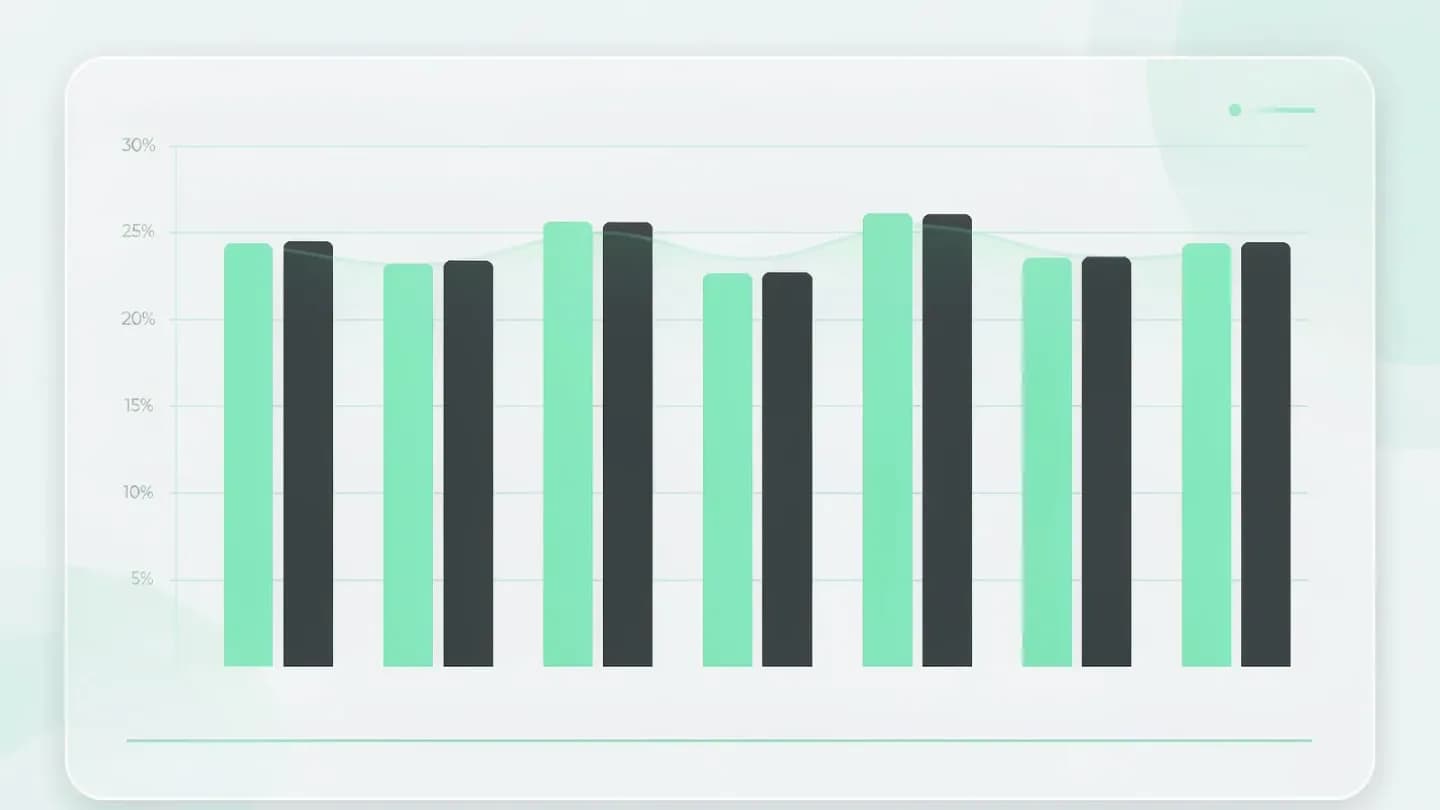
The clearest 2026 finding comes from a study built with researchers at Columbia, Harvard, the Technical University of Munich, and Carnegie Mellon, using Taboola data across hundreds of thousands of ads and more than three million clicks. After statistical controls, AI-generated ads matched human-made creative on click-through rate, and in the raw numbers AI edged human at 0.76 percent versus 0.65 percent. The point is not that AI is magically better; it is that well-made AI creative is no longer the weak link it was two years ago.
On the UGC format specifically, published benchmarks put well-structured UGC at 0.9 to 1.8 percent link CTR on Facebook, 1.0 to 2.5 percent on TikTok, and 0.8 to 1.5 percent on Instagram feed, with ecommerce conversion rates of 1.5 to 4 percent on Facebook. UGC-style creative also tends to beat polished studio ads by 20 to 50 percent on CTR in the same campaign, largely because a real-looking person mid-sentence stops the scroll where a brand intro does not. Platforms such as TikTok and Instagram also favour native-feeling content in their ranking, so UGC-style cuts often earn better distribution and lower CPMs than produced advertising. Hold rate tells the same story from the viewer side: well-structured fifteen-second UGC holds 60 to 80 percent completion, and the drop right after the hook is where most AI cuts lose the sale, so the script body has to earn the second half of the watch.
The authenticity test: making AI UGC read as real
The single biggest determinant of whether an AI UGC ad converts is whether viewers can tell it is AI. The Taboola-backed study found that ads which did not 'look like AI' posted the highest engagement of all groups, beating both human-made ads and AI ads that read as artificial. A large, clear human face was one of the most important trust signals in the data.
That puts two production details in charge of the outcome. The first is delivery: scripts must sound like a person talking, with contractions and short sentences, not a voiceover reading ad copy. The second is the visual tell viewers notice before anything else.
Lip-sync is the tell viewers notice first, and {{link}} explains why a rough sync still fails the scroll test on most generative clips.
When the mouth and audio drift, the brain flags the ad as fake in under a second, and the scroll wins. Picking an engine and a workflow that hold lip-sync tight is the difference between a converting AI UGC ad and a wasted test budget, so the lip-sync check belongs in your pre-launch QA, not your post-mortem.
Lip-sync is the tell viewers notice first, and AI video lip-sync accuracy explains why a rough sync still fails the scroll test on most generative clips.

Pick the right engine and lock the persona
Persona realism starts with the model. Talking-head quality varies sharply between engines: some hold a stable face and natural micro-expression across a fifteen-second spot, others drift into the uncanny within a few seconds, which is why the engine choice should be a deliberate test rather than a default setting.
Start with a model comparison — {{link}} ranks Sora 2, Veo 3.1, and Kling 3.0 on the talking-head realism that makes a synthetic spokesperson believable.
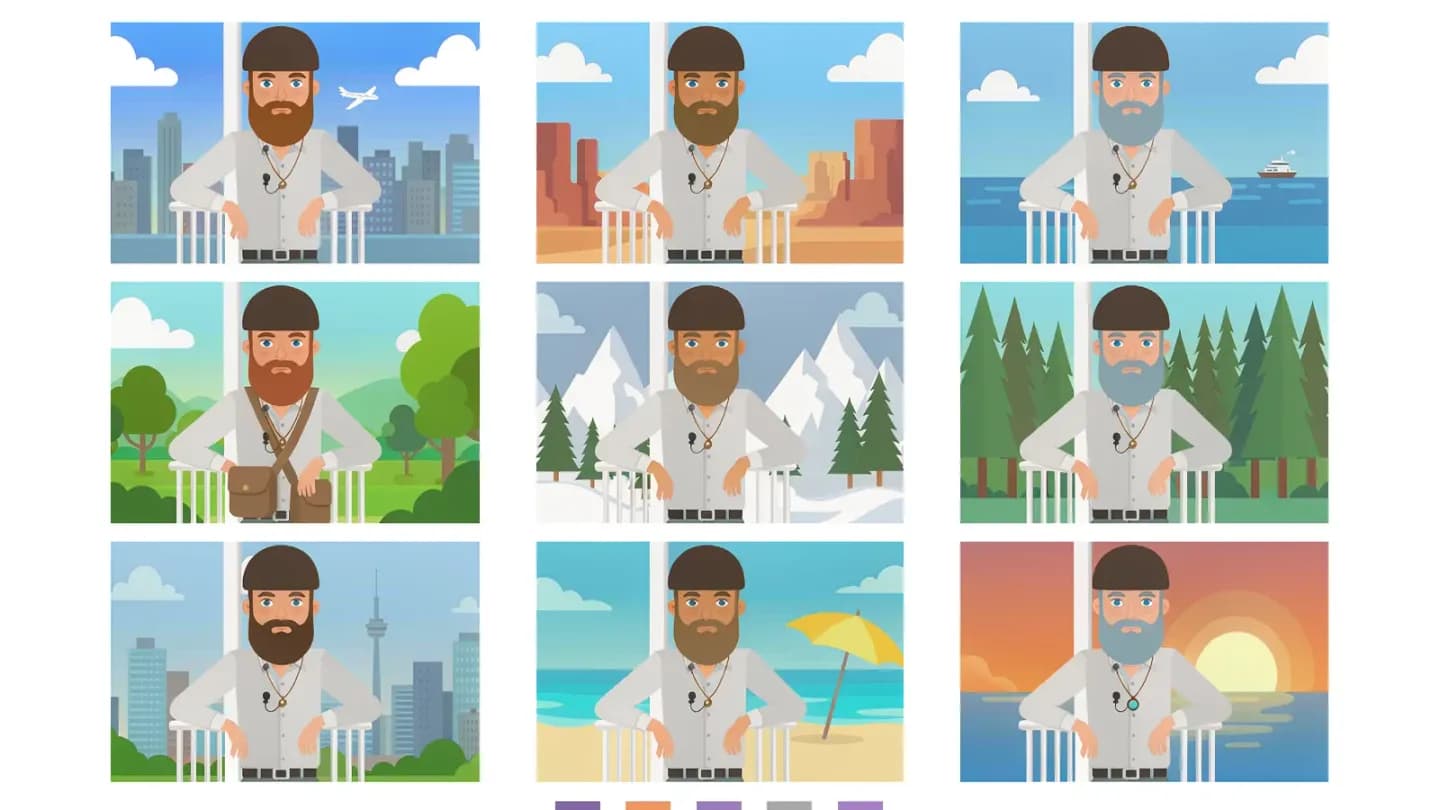
Once an engine is chosen, the harder problem is consistency. A UGC testing loop spins up dozens of variants of the same actor across hooks, outfits, and settings, and every variant must look like the same person. Without a reference-first workflow, faces subtly change between cuts and the campaign reads as a cast of strangers instead of one trusted presenter.
Once you choose an engine, {{link}} keeps the same actor's face, wardrobe, and voice stable across dozens of variants.
Start with a model comparison — the 2026 text-to-video model comparison ranks Sora 2, Veo 3.1, and Kling 3.0 on the talking-head realism that makes a synthetic spokesperson believable.
Once you choose an engine, a reference-first character consistency workflow keeps the same actor's face, wardrobe, and voice stable across dozens of variants.
Build the variant library: a testing loop that finds winners
Volume is the whole point. You are not producing one hero film; you are producing a library of cheap candidates so the algorithm can tell you which one works. A practical loop: pick one product and one promise, write one solid hook-problem-solution-proof-CTA script, then spin five to ten variations of the hook, actor, and opening visual. This is also where captioning matters, since most social video is watched without sound. Refresh discipline matters too: because AI makes variants nearly free, the smart move is to keep feeding the account two or three new cuts a week so frequency stays low and the winning angle never burns out.
Launch them into a clean test campaign with enough budget per variation to read CTR, hold rate, and cost per result rather than raw views. Kill losers fast, scale the winners, then iterate on the winning angle with new variations. This is where generative speed becomes an unfair advantage over a traditional creator pipeline that needs days per asset.
Treat the test phase as a structured winner-rate exercise — {{link}} shows how to read CTR, hold rate, and cost per result to promote the few cuts that actually scale.
Treat the test phase as a structured winner-rate exercise — a structured winner-rate framework shows how to read CTR, hold rate, and cost per result to promote the few cuts that actually scale.
Disclose synthetic performers before you ship
A synthetic spokesperson is still a person-shaped claim, and the rules have caught up. In the EU, AI Act Article 50 requires providers of systems that generate synthetic video to mark outputs in a machine-readable format and detectable as artificially generated, and deployers of deepfake-style content must disclose that it was artificially generated. That obligation reaches paid creative, not just deepfakes.
Provenance tagging backs this up at the file level. The IPTC digitalSourceType vocabulary defines trainedAlgorithmicMedia as media created algorithmically by an AI model, giving platforms and ad reviewers a standard field to read. Pair it with the platform disclosure fields that now exist for synthetic performers so the label travels with the asset.
On ad platforms, Amazon Ads already requires a disclosure field when creative includes a synthetic performer, a generated or simulated person, so an AI UGC spokesperson must be flagged rather than passed off as a real customer. The safe pattern is to use AI actors as brand presenters, never as fake testimonials, which also keeps you clear of deceptive-endorsement guidance.
Disclosure is not a tax on performance. It is a guardrail: the brands that scale AI UGC without it are the ones that get pulled for misleading format, while the ones that label clearly keep the trust that makes the format convert in the first place.
If you want a week-one version: day one, write one hook-problem-solution-proof-CTA script and pick an engine from the model comparison; day two, generate eight hook and actor variations; day three, launch a clean test with even budget; day four, read CTR and hold rate and kill the bottom half; day five, scale the winner and tag it as synthetic. That loop is the entire playbook.
Put the framework into production
These related pages connect the article’s planning advice to a specific commercial scope.
References
- EU AI Act Article 50 - Transparency ObligationsEU Artificial Intelligence Act
Providers of AI systems generating synthetic video must mark outputs in a machine-readable format detectable as artificially generated (Art. 50(2)); deployers of deepfake-style content must disclose it was artificially generated (Art. 50(4)).
- IPTC Digital Source TypeIPTC
The IPTC digitalSourceType vocabulary defines trainedAlgorithmicMedia as media created algorithmically by an AI model, the file-level provenance tag for synthetic creative.
- Amazon Ads help - synthetic performer disclosureAmazon Ads
Amazon Ads requires a disclosure field when ad creative includes a synthetic performer, a generated or simulated person, so AI UGC spokespeople must be flagged rather than presented as real customers.
- Do AI UGC Ads Convert? Data + Examples (2026)VideoAI.ME
A 2026 study using Taboola data across 3M+ clicks (researchers from Columbia, Harvard, TUM, CMU) found AI-generated ads matched human-made creative on CTR after controls; raw 0.76% vs 0.65% CTR, and ads that did not look like AI posted the highest engagement.