
The Brief: A Beagle, a Sofa, and a Studio That Wouldn't Allow Animals
Castlery's 100% AI-generated 'Comfurtable' campaign proves a premium AI-generated brand campaign can match live-action quality while cutting production cost 60% and beating watch-time benchmarks by 23%. Built with Google's Veo3, Gemini 3, Imagen 4, and Nano Banana Pro, it shows what fully synthetic brand video looks like when product fidelity is the priority rather than an afterthought.
Castlery is a design-led global furniture brand selling in Australia, the UK, the US, Singapore, and Canada. The brief for 'Comfurtable' was a charming canine moment that also demonstrated the durability of premium furniture for pet-loving households. The wrinkle: the production studio's rules did not permit animals on set. Training a dog, building a pet-safe set, and reshooting for the right take would have been slow and expensive under a conventional workflow.
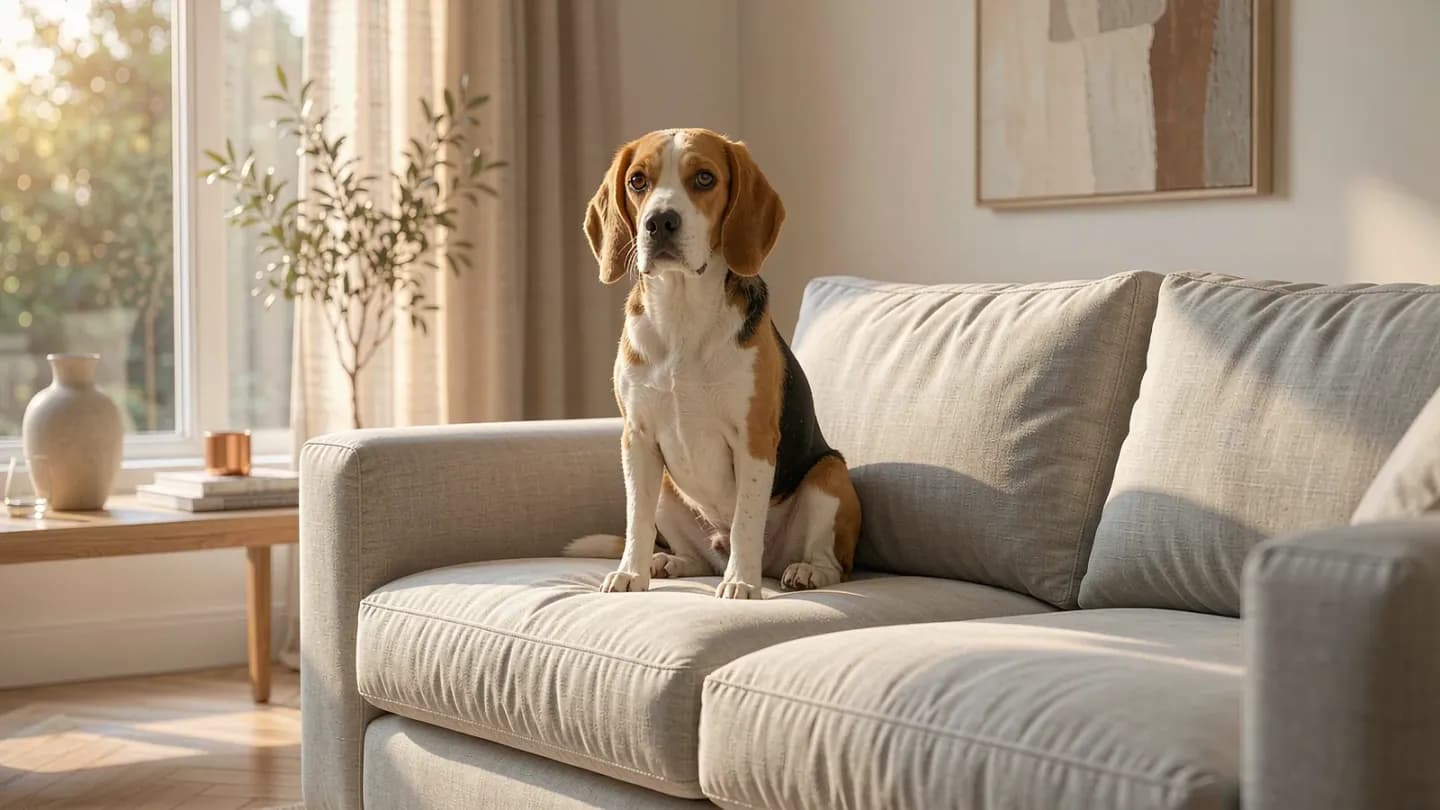
So Google and Castlery's agency team, led by AI video producer Yohan Wadia, rebuilt the entire spot with generative models. No dog was filmed; the beagle was generated. The furniture, rooms, and lighting were constructed from reference assets of real Castlery pieces. The result is a single polished film that would have been impractical to shoot conventionally, and a clean test case for what an AI-first production model can deliver for a design-led brand.
The 'Comfurtable' name is a pun on creature comforts, and the campaign leaned into it: the film sells the feeling of a pet-friendly home as much as the furniture itself, which is exactly the kind of emotional brief that is hard to hand to a model without a clear reference to keep it honest.
The Stack: Veo3, Gemini 3, Imagen 4, and Nano Banana Pro
Four Google models did the work. Gemini 3 handled script and narrative logic. Imagen 4 produced product stills and environment concept art. Veo3 generated the motion, working from both text and image prompts. And Nano Banana Pro, newly introduced at the time, handled character and texture consistency.
The division of labor matters. Veo3 is strong at photorealistic movement but, on its own, can drift: a dog's fur, a sofa's weave, or the bounce of water on fabric can shift from frame to frame. Nano Banana Pro was used to 'lock' the visual identity of the dog and the furniture textures, then feed that locked reference back into Veo3 so each shot stayed on-model. Locking a character's look across models is exactly what {{link}} is built to handle.
The takeaway for brand teams is that the bottleneck is no longer 'can AI make a video' but 'can it stay consistent with your brand assets.' The model stack is the tool; the reference discipline is the skill. Castlery's team treated the furniture and the animal as fixed references, not loose suggestions, and that discipline is what separates a usable brand film from a pretty but unreliable demo.
For brand managers, the practical lesson is to brief the consistency step explicitly. Most failed AI brand tests stumble not on generation quality but on drift between shots; naming the locked reference up front keeps the output on-brand and saves the iterations that would otherwise be wasted on off-model frames.
Locking a character's look across models is exactly what prompt engineering for visual consistency is built to handle.

The Hardest Problem in AI Video: One Dog, Every Frame
Character consistency has been the historic weakness of AI video. Early outputs looked great for a second, then the talent's face, build, or wardrobe morphed. For a furniture brand, inconsistency is fatal: if the sofa changes between cuts, the product story collapses and the viewer loses trust in what they are being sold.
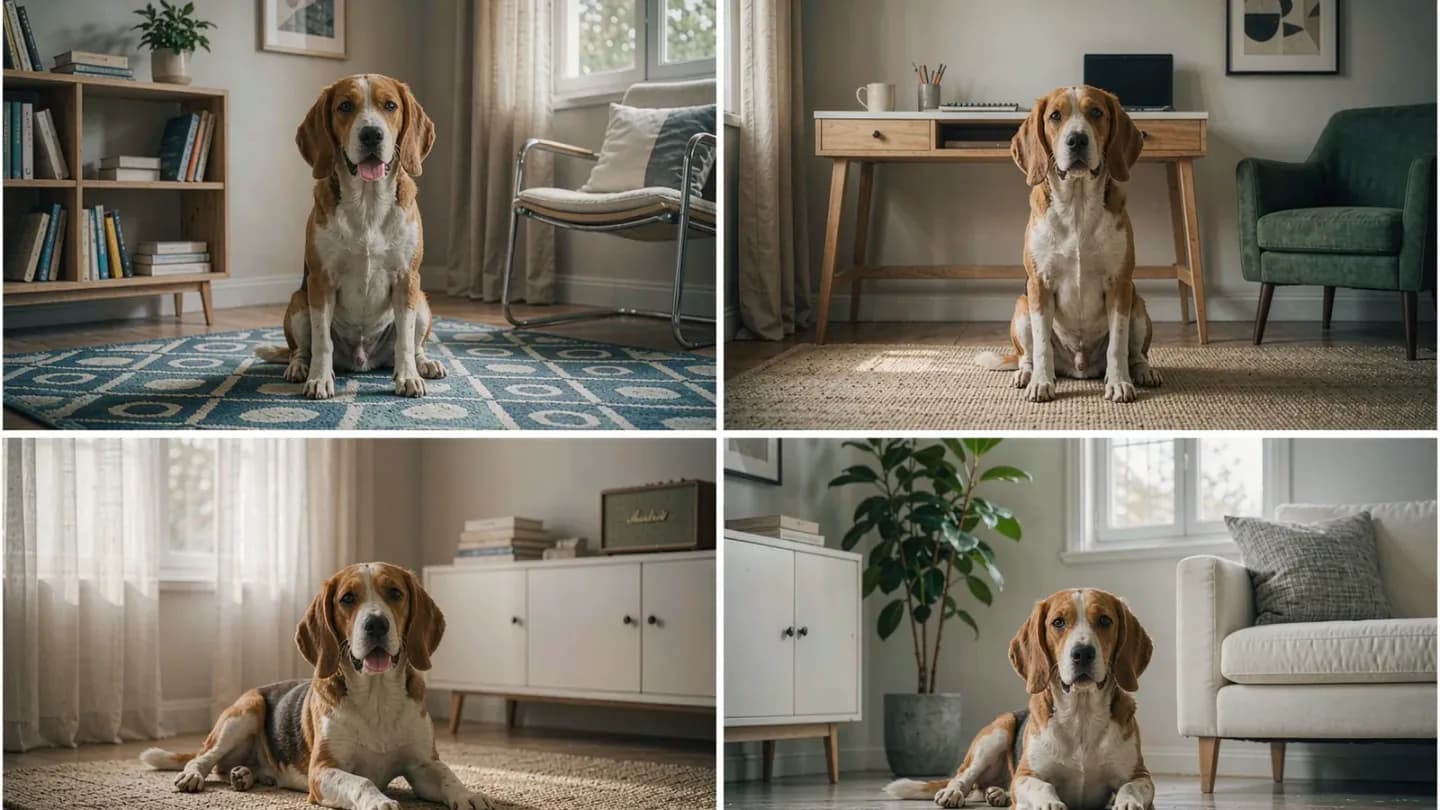
Castlery's team treated the dog and the sofa as locked references. Nano Banana Pro held the beagle's appearance and the fabric's weave across dozens of Veo3 shots, so the 'talent' looked the same in every frame. Google's Ken Attard told Little Black Book the film achieved 'characters looking the same the whole way through'—the bar a live-action shoot clears by default but generative video usually misses.
Keeping a photorealistic dog and a specific sofa fabric identical across every shot is the same challenge solved by {{link}}. The difference in 'Comfurtable' is that Castlery shipped it at brand quality, not as a stylized vignette where you could hide drift by showing the back of a head. That is the milestone worth noting: consistency became a production control, not a hope.
It is worth separating two kinds of consistency: visual, the dog and sofa looking the same, and behavioral, the pet moving plausibly within the scene. 'Comfurtable' held both, which is why the result reads as a real spot rather than a sequence of pretty but disconnected frames stitched together after the fact.
Keeping a photorealistic dog and a specific sofa fabric identical across every shot is the same challenge solved by reference-driven control for AI video.
60% Cheaper, 23% More Watch Time
The numbers are the part brand leaders actually study. Castlery budgeted for a traditional shoot and found the AI-first route came in 60% cheaper than a live-action production. That saving funded more versions and more markets, rather than producing a smaller campaign.
Effectiveness held up too. Castlery's marketing VP Leah Howatson said the AI creative outperformed industry benchmarks by 23% in watch-time performance, citing YouTube Data 2025, and Google cited a 72% view-through rate on YouTube. A 60% drop in production cost lines up with broader {{link}} reported across brand teams this year.
Cost and quality moving in the same direction is rare in production, where you usually trade one for the other. Here, removing on-set constraints—animal wrangling, locations, reshoots—cut cost, while iteration, retaking a 'take' by regenerating a frame, improved the result. The campaign also scaled premium storytelling consistently across five markets from one generated master.
The 60% figure is specific to replacing a live-action shoot with a generated equivalent, not to all production. Teams should read it as evidence that high-end brand films are now in scope for AI-first budgets, while routine shoots may still favor traditional methods for speed or pure familiarity.
A 60% drop in production cost lines up with broader 2026 AI video production cost benchmarks reported across brand teams this year.
Iterative, Not Linear, and Humans Stay in the Loop
Attard's framing is the useful one: 'a shift from linear production to iterative creation.' On a set, you capture what happens and live with it. In this pipeline, the team directed the 'talent' frame by frame, regenerating until the narrative was exactly right, unbounded by what was captured on the day.
That does not mean humans left. Castlery is explicit that the campaign was not meant to remove content producers; it extends them. The script, the brief, the art direction, and the call on 'is this on-brand' all stayed human. Castlery's team insists the point of the work was to extend, not replace, creative talent, which is the practical case for {{link}}.
The operating model that emerges is a small AI-video unit, a producer, an artist, and a client partner, that prototypes in hours and ships in days, with humans owning taste and the model owning repetition. This is where most brand teams will actually land in 2026: not fully automated, not stubbornly analog, but a tighter creative loop with people deciding what is good.
Castlery also paired the generated hero film with real creator content showing actual pets on its furniture at home. That mix matters: synthetic hero creative sets the brand world, while authentic customer footage supplies the trust that audiences still grant to real people and, in this case, real animals on real sofas.
Castlery's team insists the point of the work was to extend, not replace, creative talent, which is the practical case for human-in-the-loop AI video.
What 'Comfurtable' Teaches About an AI-Generated Brand Campaign
Five lessons travel beyond furniture. First, pick a brief where AI's weaknesses, consistency and product fidelity, are managed by locked references rather than hoped away. Second, treat the model stack as one connected system, not four separate toys you prompt in isolation.
Third, measure the right thing: Castlery tracked watch time and cost, not just 'did it look cool.' Fourth, keep a human on brand judgment, because audiences and buyers still read AI-made work for authenticity. Fifth, pair synthetic hero creative with real customer content; Castlery complemented the film with creators showing their own pets on Castlery furniture at home, which keeps the campaign honest.
The bigger takeaway is that brand video is shifting from a linear shoot to {{link}}. 'Comfurtable' is one of the clearest proofs that the shift can hold premium quality while lowering cost, and that the brands moving first are the ones defining the next creative benchmark for AI-generated brand campaigns.
None of this requires a Google partnership to start. The accessible version is a locked product reference, one consistent model path, and a human reviewer who owns the brand call, the same shape 'Comfurtable' used at far larger scale with a global furniture brand and five live markets.
The bigger takeaway is that brand video is shifting from a linear shoot to AI-native creative pipeline.
Put the framework into production
These related pages connect the article’s planning advice to a specific commercial scope.
References
- Castlery & Google Deliver AI-First 'Comfurtable' CampaignB&T
Castlery partnered with Google on 'Comfurtable', a 100% AI-generated campaign built with Veo3, Gemini 3, Imagen 4, and Nano Banana Pro; it came in 60% cheaper than a traditional live-action shoot and beat industry watch-time benchmarks by 23% across five markets.
- Castlery Ad Starring Beagle Was Entirely Made With Google's Latest GenAI ToolsLittle Black Book (LBBonline)
Google's Ken Attard tells LBB the project was 60% cheaper than a live-action shoot and that Nano Banana Pro enabled 'characters looking the same the whole way through'; he stresses the creative brief and human direction remained essential.
- C2PA Content Credentials: Provenance for AI-Generated MediaCoalition for Content Provenance and Authenticity (C2PA)
C2PA's Content Credentials attach provenance metadata to AI-generated images and video so viewers can verify how a creative was made, the disclosure posture brands adopting synthetic hero creative should adopt alongside it.