
The TVC production bottleneck brands keep hitting
AI TVC production has never been limited by imagination. The real constraint has always been the distance between a brand brief and a finished, on-air film. A single TVC moves through scripting, storyboarding, casting or product shoots, editing, color, and a chain of approvals that can stretch across weeks and several vendors. Each handoff is a place where meaning leaks and schedules slip.
Long before any canvas tool arrived, the bottleneck in commercial production was throughput, the exact gap the cost per usable clip metric {{link}} was designed to measure.
Agencies and in-house studios both felt it. Every revision meant re-booking stages, re-aligning editors, and re-exporting masters. The economics punished iteration, so teams shipped fewer cuts and tested less than they wanted to, trading exploration for predictability.
The cost shows up in two ways. Fixed production spend scales with every reshoot, and opportunity cost scales with every week a campaign waits. When a cultural moment moves in days, a month-long production cycle means the spot arrives after the moment has passed. That mismatch is why so many commercial teams talk about speed but still ship on legacy timelines.
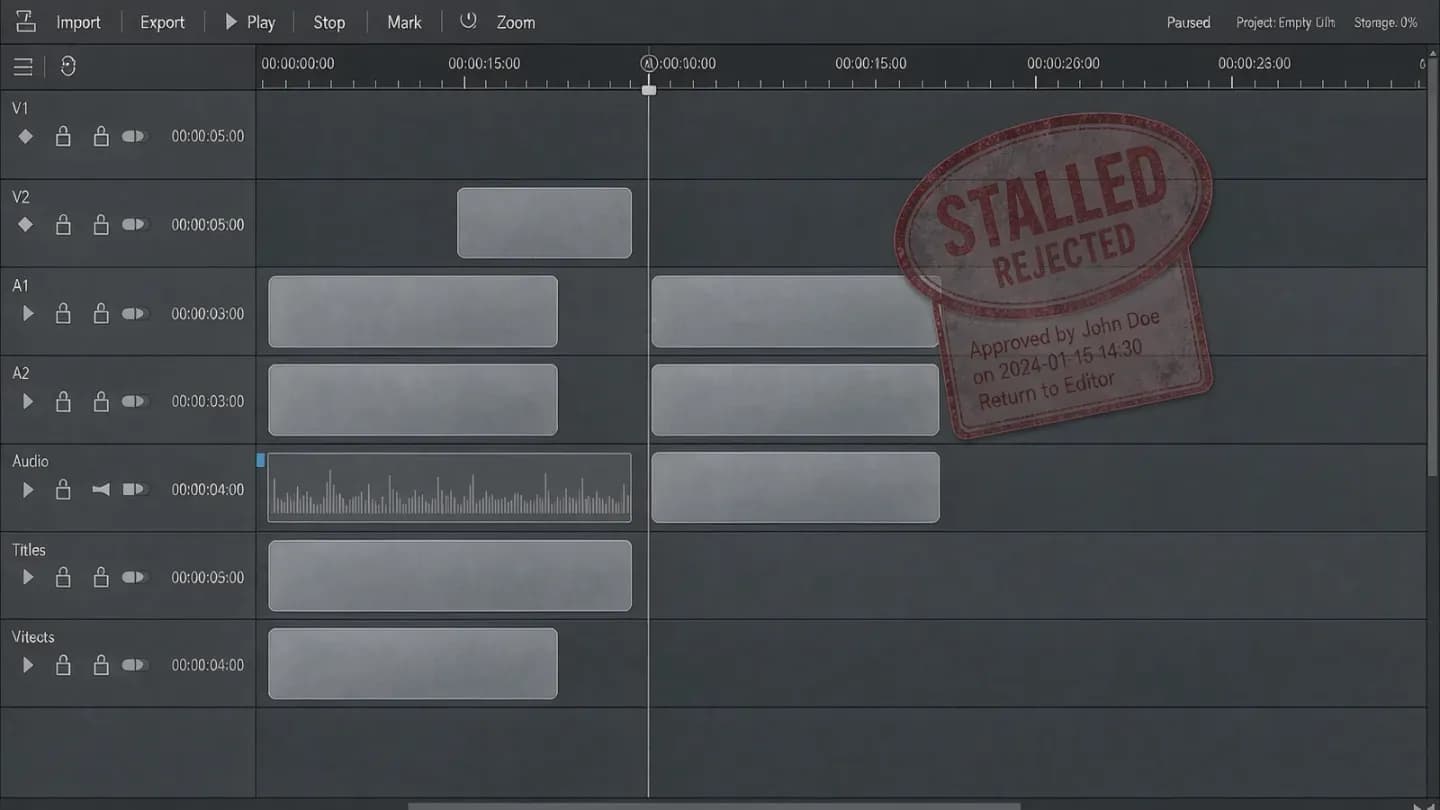
Tooling made this worse, not better. A brand team might generate a storyboard in one app, edit in another, review in a deck, and log approvals over email. The assets lived in five places, so every change meant reassembling the whole chain. The bottleneck was never a single missing feature; it was the absence of a single system of record for the work.
Market pressure is pushing the other way. As digital video ad spend climbs past eighty billion dollars a year, more brand dollars flow into video, which means more spots to produce and less patience for long cycles. The teams that win are not the ones with the single best film but the ones that can field the most credible variants before a trend cools.
Long before any canvas tool arrived, the bottleneck in commercial production was throughput, the exact gap the cost per usable clip metric AI video cost per usable clip was designed to measure.
What AI TVC production looks like on a creation canvas
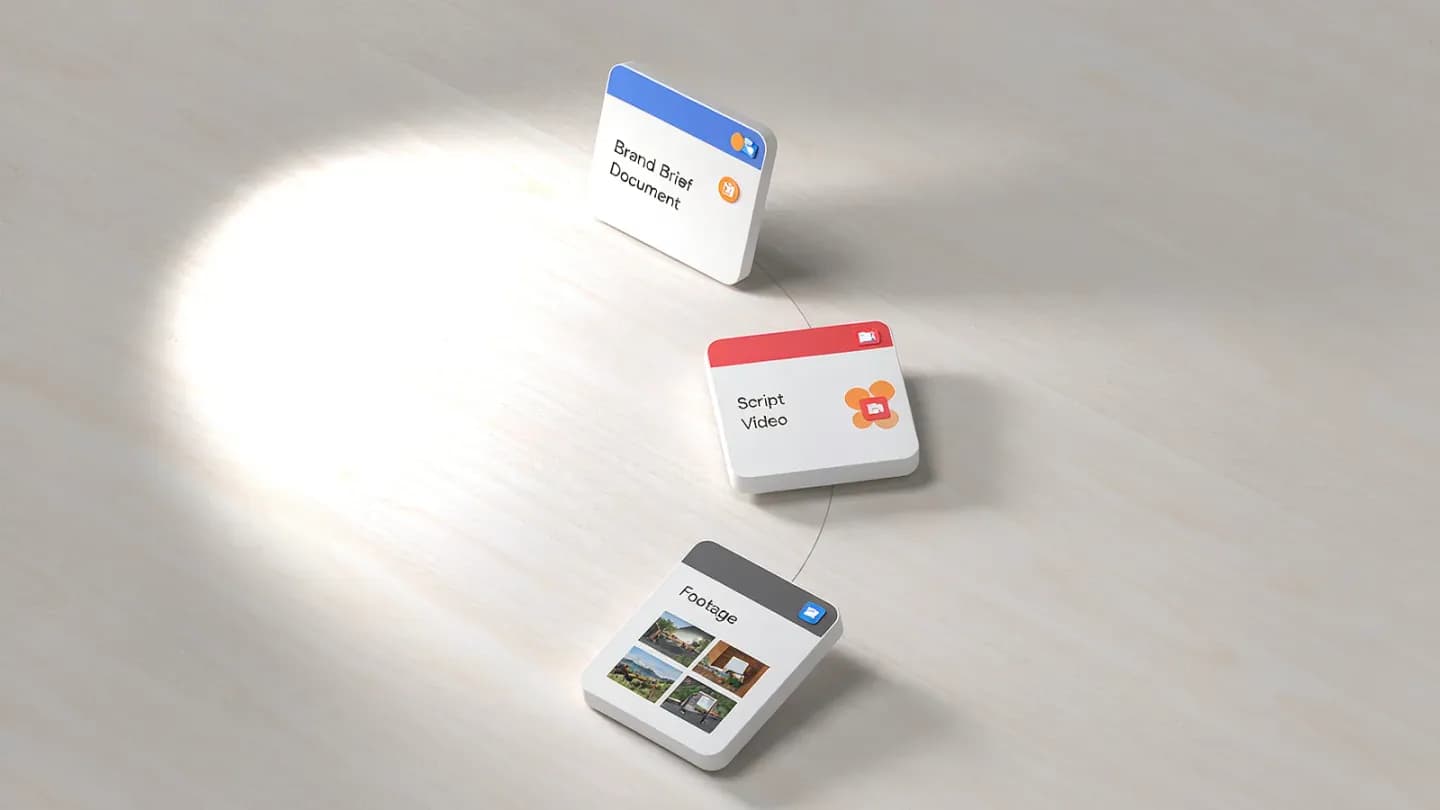
A creation canvas flips that model. Instead of jumping between a prompt tool, a timeline editor, and a review deck, the brief, script, storyboard, and footage live in one node-based workspace. Wondershare's Filmora.TV, launched in August 2026, is built around exactly this idea for TVC and brand teams.
A canvas that locks brief, script, and brand assets in one place is exactly the shift the platforms behind licensable video {{link}} are accelerating for brand teams.
TVC-specific prompt tuning translates a brief into executable storyboards and frames, which can then export straight to Premiere Pro, Final Cut Pro, or Wondershare's own editor for finishing. The point is not to replace the edit bay but to compress the pre-production that feeds it, so the expensive finishing stages start from a precise reference instead of a vague intent.
Think of it as the difference between a folder of files and a working document. On a canvas, the brief is a node that downstream storyboards reference; change the brief and the dependent frames update their context. The model is closer to a design tool than a media bucket, which is the mental shift commercial teams have to make to use it well.
Filmora.TV is not the only player pulling generation, editing, and review into one surface, but its explicit TVC framing matters. TVC work carries higher stakes than social clips: longer formats, brand-safety scrutiny, and handoff to professional edit suites. A canvas that respects that, exporting cleanly to Premiere or Final Cut, fits how agencies already finish and deliver.
The comparison that matters is against a traditional non-linear editor used alone. An NLE is excellent at finishing a known cut, but it is silent on strategy: it does not hold the brief, it does not propose storyboards, and it does not track why a frame exists. The canvas sits upstream of the NLE and feeds it a better starting point, which is why the export-to-Premiere path is the feature that makes the workflow real rather than a demo.
A canvas that locks brief, script, and brand assets in one place is exactly the shift the platforms behind licensable video licensable AI video are accelerating for brand teams.
The Chayan Cold-Aroma case: a week of validation in hours
The clearest proof is a consumer brand launch. Wondershare worked with Changsha tea brand Chayan to produce the 'Cold-Aroma' (冷香凝) brand film using Filmora.TV.
Chayan is not alone in proving premium AI brand film is possible; Castlery's fully AI-generated Comfurtable campaign {{link}} cut production cost sixty percent and beat watch-time benchmarks across five markets.
For Cold-Aroma, the team used the canvas to translate abstract scent-led selling points into visual concepts and storyboards. Work that previously needed a week of back-and-forth validation was compressed into a few hours, giving the later shoot and post a precise visual reference instead of a vague brief to interpret.
Wondershare estimates the workflow can cut video production time by up to 90 percent and cost by up to 80 percent on comparable TVC work. Those figures are vendor claims, but the direction is the part worth noting: pre-production acceleration, not just cheaper pixels.
What makes the case instructive is not the tea brand itself but the type of work. Scent is notoriously hard to brief because it has no literal visual. Translating 'cold aroma' into frames forced the team to make the abstract concrete early, and the canvas gave them a place to iterate on those translations quickly. That is exactly the pre-production labor that normally consumes the most calendar time.
Chayan is not alone in proving premium AI brand film is possible; Castlery's fully AI-generated Comfurtable campaign AI-generated brand campaign cut production cost sixty percent and beat watch-time benchmarks across five markets.

Where the canvas stops: what still needs human hands
A canvas is not a creative director. Brand-sensitive decisions, final color, and legal sign-off still sit with people, and even with a canvas, generated video has to clear the budget proof bar {{link}} buyers now impose before a cut ships.
Provenance matters too. An AI-generated brand film that reaches consumers carries disclosure and trust obligations, addressed by provenance standards such as C2PA for commercial creative. A canvas that treats origin metadata as part of the asset, rather than an afterthought, saves a team from a compliance scramble at launch.
Ambitious brand films also carry backlash risk, as Svedka's AI Super Bowl spot {{link}} showed when audiences rejected the synthetic framing.
None of this argues against the canvas. It argues for a clear division of labor: let the canvas generate and organize, let people judge and approve. The teams that get burned are the ones that treat the output as finished rather than as a high-fidelity pre-visualization the humans still own.
The honest framing is that the canvas compresses the expensive part of TVC work, the part measured in calendar time and senior reviews, while leaving the parts that need taste, legal sign-off, and brand judgment exactly where they belong. Automation here is an accelerator for exploration, not a replacement for the people who are accountable for the brand.
A canvas is not a creative director. Brand-sensitive decisions, final color, and legal sign-off still sit with people, and even with a canvas, generated video has to clear the budget proof bar AI video budget proof buyers now impose before a cut ships.
Ambitious brand films also carry backlash risk, as Svedka's AI Super Bowl spot AI Super Bowl ad showed when audiences rejected the synthetic framing.
What commercial teams should steal from this workflow
The takeaway is not 'buy this tool.' It is that the highest-leverage AI work in commercial video is collapsing pre-production, not just generation. A shared canvas that holds the brief, the script, and the brand assets lets teams iterate in hours instead of weeks.
Treat the canvas as a pre-flight system: lock the brand blocks once, generate variants against them, and hand a precise reference to the humans who finish and approve. The brand library becomes a reusable asset instead of a per-project scramble, which is where the durable cost savings actually live.
Start small. Pick one recurring production, a seasonal variant, a product-page film, or a LinkedIn cutdown, and run it through a canvas end to end. Measure the pre-production hours saved, not just the render cost. The win that compounds is the iteration loop, because the brands that win with AI video are the ones that test more cuts, not the ones that generate the prettiest single spot.
Measure it like a production system, not a creative toy. Track pre-production hours per cut, the number of variants a team can evaluate before a shoot, and the reuse rate of brand blocks across campaigns. Those are the metrics that turn a canvas from a novelty into infrastructure, and they are the numbers a CFO will ask for before the next tool renewal.
Put the framework into production
These related pages connect the article’s planning advice to a specific commercial scope.
References
- 2026 IAB Digital Video Ad Spend & Strategy Report: Part OneIAB
U.S. digital video ad spending is projected to surpass $80 billion in 2026, growing 11% year-over-year—nearly 20% faster than the total ad market.
- Video Marketing Statistics 2026Loopex Digital
Global digital video advertising spend keeps climbing, raising the pressure on commercial teams to produce more brand video, faster.
- C2PA Provenance StandardC2PA
The C2PA standard defines provenance metadata that lets publishers attach tamper-evident origin records to AI-generated media.