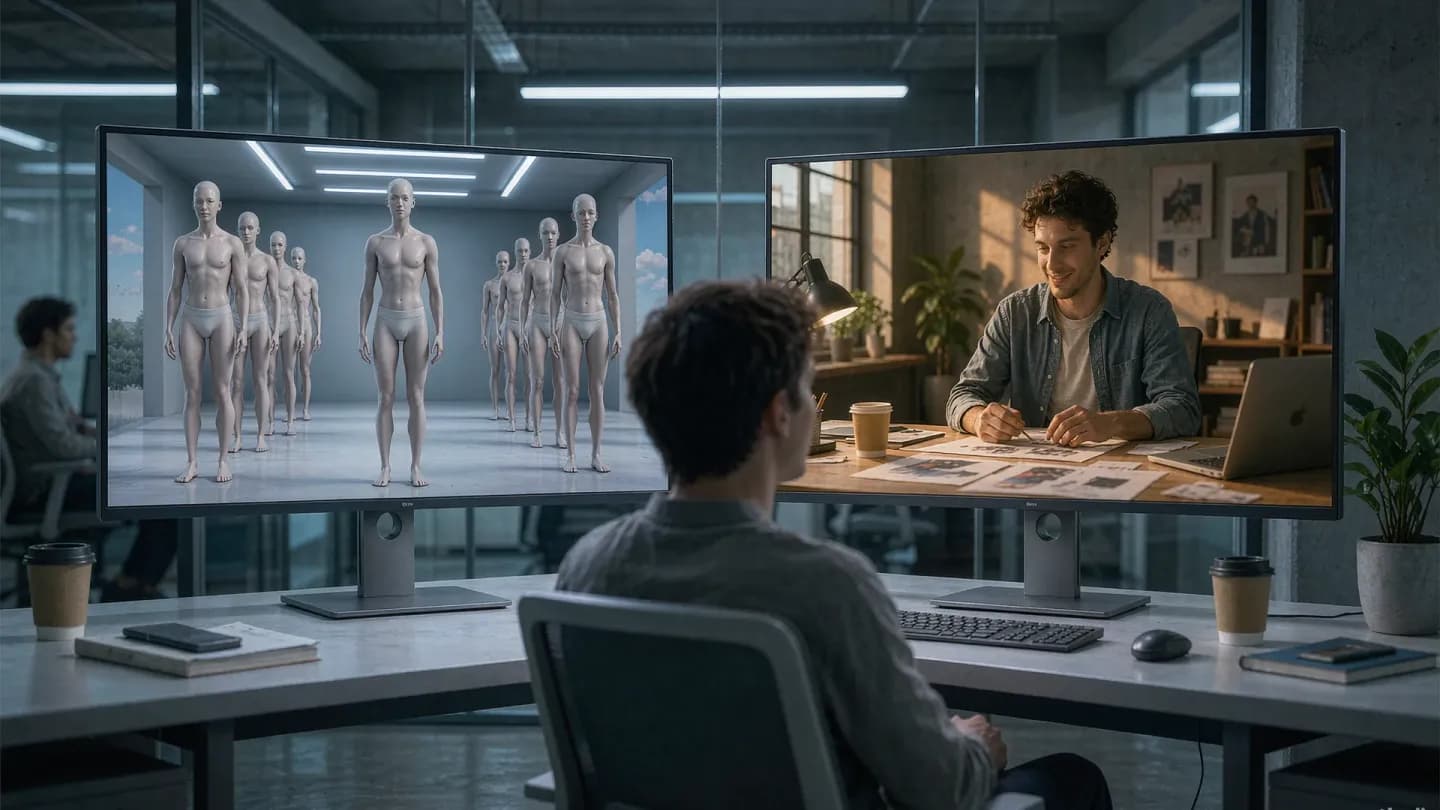
AI video ad tolerance is now a production metric
AI video ad tolerance is collapsing: 86 percent of Gen Z now always or usually skip ads, and 35 percent name AI-generated creative as a reason to disengage. The fix is to treat tolerance as a production metric — earned in the first two seconds, before the skip button appears.
The environment a generated spot ships into has turned hostile. According to Attest's 2026 US Media Consumption report, 92 percent of viewers use at least one ad-supported streaming service and just 12 percent give television their undivided attention, while 63 percent of video marketers now use AI video tools, up from 51 percent a year earlier. The mismatch is structural: generation got cheap, so output volume rose, and audience patience did the opposite. When a brand can spin up dozens of variants in an afternoon, the scarce resource is no longer production capacity but the seconds of genuine attention any single viewer is willing to grant. That is why tolerance belongs on the same scoreboard as cost per clip and render time.
Treating ad tolerance as someone else's problem is the expensive mistake of 2026. The auction still rewards creative that earns a view, and a skipped impression costs the same as a watched one while delivering nothing. For AI video specifically, there is a sharper edge: a meaningful slice of viewers now opt out the moment they sense the creative was machine-made, which turns provenance into a performance variable rather than a compliance footnote.

The skip reflex is generational, but it is not shallow
The skip reflex is generational, but it is not shallow. Attest finds 86 percent of Gen Z always or usually skip ads, and even Boomers do so nearly half the time. Skipping is the default behavior across every age cohort; the only question is how fast each group reaches for the button. For commercial teams this means the 'just make it short' heuristic is no longer enough — shortness competes with a reflex that is already loaded.
Removing the skip button does not fix the problem, it just hides it. When viewers cannot skip, only 44 percent say they watch the ad as intended, 34 percent redirect their attention elsewhere, and 17 percent simply mute the sound. Forcing an impression is not the same as earning one, and the forced-view cohort is the least receptive audience a brand can buy. AI video that relies on format tricks to survive a skip timer is optimizing for a metric that was never the real outcome.
The strategic read is that tolerance is earned in the first second, not recovered in the last. A generated opener that reads as generic or synthetic loses the viewer before the hook lands. That is a production decision — cast, voice, pacing, and the honesty of the premise — not a media decision, which is why it belongs in the brief rather than the trafficking plan.
A third of Gen Z opts out specifically because the creative is AI-made
The most important number for an AI video team is not adoption, it is opt-out. Thirty-five percent of Gen Z tell Attest that AI-generated ads are a reason they disengage. That is a third of the most valuable young cohort actively penalizing machine-made creative at the moment of choice — a behavior that no targeting parameter can override once the skip button is in their hand.
The {{link}} explains the mechanism: consumer trust in advertising has been eroding for years, and AI-made creative lands on top of that deficit rather than repairing it. When a viewer senses an ad was generated, they often read it as a signal the brand invested less, not more, in reaching them — which is precisely the opposite of the efficiency story the production team was trying to tell.
This is the difference between a technology risk and a creative risk. The model did its job; the reception did not. Brands that treat 'it's AI-generated' as a disclosure to survive rather than a creative choice to defend will keep losing the third of Gen Z who now treat provenance as a quality signal. The fix is not less AI — it is AI used in service of relevance, not as a tell.
The AI ad consumer trust gap explains the mechanism: consumer trust in advertising has been eroding for years, and AI-made creative lands on top of that deficit rather than repairing it. When a viewer senses an ad was generated, they often read it as a signal the brand invested less, not more, in reaching them — which is precisely the opposite of the efficiency story the production team was trying to tell.

Adoption is rising as tolerance falls — and the ROI signal is softening
The softening ROI signal is the part most teams miss. Wyzowl's 2026 Video Marketing Statistics show 63 percent of video marketers now use AI video tools, up from 51 percent a year earlier — but only 82 percent report a good return on investment, down from an all-time high of 93 percent. More teams are making more video, and a smaller share are sure it is working. That is the signature of a market learning that volume is not the same as value.
The {{link}} is no longer a forecast: the gap between AI video adoption and AI video confidence is now visible in the numbers, and the brands citing 'we use AI' as the whole strategy are the ones watching ROI decay. The 35 percent of Gen Z who opt out on provenance are a visible manifestation of that gap — adoption outran the creative maturity needed to make the output land.
The {{link}} adds the demographic texture: a generation that grew up with creator content holds advertisers to a higher bar and punishes synthetic creative more harshly than any cohort before it. Reading the two datasets together, the story is consistent — AI video crossed from novelty to baseline, and baseline expectations are unforgiving.
None of this means pull back. IAB's 2026 Digital Video Ad Spend report still puts US digital video spend above 80 billion dollars and notes GenAI creative adoption keeps accelerating, even as buyers demand more proof of performance. The money is not leaving; it is getting pickier about what earns a view.
The AI video ROI reversal is no longer a forecast: the gap between AI video adoption and AI video confidence is now visible in the numbers, and the brands citing 'we use AI' as the whole strategy are the ones watching ROI decay. The 35 percent of Gen Z who opt out on provenance are a visible manifestation of that gap — adoption outran the creative maturity needed to make the output land.
The Gen Z AI ad backlash adds the demographic texture: a generation that grew up with creator content holds advertisers to a higher bar and punishes synthetic creative more harshly than any cohort before it. Reading the two datasets together, the story is consistent — AI video crossed from novelty to baseline, and baseline expectations are unforgiving.
What AI-video teams should change
The response is not to make less AI video, it is to make AI video that survives the skip. Earn the first second with a premise that reads human and specific rather than templated. Lead with a real voice, a real product truth, or a real person; generative tools are strongest when they extend a known brand asset, not when they invent one from a cold prompt.
Disclose honestly and design for it. Provenance is now part of reception, so a confident, on-brand disclosure can convert a trust liability into a credibility signal — the opposite of the quiet watermark that reads as something to hide. The brands winning skip culture treat transparency as a creative beat, not a legal footnote.
The {{link}} is the inconvenient truth of creative testing: only about 5 percent of variants ever become scalable winners, so the teams that generate forty cuts and ship the first ten are wasting the very advantage that made generation cheap. Tolerance is won by the cut that earns attention, not the one that merely exists.
Build a tolerance review into the brief. Before a generated spot ships, ask whether a skeptical Gen Z viewer would grant it three seconds — and whether the AI tell is visible. That single question catches more failures than any post-hoc brand-safety scan, because it tests the outcome that actually matters: did the creative earn the view?
The AI video creative winner rate is the inconvenient truth of creative testing: only about 5 percent of variants ever become scalable winners, so the teams that generate forty cuts and ship the first ten are wasting the very advantage that made generation cheap. Tolerance is won by the cut that earns attention, not the one that merely exists.
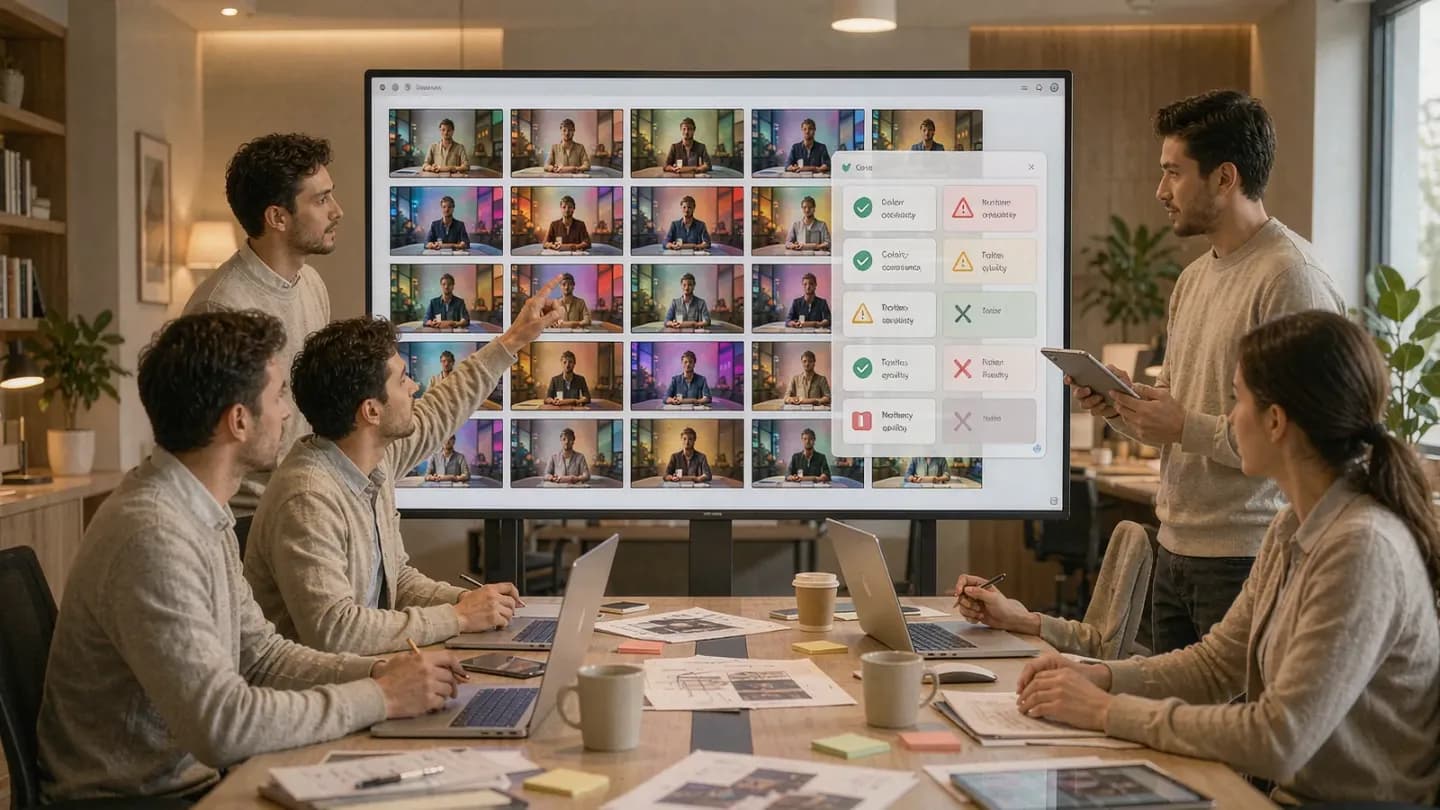
The portfolio that survives skip culture
The portfolio that survives skip culture treats ad tolerance as a design constraint from the first line of the brief. Generate wide, but judge ruthlessly: every variant should earn its impression on relevance and craft, not on the fact that it was cheap to produce. The 35 percent who opt out on provenance are not a rounding error — they are the leading indicator of where reception is heading for everyone.
AI video in 2026 is a maturity story, not a capability story. The technology can produce the volume; the discipline decides whether anyone watches. Teams that pair generative speed with human judgment, honest disclosure, and a ruthless quality bar will compound attention while the volume-only shops burn impressions on skipped frames. Ad tolerance is the new floor, and the floor is rising.
The takeaway for commercial teams is blunt: stop counting AI video as a cost you've already saved and start counting it as attention you still have to earn. The brands that win the next year are the ones that made tolerance — not just throughput — the metric their generative pipeline is built to optimize.
Put the framework into production
These related pages connect the article’s planning advice to a specific commercial scope.
References
- 2026 US Media Consumption ReportAttest
86% of Gen Z always or usually skip ads; 92% use at least one ad-supported streaming service; 35% of Gen Z say AI-generated ads are a reason to disengage; only 12% give TV their full, undivided attention.
- Video Marketing Statistics 2026Wyzowl
63% of video marketers now use AI video tools, up from 51% a year earlier; 82% report a good return on investment, down from 93%; 89% of consumers say video quality impacts brand trust.
- 2026 IAB Digital Video Ad Spend & Strategy ReportIAB
US digital video ad spend surpasses 80 billion dollars in 2026 and GenAI creative adoption keeps accelerating, even as buyers demand more proof of performance and easier workflow integration.