
What a Localized Version Actually Contains
AI video localization in 2026 is not the master with new words laid over it. YouTube treats each additional language as a separate audio track you upload yourself: the platform does not auto-dub it, the file has to be a pure audio format, and its duration must be roughly the same as the video. Long-form uploads can also carry a localized thumbnail, translated titles and descriptions help the video surface in that language's search results, and playback defaults to the viewer's preferred language.
What changes by format is how much surface area you localize. Short-form placements usually carry one caption layer and no localized artwork, while long-form uploads can take a market-specific thumbnail and benefit from a translated title and description. The format split covered in {{link}} decides how much of that surface is even available to you.
The reason this trips up AI video teams is that generation makes the visual layer feel finished. A clip renders, the edit locks, and localization looks like a last-mile task. The moment you add a second market, though, the unit of delivery stops being the video and becomes the market version, with its own audio file, its own text fields, and its own approval record.
A practical way to keep that tree visible is a variant registry: one row per market version, with columns for the source master, the audio file, the caption file, the artwork, and the approval status. It reads like overhead until the master changes. A price update, a new disclosure line, a re-graded opening, and suddenly the same edit has to be pushed into six languages without missing one.
The registry also settles an argument that otherwise recurs on every project: whether the localized cut is a new asset or a modified copy of the master. Treating it as a new asset with a parent forces the question of ownership, and ownership is what determines who approves the change when the parent moves.
The format split covered in YouTube Shorts versus long-form decides how much of that surface is even available to you.

The Master-to-Market Chain in AI Video Localization: Regenerate, Re-Record, or Re-Tag
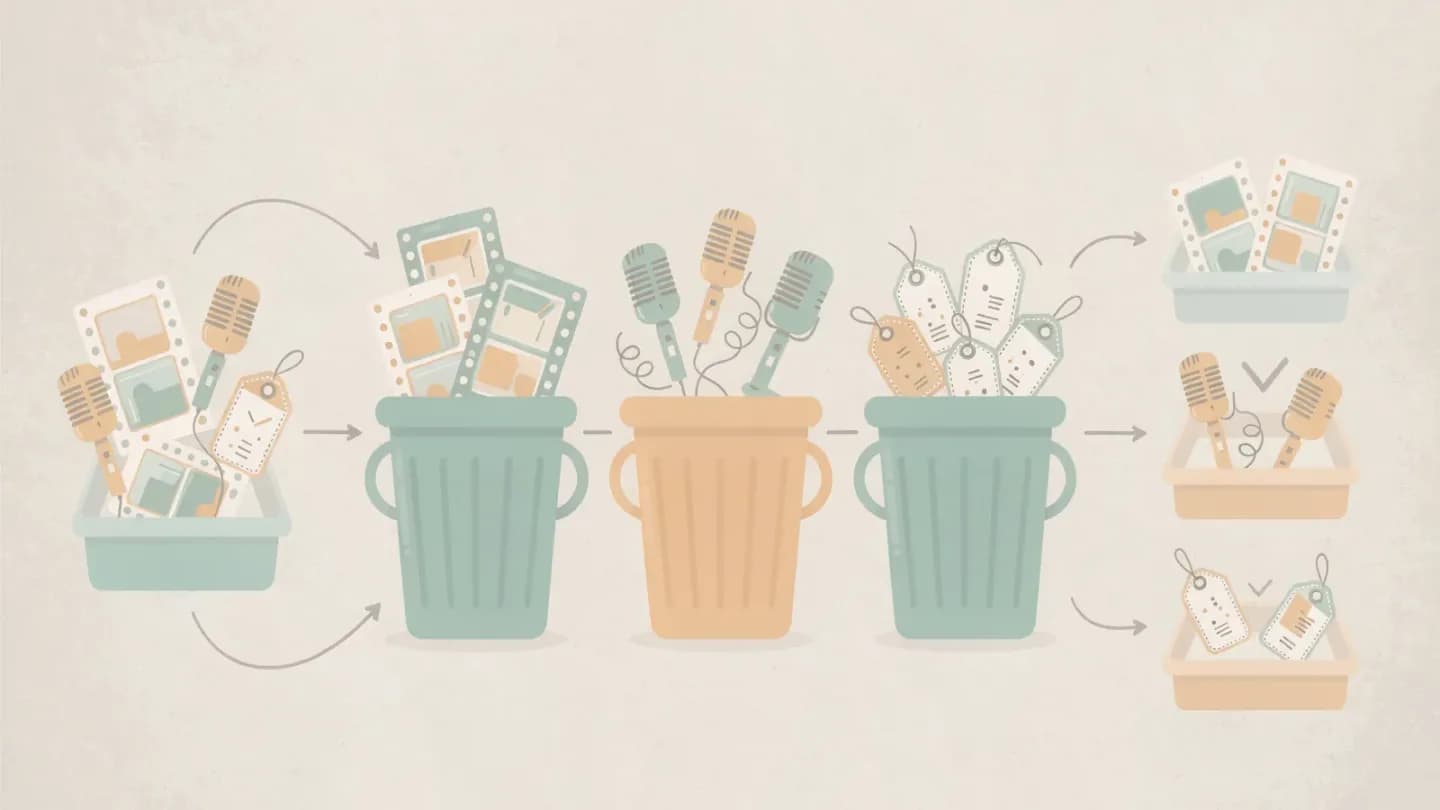
Every element in a localized cut falls into one of three buckets. Regenerate: anything where the picture itself carries language, including on-screen text, product packaging, signage, and a performer's mouth. Re-record: the voice track, which under YouTube's multi-language audio model is a separate uploaded deliverable rather than an automatic conversion. Re-tag: titles, descriptions, thumbnails, captions, and structured data, which change without touching a frame. Sorting the shot list into these three buckets before generation starts is what keeps localization from turning into a reshoot.
Teams that already run {{link}} tend to assume a market version is just another variant. The difference is that a variant usually reuses the same audio, while a localized version replaces it, and audio is the layer with the strictest platform rules.
The regenerate bucket is where cost actually lives. When the generated performer speaks, {{link}} decides whether the localized cut survives review. A line that reads perfectly in English can land with a mouth shape that no longer matches the dubbed track, and fixing it means regenerating the shot rather than re-recording the audio.
A useful rule of thumb: if an element would look wrong in a screenshot with the sound off, it belongs in the regenerate bucket. That single test catches most packaging, supers, and signage problems before a single render is paid for, and it gives the market owner a defensible reason to push back on a deadline.
Sequencing matters as much as the buckets themselves. Regenerate work has to finish before re-record work starts, because a regenerated shot can change timing, and a voice track written against the old cut will drift by a frame or two on every line. Run the three passes in that order and the market version assembles once rather than being rebuilt each time a layer changes.
Teams that already run AI video personalization at scale tend to assume a market version is just another variant.
When the generated performer speaks, AI video lip sync accuracy decides whether the localized cut survives review.
Audio Specs Localized Tracks Have to Meet
Localized audio inherits the delivery spec of the master rather than escaping it. The platform's recommended container and codec settings still apply to the file you deliver, and in broadcast and online-video delivery the loudness target applies per version. EBU R 128 sets average programme loudness at -23 LUFS and, since version 3.0 of the recommendation, tightened the permitted tolerance to plus or minus 0.5 LU. A market version mixed to a different target is not a variant of the master; it is a compliance problem waiting for the QC pass.
This is where AI dubbing tools create false confidence. A synthesized voice can be perfectly intelligible and still arrive at the wrong integrated loudness, with inconsistent level between sentences and no true-peak headroom. Measure every localized track against the same target as the master, and keep the measurement result attached to the version rather than sitting in someone's inbox.
Captions add a second text layer that has to match the localized audio rather than the source language. Treat caption files as part of the audio deliverable: generated from the same approved script, reviewed by the same market owner, and versioned with the same identifier as the video they belong to.
Keep the measurement result with the version. A loudness report stored next to the audio file, using the same version identifier as the video, turns a subjective argument about level into a checkable fact. It also gives the market owner something concrete to sign off on, which is precisely what localization approvals usually lack.
Metadata Is Half the Deliverable
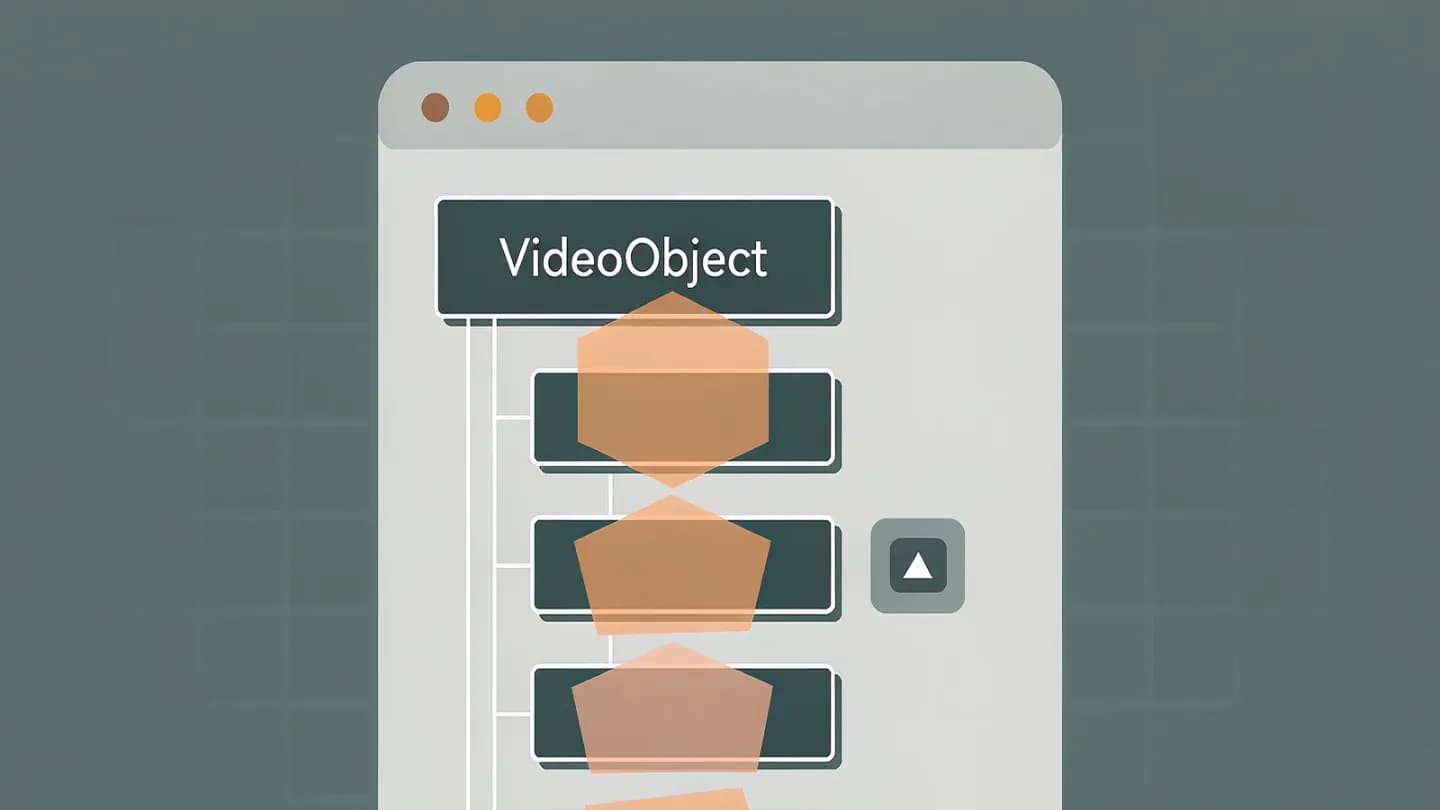
Structured data is where a market version declares what it is. Google's video guidance requires name, thumbnailUrl, and uploadDate on a VideoObject, recommends description, contentUrl, duration, and hasPart for key moments, and expects ISO 8601 for dates and durations and ISO 3166-1 for regions. Key moments declared through structured data take priority over automatically detected ones, which matters when the localized version is cut slightly differently from the master.
The same structured layer that {{link}} depends on is where market-level signals get declared. Answer engines read that markup too, so a localized description still written in the source language quietly removes that market from the answer set.
The VideoObject type also carries regionsAllowed, expressed in ISO 3166 codes and treated as worldwide when it is omitted. That is the cleanest place to state which market a version is intended for, and it is far more durable than encoding the market in a filename.
Do not encode the market in a filename. Filenames get rewritten, CDN paths get reorganized, and the signal disappears the first time someone exports a copy. Declare the region in the markup and in the CMS record, where it survives a move, and let the filename stay dumb.
The same structured layer that generative engine optimization for video depends on is where market-level signals get declared.
A Localization Checklist Before You Ship
Before any market version goes live, five things should be true. The audio track is a pure audio file in an accepted format with a duration that matches the video. Its integrated loudness measures to the same target as the master. On-screen language has been regenerated rather than covered. Title, description, thumbnail, and captions exist in the target language. And the structured data for that version declares the right region and the right duration.
Every market version should sit in the {{link}} alongside its source master. When a claim, a price, or a disclosure changes, you need to know which markets are still carrying the old language, and that is a record-keeping problem rather than a rendering one.
Localization done this way is unglamorous and repeatable. The teams that get value from AI video across markets are not the ones with the best dubbing model; they are the ones who decided, before the first render, which elements regenerate, which re-record, and which only need a new tag.
Set the cadence as well. Market versions drift when the master is updated on a schedule that localization cannot see. If the master refreshes monthly, the localization backlog belongs on that same calendar instead of sitting in a queue someone opens when a market complains.
Name the version once and use that name everywhere. A market identifier that appears in the filename, the loudness report, the caption file header, and the CMS record is what makes an audit answerable. Without it, the honest answer to which markets are still running the previous disclosure is that nobody is completely sure.
Every market version should sit in the AI video creative audit trail alongside its source master.
Put the framework into production
These related pages connect the article’s planning advice to a specific commercial scope.
References
- Use multi-language audio tracks and localized metadataYouTube Help
Additional language audio tracks must be uploaded by the creator rather than auto-dubbed, must be a pure audio file, and must be roughly the same duration as the video; long-form uploads can carry localized titles, descriptions and thumbnails, and playback defaults to the viewer's language preference.
- EBU R 128: Loudness normalisation and permitted maximum level of audio signalsEuropean Broadcasting Union
R 128 sets the target average programme loudness at -23 LUFS and, since version 3.0, tightened the permitted deviation to plus or minus 0.5 LU.
- Video structured data: VideoObject markupGoogle Search Central
VideoObject requires name, thumbnailUrl and uploadDate, recommends duration and hasPart key moments, uses ISO 8601 for dates and durations and ISO 3166-1 for regions, and key moments declared in markup take priority over automatically detected ones.
- schema.org VideoObjectschema.org
VideoObject exposes regionsAllowed expressed in ISO 3166 codes, and a value is assumed to allow worldwide distribution when the property is omitted.