
What simultaneous audio-visual generation actually does
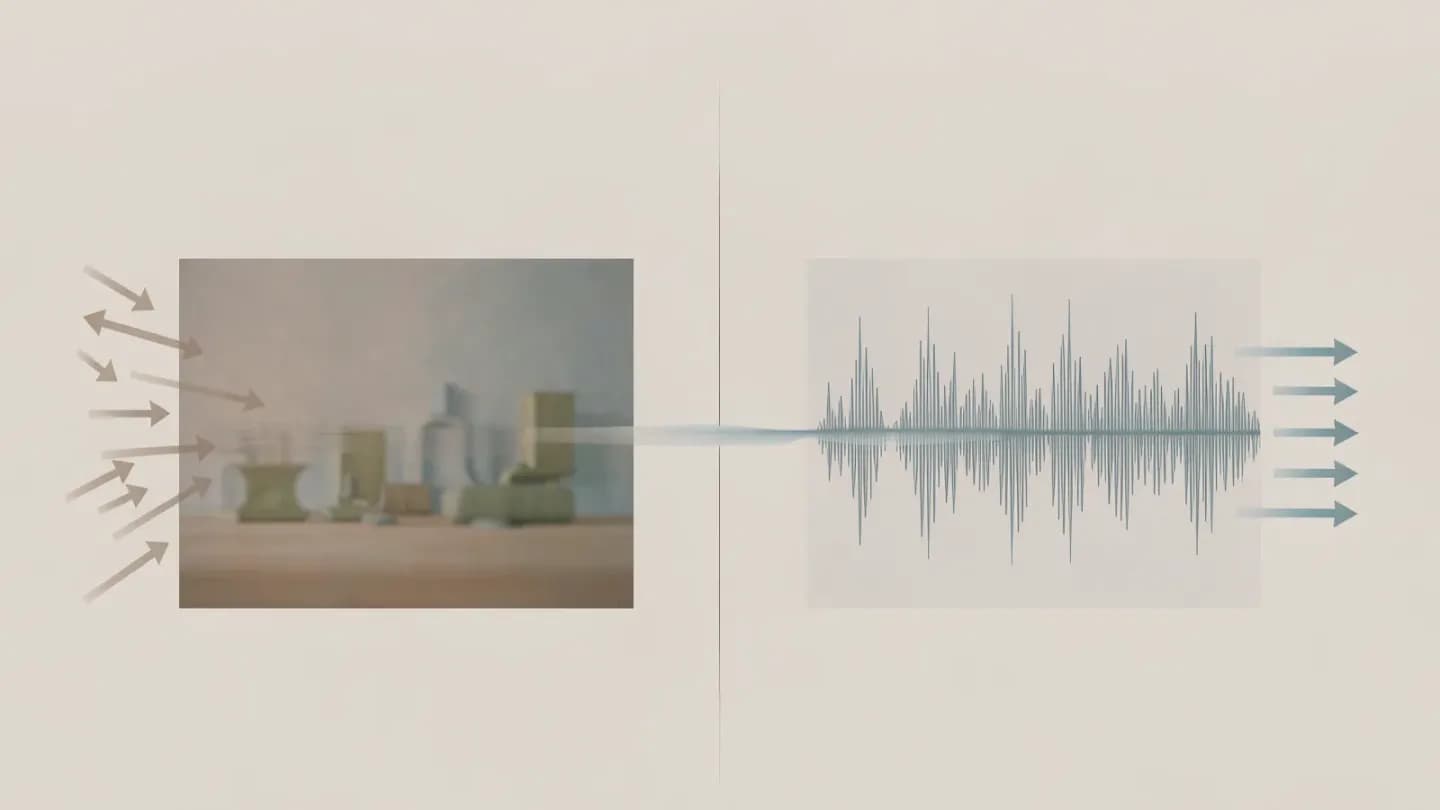
Simultaneous audio-visual generation is the ability of a video model to produce synchronized picture and sound in a single pass instead of rendering silent footage and dubbing it later. Kling 2.6's release makes this the new baseline for commercial teams, collapsing the silent-clip-then-dub pipeline that has defined AI video production since the first text-to-video tools shipped.
Under the hood, the model learns the temporal alignment between motion and the acoustic events that should accompany it. A footstep lands with a footstep sound, a door closes with a thud, and a voiceover track arrives already time-aligned to the cut. The output is not a silent clip plus a separate audio file; it is one asset where the two channels were reasoned about together from the first frame.
For commercial work this matters because most briefs are never silent. A product demo needs the click of a latch, a brand film needs score that swells on the right beat, and a social cut needs ambient room tone so it does not feel dead. Generating those cues together, rather than bolting them on, removes an entire class of sync fixes from the edit.
The practical upside is speed without a quality tax. Because the model reasons about both channels at once, the sound it produces tends to sit in the right place relative to the action, which is exactly what viewers subconsciously expect from professional footage. That expectation is the reason amateur AI clips often feel wrong even when nothing is technically broken.
Why the silent-clip-then-dub workflow persisted
The reason teams accepted the old routine is that the tooling forced it. For two years, text-to-video models produced motion and left every sound decision to a later stage. That was tolerable when outputs were short and experimental, but it quietly became the most expensive step in a production once volumes rose.
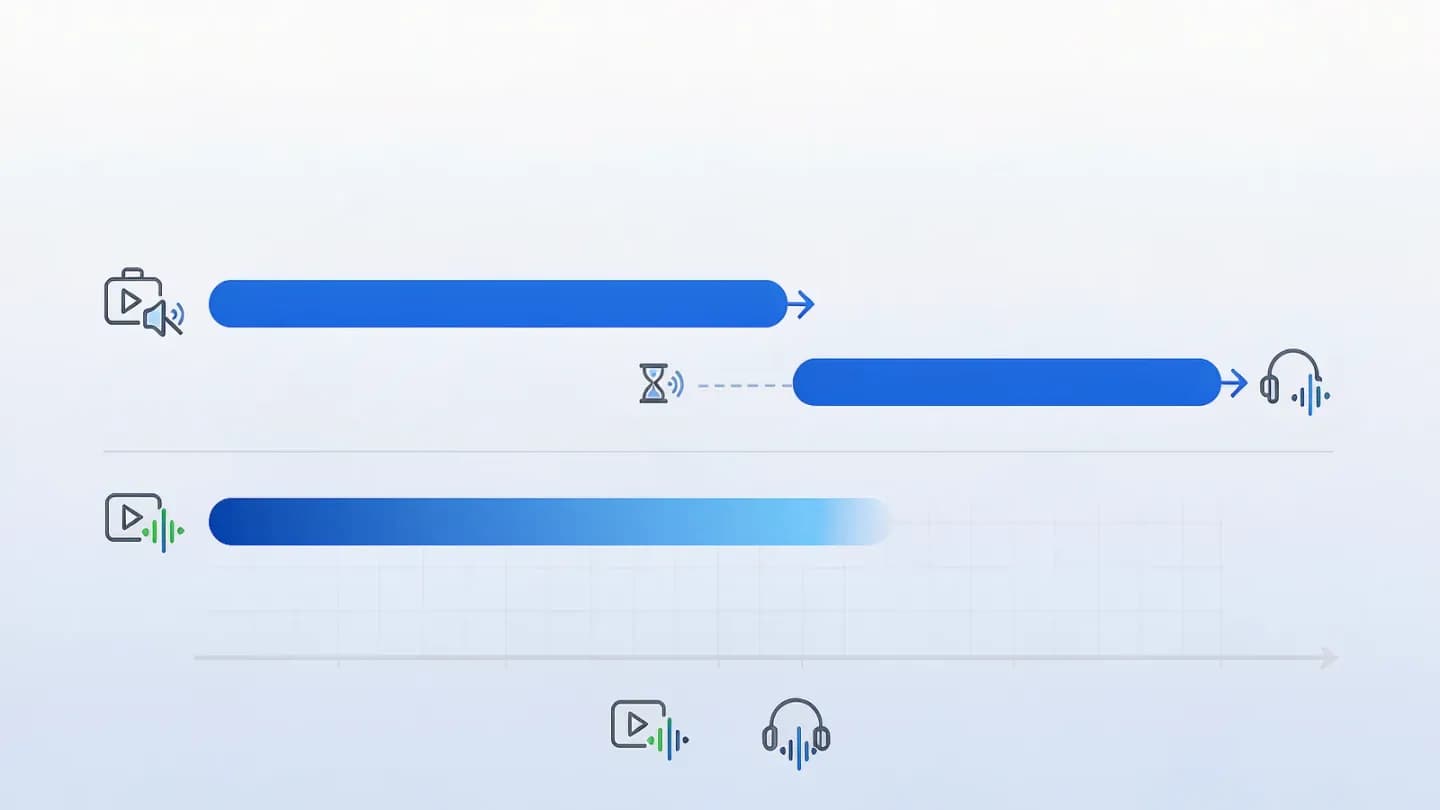
The old routine pushed sound into {{link}} that began only after the picture lock. Voice actors, foley artists, and music supervisors all entered the project only once the visuals were frozen, which meant any late visual change forced a re-dub.
Native-audio models chipped at the problem by generating basic sound, yet most still handed the final mix to a human. The result was a half-solved workflow: picture and track existed in the same project, but they were never born from the same decision, so they never quite agreed.
At low volume the waste is invisible, but a team shipping fifty variants a week pays for fifty separate sound stages. Co-generation attacks that multiplier directly, which is why it matters more to performance-marketing teams than to one-off brand films where a single polished mix is affordable.
The old routine pushed sound into a later production stage that began only after the picture lock.
What changes in the production plan
When audio and video are co-generated, the schedule compresses. There is no waiting room between 'render finished' and 'sound started' because they finish together. A 30-second cut that used to need a render day plus a sound day can now land as a single deliverable, and the calendar stops being the bottleneck.
The cleanup that used to absorb a full editing day now shrinks to {{link}} instead of a rebuild. Instead of rebuilding sync from scratch, the editor polishes what the model already aligned: trimming a breath, lifting a line, balancing a music bed. The structural work is done before the human touches it.
Planning also shifts upstream. Because the model reasons about sound, the brief has to specify it. Teams that used to write 'add music later' now write the mood, the tempo, and the moments that need silence into the prompt itself, which makes the first render far closer to the final cut.
Versioning also gets cheaper. When a platform needs ten cuts of the same spot, each one now inherits a coherent soundtrack instead of requiring ten fresh dubbing sessions. The marginal cost of an extra variant drops to almost nothing beyond the render itself, which changes how many creative directions a team can afford to test.
The cleanup that used to absorb a full editing day now shrinks to a conform pass instead of a rebuild.
Sound design, music licensing, and loudness
Co-generation does not erase the human disciplines around sound; it moves them earlier and makes them more explicit. A model can invent a plausible score, but that score is still a generated asset with the same licensing questions as a generated face or location. Teams should treat AI-composed audio as a temp track unless the model's training rights are documented.
Every destination still enforces its own technical bar for {{link}} shipped to it. Broadcast and premium platforms expect clean headroom and consistent levels, and a clip that ships with a model-generated bed still has to meet those bars before it is acceptable. The technical gate is unchanged even when the production method is new.
Loudness is the quiet gotcha. Generated dialogue and music can drift to inconsistent levels across a batch of variants, and an unsettling swing between cuts reads as amateurish to viewers even when no single clip is wrong. Baking a loudness target into the prompt, then verifying it on export, keeps a campaign coherent across every version a platform serves.
Treat the first model output as a temp, not a master. Listening to it critically, then regenerating the few seconds that miss, is far cheaper than accepting a generated bed that quietly violates a platform's ad policies on music originality. The model accelerates the work; it does not remove the reviewer.
Every destination still enforces its own technical bar for audio-bearing files shipped to it.
Provenance and disclosure for generated audio
Sound is part of the content, so the same transparency rules that apply to generated visuals apply to generated audio. Regulators and platforms increasingly expect a machine-readable record of what was synthesized, and a clip that fakes a spokesperson's voice or a real artist's song carries the same risk whether the deception is visual or acoustic.
Content Credentials, built on the C2PA standard, let a team attach provenance to an asset so anyone can see which parts were generated. For co-generated video, that means the audio track should carry the same lineage label as the picture, not a separate, easier-to-lose marker. Treating the pair as one provenance object is the clean way to stay auditable.
Disclosure is also a trust decision, not just a compliance one. Viewers tolerate clearly labeled synthetic media far better than media that quietly impersonates a real voice. Stamping both the picture and the generated track up front protects the brand even when the law has not caught up to the format.
The platform trend points the same way. As synthetic media becomes common, the differentiators viewers reward are honesty and consistency, not the mere fact of generation. Baking provenance in at the source is cheaper than retrofitting it after a campaign draws scrutiny, and it travels with the asset wherever it is republished.
Where this fits in the 2026 model landscape
Kling 2.6 is the headline example, but the direction is industry-wide. As more models learn to reason about sound, 'does it have audio' stops being a feature checkbox and becomes a baseline expectation, the way 1080p and reasonable motion already are. The differentiator moves to quality and control: can the team steer the soundtrack, or only hope for a good one.
Any serious evaluation now has to score co-generation as {{link}} rather than a bonus feature. Comparing models on visual fidelity alone misses the point when half the deliverable is now acoustic. The useful question is whether the model's sound helps the cut or merely fills it, and whether the team can direct that sound with the same precision they direct the camera.
For commercial video teams, the practical takeaway is to rewrite the brief and the calendar. Specify sound from the first prompt, budget a conform pass instead of a full dub, and attach provenance to the whole asset. The silent-clip era is ending; the teams that plan for co-generated audio now will ship faster and sound better when the rest of the market catches up.
The risk is over-trusting the first render. Co-generation is a head start, not a finished mix; the teams that win still audition the soundtrack, check loudness, and confirm rights before the spot goes live. The pipeline is shorter, not optional, and the human ear remains the final gate.
Any serious evaluation now has to score co-generation as a first-class capability rather than a bonus feature.
Put the framework into production
These related pages connect the article’s planning advice to a specific commercial scope.
References
- C2PA - Content CredentialsCoalition for Content Provenance and Authenticity
Content Credentials provide an open technical standard for recording the origin and edits of digital content, including AI-generated media, so creators can show what was synthesized.
- YouTube Help - Upload encoding specificationsGoogle
YouTube requires delivered video to be valid MP4/H.264 with AAC-LC (or Opus / Eclipsa Audio) sound, so any clip that now carries generated audio must still meet these encoding specs.
- Chinese tech drives AI adoption in creative industryChina Daily
Kling AI's Kling 2.6, shown at CES 2026, introduces 'simultaneous audio-visual generation' that transforms the traditional workflow of silent visuals followed by manual dubbing.
- EBU R 128 - Loudness of audio programmesEuropean Broadcasting Union
EBU R 128 sets the loudness target for audio programmes at -23 LUFS, a specification that delivered commercial audio must still meet regardless of how it was produced.