AI Video Strategy & Production
KinoVela Editorial
Practical guidance from the KinoVela AI video creative team.
Published guidance
Articles by KinoVela Editorial
 Oct 2026
AI Disclosure Labels Don't Hurt Ad Performance. Format Is the Real Decision
A 900-person MediaScience study put four formats of AI disclosure labels to the test: no performance penalty, but the icon viewers prefer failed at the one job disclosure has.
 Oct 2026
The First Episodic AI Video Assembly Line Ships 150 Videos a Month
The AI Bible ships roughly 150 videos a month on reusable character libraries and project-level memory. What the first episodic AI video assembly line proves about continuity infrastructure - and what commercial video teams should copy.
 Oct 2026
AI Video Teams in 2026: Rebuild the Org Chart Around Judgment
AI video teams are rebuilding around judgment, not hours: 88% of US advertisers already run AI in creative production, and the 2026 surveys show winners restructure roles and workflows instead of adding tools.
 Oct 2026
The First Jury for AI Commercials: What the Generated Awards' Winners Reveal About Craft in 2026
In May 2026, six human jurors reviewed roughly 1,700 AI commercials and crowned eight winners at the first Generated Awards. For commercial video teams, the results matter less as a trophy cabinet than as the medium's first public quality bar - and a map of where craft still decides the outcome.
 Oct 2026
The Sea of Sameness: Why AI Video Differentiation Is a Briefing Problem in 2026
When every production team runs the same models, sameness becomes the default output. Dentsu's 2026 CMO Report shows 78% of CMOs fear exactly that - and AI video differentiation now has to be briefed, not hoped for.
 Oct 2026
Google Deleted the Language Setting: What Language-Targeted AI Video Ads Must Decide Now
Google removed campaign-level language targeting from Search ads in September 2026. Language now comes from the ad and the landing page itself, which makes language-targeted AI video ads a creative decision video teams own end to end.
 Oct 2026
How WD-40 Used Amazon Ads Generative Video to Win France
WD-40 and agency Bizon used Amazon Ads generative video to launch a French degreaser without a production shoot, tripling daily unit volume.
 Oct 2026
AI Video Email Marketing in 2026: From Open-Rate Trick to Lifecycle Infrastructure
AI video email marketing in 2026 has moved from an open-rate trick into lifecycle infrastructure triggered by customer events and rendered per recipient. Here is the trigger-to-render playbook and the benchmarks that justify it.
 Oct 2026
Pennsylvania's AI Ad Disclosure Act: A Video Compliance Playbook
Pennsylvania's SB 806, the AI Deceptive Advertising Act, passed both chambers in Oct. 2026 and will soon require clear and conspicuous AI ad disclosure on video. Here is the wording, first-instance placement, and file-level provenance playbook for commercial video teams.
 Oct 2026
APAC Marketing AI Adoption Is Solved. Integration Is the 2026 Problem.
APAC marketing AI adoption is now effectively universal across the region's in-house agencies, yet most teams still treat AI as a drafting tool rather than an operating model. The 2026 problem is integration, not access.
 Oct 2026
How China's OPC Studios Industrialized AI Video Production
China's OPC studios show what happens when AI video production stops being a solo experiment and becomes a system: festival awards, hit series, and compute budgets under six figures. This case study breaks down the pipeline these teams built, and what commercial teams can borrow.
 Oct 2026
The Slow-Burn Effect: Why Social Video Watch-Time Retention Beats View Counts
Views are climbing while engagement, attention and monetization fall. The 2026 slow-burn effect shows why watch-time retention, not raw view counts, is the metric that compounds a social video's reach and earns platform distribution.
 Oct 2026
AI Video Prompt Adherence in 2026: Why Models Still Miss Your Intent
Prompt adherence is the gap between what you wrote and what the model rendered, and it is where most AI video projects quietly fail. This 2026 guide explains why text-to-video models drift from your instructions, and how modular prompts, a locked identity anchor, and disciplined iteration make generation predictable.
 Oct 2026
Why AI Video Disclosure Safeguards Now Ship Inside the Tool
AI video tools like TikTok's Symphony Agent now attach AI labels, invisible watermarks and moderation at the moment of creation. These AI video disclosure safeguards change how commercial teams handle provenance and platform-native versus portable compliance.
 Oct 2026
Meta's static-to-video ads are live: the QC gate now starts at the source image
Meta's static-to-video ads are generally available in Advantage+ creative, and catalog product-image-to-video is in beta. The approval chain now starts at the source image and the product feed.
 Oct 2026
AI Video Consent Is Not Reception: What the SKF Garbo One-Star Review Actually Measures
SKF's AI-generated Greta Garbo ad cleared estate permission, dodged archival footage, licensed the voice and added AI disclosure stamps — and still drew a one-star review from The Guardian. AI video consent and reception are two different gates, and only one of them is legal.
 Oct 2026
Video Podcast Ads Already Convert Better. The Problem Is You Kill Them on Day Seven
Video podcast ads posted a 75% higher median lead conversion than audio-only shows in the first half of 2026, and their responses keep building for 30 days. Most teams still read them at seven.
 Oct 2026
Full-Duplex AI Video Passed the Turing Test. Now Comes the Hard Part
Full-duplex AI video: Tavus's Griffin held a one-minute call that 48% of participants believed was with a real person. For commercial teams the consequence is not a better avatar but a live endpoint that needs runtime governance.
 Oct 2026
Museum AI Video Is Generative Production's Hardest Accuracy Brief
Museum AI video has become the strictest test of generative production: Shanghai Museum's 50-artifact series, Shaanxi's mural drama and BestTV's exhibition shorts all ship with expert review gates, structured source distillation and anti-hallucination standardization. Its governance template transfers to brands.
 Oct 2026
Agency AI Transparency 2026: Brands Demand Visibility
Agency AI transparency is the governance battleground of 2026: 96% of major brands run generative or agentic AI, yet only 13% see agency AI use clearly. The fix is contractual — 59% write AI clauses into agency deals and 69% demand disclosure when AI touches delivered work.
 Oct 2026
AI Video in Banking 2026: Finance Adopts for Trust
MUFG produced scene-specific card-loan ads with Veo 3, Shanghai Commercial Bank rebuilt decades of client history with AI, and CITIC Baixin Bank industrialized investor education. AI video in banking in 2026 is a trust play: education, situational variants and heritage reconstruction.
 Oct 2026
Meta Removed Placement Exclusions. Creative Is the Control Now
Meta has begun removing ad-set-level placement exclusions from Ads Manager, and the value rules that replace them can suppress a placement but never switch it off. Exclusion has become bid suppression, and the control layer for AI video ads now lives in the asset library itself.
 Oct 2026
AI Audience Simulation: The 2026 Distribution Play
AI audience simulation is the 2026 distribution shift: Inside the Arthouse partnered with Chronicle to simulate viewer segments, lift watch hours almost overnight, and replace broad ad buys with micro-targeted clips. The playbook commercial video teams can copy.
 Oct 2026
Video Sales Enablement Is Now an AI Benchmark Play
Video sales enablement has quietly become AI video's most measurable win. Vidyard's 2026 Video in Motion benchmark ties video across the revenue motion to 42 percent higher close rates and 33 percent faster deal progression, while 87 percent of sales organizations already use AI. Here is what the numbers say.
 Oct 2026
AI-Generated Cinema Ads: The Premium Screen Bet
AI-generated cinema ads went live in July 2026: OpenArt bought AMC preview placements for a film made entirely in-house with its own Director tool. Why the premium screen is a credibility bet for generative video, and why directorial language, not generation, is the real bottleneck for brand teams.
 Oct 2026
Creator Series Sponsorship: 2026's Season-Long Buy
Creator series sponsorship is the 2026 shift: brands fund episodic creator worlds instead of single videos. TikTok's The Next Episode, YouTube's show-sponsorship pilot, THE RACE's integration ladder, and the fit check that decides whether a brand belongs inside someone else's season.
 Oct 2026
Utopai's PAI Turns Production Intelligence Into the Product
Utopai launched PAI as a production intelligence platform with its second-ranked Utopai X model inside it. The one-billion-dollar AI-native studio is betting the connected context of a production - not the model - is what compounds. Here is what that architecture means for commercial video teams.
 Oct 2026
AI Travel Video Has a Realness Test: Inside TUI's Labelled Win
AI travel video has a rule other verticals never face: everything in the frame must exist. TUI's AI-made Live Happy spot won YouTube's Brands x Creator Battle on a public vote. The working route: label synthetic footage, verify every destination, keep claims separate from mood.
 Oct 2026
AI Testimonial Videos Now Carry Federal Liability
AI testimonial videos now carry federal liability. The FTC's Reviews and Testimonials Rule treats a fabricated customer as deception, the TruHeight settlement put $750,000 behind it, and a label does not cure it. This guide maps what 16 CFR Part 465 bans and the pre-ship check that keeps AI actors legal.
 Oct 2026
CTV Measurement Gets a Rulebook: What IAB Europe's Framework Means for AI Video
CTV measurement finally has a common rulebook: IAB Europe's final Framework and Transparency Principles define how CTV metrics connect and what must be disclosed. For AI video teams shipping generated creative to connected TV, the dependency chain decides which impressions count before any outcome metric does.
 Oct 2026
AI Video Benchmarks: Read Them Like an Analyst in 2026
Most AI video benchmarks hide a different denominator, a skewed mean or a mixed cohort. The mean-versus-median trap, the unsourced three-second rule, the carousel contradiction, and the five-question checklist that makes any benchmark number defensible.
 Oct 2026
Runway Ads: When the Creative Tool Starts Running the Campaign
Runway Ads launched September 30 as an autonomous engine for performance marketing: generate, approve, publish and learn in one system. Weekly output on Runway's own program went from 77 ads to roughly 900. The render is no longer the deliverable - the loop is, and governance is the new creative work.
 Oct 2026
Conversational Video Ads Turn the Ad Unit Into the Destination
Google's Business Agent lets viewers ask product questions beside a YouTube video ad, OpenAI is testing Sponsored Agents, and Amazon rebuilt its ad platform around an agent. Conversational video ads turn the ad unit into the destination — and the product feed into part of the creative.
 Oct 2026
Predictive Creative Scoring Moves the Verdict Before the Spend
Kroger, Vidmob and MMA Global analyzed 1,934 assets from a year of live campaigns and forecast e-commerce conversion with 81% accuracy before launch. Predictive creative scoring moves the verdict on creative ahead of the auction, where the fourfold conversion gap is decided before any media dollar moves.
 Oct 2026
Agentic Media Buying Gets Its Missing Standard: Inside AAMP 3.0 and OpenProposal
AAMP 3.0 gives agentic media buying its missing standard: OpenProposal turns the RFP-to-buy handoff into an agent-readable exchange with a seven-stage lifecycle. Video inventory that buying agents cannot parse is now invisible, and the reasoning behind a proposal finally travels with it.
 Oct 2026
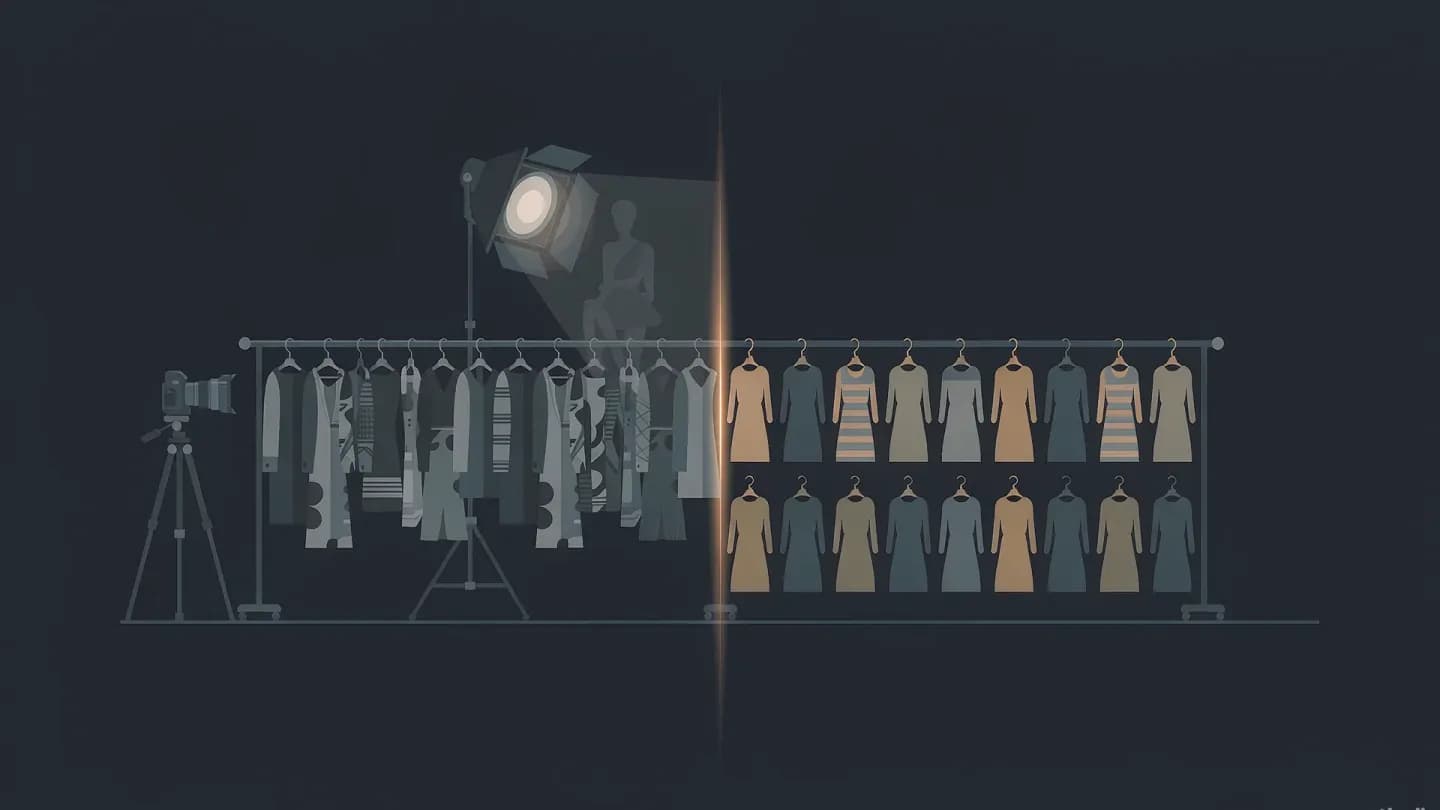
AI Fashion Models 2026: The Licensing Playbook Fashion Wrote First
Fashion turned AI fashion models into licensed infrastructure: H&M pays royalties on twins whose models keep the rights, Zalando cut lead times eight weeks to four days, and Mango ships full AI campaigns. Here is what commercial video teams should copy.
 Oct 2026
Character Consistency in AI Video Is a Reference Problem, Not a Prompt Problem
Character consistency in AI video became a workflow, not a wish: identity lives in a reference image and the prompt only describes motion. The reference-first gate - build the set, approve the portrait, propagate frames - is why 2026 multi-shot ads finally hold their cast.
 Oct 2026
Attention Without Conversion: The First Field Experiment on AI Video Ads Is In
The attention without conversion pattern is now peer-reviewed: a randomized field experiment of more than 150 video ads finds AI creatives win clicks and retention but lose conversions. Here is the funnel split, the mechanism behind it, and how to route AI video.
 Oct 2026
Engagement Rate Benchmarks for Short-Form Video: One Metric, Two Denominators
The same short-form video format reads 6.9 percent engagement per person reached in one 2026 study and 0.55 percent per follower in another. How to read engagement rate benchmarks without making the wrong keep-or-kill call on your next cut.
 Oct 2026
The AI Ad Perception Gap: Advertisers Think 82% of Young Consumers Like AI Ads. 45% Do.
The AI ad perception gap is now 37 points: 82% of ad executives assume young consumers feel positive about AI-generated ads, but only 45% actually do. Here is how to measure audience comfort instead of assuming it, and why disclosure is a net positive.
 Sep 2026
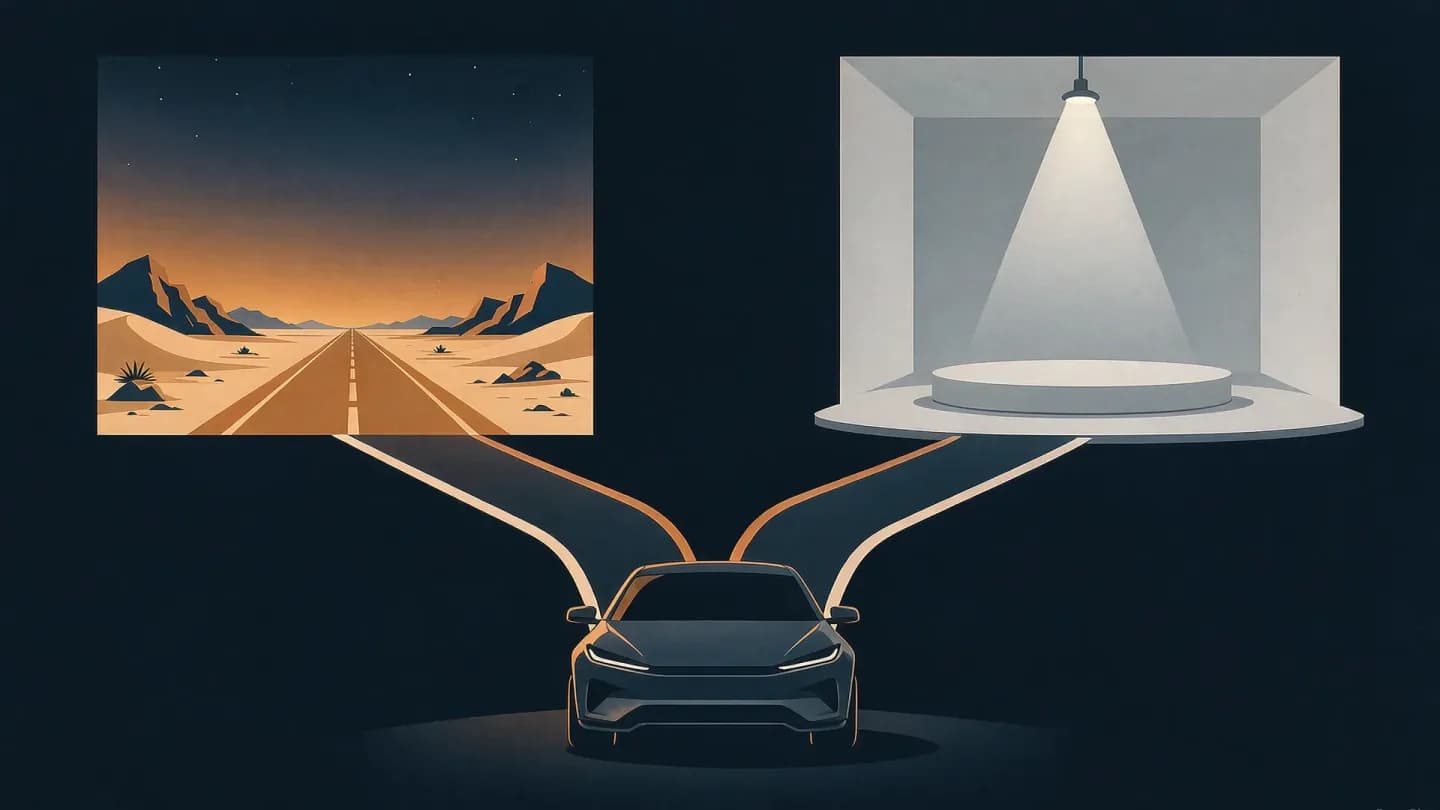
Automotive AI Video 2026: The Vertical That Routes by Fidelity
BMW generated an entire iX3 ad without a camera and Hyundai India rebuilt 30 years of product history with AI, while Voyah collected 700 AI videos from outside creators in 31 days. Automotive AI video in 2026 is a routing pattern: generation gets the stories cameras cannot shoot, and the product shot stays real.
 Sep 2026
Cultural Freshness: The AI Video Gap No Render Can Close in 2026
Cultural freshness is now the dividing line in AI video creative: delivery metrics have closed, but models trained on past data cannot sell into the cultural moment a cut ships into. Where the residual gap lives, and how to gate for it.
 Sep 2026
The AI Ad Theme Match: The Peer-Reviewed Rule for When AI Belongs in the Ad
A new Journal of Interactive Advertising study defines the AI ad theme match: AI-generated ads win acceptance when AI's role matches the ad's theme, and trigger the uncanny valley when it is just a cheaper production tool.
 Sep 2026
AI Video Emotion Testing: When Stronger Reactions Mean the Wrong Feelings
Kantar's facial coding shows GenAI ads trigger stronger emotional reactions with lower net positivity, and branding that vanishes at peak moments. AI video emotion testing turns those traces into a sign-off step any pipeline can run.
 Sep 2026
Region-Level Editing Ends the Re-Roll Era: The AI Video Shot Becomes an Editable Asset
A flawed AI-generated take used to mean a full re-roll, billed per second. Region-level editing in Seedance 2.5 and Netflix's open-source VOID flips the default: keep the shot, repair the region. What that changes for production economics in 2026.
 Sep 2026
AI Video Awareness Campaigns 2026: When a View Costs $0.0022 and Reach Becomes the Product
A Veo 3-made Lay's spot bought views at $0.0022 each and a homeware campaign hit $1.90 CPM with 1.9x ROAS. The data behind AI video awareness campaigns, and the three-stage pre-promo playbook that converts cheap reach into promo-window revenue.
 Sep 2026
The AI Necessity Test: Whether AI Video Earns Its Place Is About the Idea, Not the Tool
The AI necessity test asks whether AI is essential to the campaign idea or just a cheaper shortcut. A 2026 study of why AI ads succeed or fail says audiences reward the first answer and punish the second.
 Sep 2026
App Preview Videos Now Expire: The Storefront Refresh Pipeline
App preview videos now expire: Google Play requires games-tab videos uploaded within 21 days, and the iOS 26 Liquid Glass redesign dates every capture made against old system chrome. The once-per-launch storefront video has become a recurring production obligation with a real pipeline behind it.
 Sep 2026
AI Video Quality Has a Commercial Threshold: Which Jobs AI Can Already Finish, and Which It Still Cannot
AI video quality stopped being a taste debate in 2026: a 15-second social ad at 1080p with synced audio is shippable, a 60-second dialogue brand film is not, and the profitable work sits between the poles.
 Sep 2026
The AI Video Campaign That Handed the Render to the Audience
An AI video campaign won Effie Singapore's first Grand Prix without a studio: Brewlander printed prompts on billboards and coasters and let consumers render their own beer commercials, on +32% spontaneous awareness and +15% sales. Control moves to the prompt.
 Sep 2026
AI Video Resolution in 2026: The Draft-Cheap, Upscale-Smart Pipeline From 480p to 4K
AI video resolution is a workflow decision, not a quality dial. Most 2026 models top out between 480p and 1080p, so the commercial pipeline now ends with a reconstruction pass, and the destination rather than the model sets the spec. Here is the tier ladder, the bitrate reality and the delivery QC checks.
 Sep 2026
Product Page Video Is a Different Job Than the Ad You Just Shipped
Product page video is a separate deliverable from the campaign cut: the buyer's top goal moved back to acquisition, half of major retailers still rate mediocre on the product page, and a generated frame on a page is a product claim carrying provenance metadata and, increasingly, a platform label.
 Sep 2026
Archive Footage in the AI Era: The 2026 Authentication Playbook
Archive footage is no longer a settled input. Generative models now flood the pool with synthetic clips that survive a casual look, so documentary and brand teams have to document where a frame came from, who attested that it is a capture, and what the licence allows before it reaches the timeline.
 Sep 2026
Premium Video Inventory: The Label Left the Screen in 2026
Premium video inventory in 2026 is a contract, not a screen. Budgets moved toward wherever algorithms, commerce data and premium video intersect, while buyers name inventory quality as their binding constraint, so the destination tier now sets a cut's spec, rights record and QC gate.
 Sep 2026
Local Video Ads in 2026: The Surface That Ranks Proximity, Not Reach
Local video ads now sit on a discovery surface of their own, and it does not work like the feed brands already optimise for. TikTok's Local Feed ranks on proximity, topic and recency, will not surface a video that carries no location signal, and reports none of it back. Local output has to be authored per market.
 Sep 2026
AI Video Thumbnails: The Packaging Step Pipelines Still Ship by Hand
AI video thumbnails are the last hand-made step in a pipeline that now generates cuts at volume. The platform's own A/B test crowns the best watch time share rather than the best click rate, and excludes Shorts, made-for-kids and scheduled live video. Packaging has to move upstream, into the cut and the delivery spec.
 Sep 2026
Live Event Video Production: The Crop Now Ships From the Live Encoder
Live event video production stopped being a post-production job in 2026. Reframing and clip generation now run in parallel with the live encoder, so vertical output and highlight cuts exist six to ten seconds after the moment, with no human in the loop. The spec has to be set before the event starts.
 Sep 2026
AI video production management is now the layer that decides who ships
AI video production management turned into a product category in September 2026. Huijing's Jingrui AI, ShortsCrew and Western Film Group's Yingpu AI all sell schedule, version, asset and compute control rather than another model. The audit trail, not the generator, is what commercial teams are being asked to buy.
 Sep 2026
AI Video Talent Market 2026: The 329% Skill Surge and the Rate Gap It Created
AI video generation and editing demand rose 329% year over year in 2026, the fastest-growing skill on Upwork's marketplace. The AI video talent market that grew around it pays a 34% hourly premium, but the money sits in workflow control and finishing, not in tool access.
 Sep 2026
Your 2026 Video Ad Benchmark Is One Vertical Wearing an Average
A video ad benchmark is only as useful as the traffic inside it. In the 2026 sector dataset one vertical supplied 76.1% of impressions and 63.8% of clicks, which changes what a fair comparison looks like for every other category.
 Sep 2026
Live Commerce Is a Schedule, Not a Campaign: Inside the 2026 Live Video Production Model
Live commerce crossed from campaign to standing channel in 2026. US livestreaming e-commerce is tracking toward $68 billion, and on TikTok Shop Malaysia almost six in ten users name LIVE as their preferred format. The unit of production becomes a running order, and AI hosts carry a newly defined disclosure duty.
 Sep 2026
AI Parody Ads Set the New Benchmark: Four Days, 90% Right, Ship It
AI parody ads compressed commercial production to four days in 2026. The Goodwipes spoof of OpenAI's Astra spot shows what changed: a shipping standard of 90% right, a bottleneck that moved from generation to brand-asset fidelity, and the narrow legal pocket parody occupies.
 Sep 2026
Branded Micro-Drama in 2026: The Series Became a Media Channel
Branded micro-drama is the first brand format where the unit changed: brands commission seasons, not spots. Here is what 1.45 billion short-drama app downloads, a 132% jump in active advertisers and a 0.47% hit rate mean for a brief, a media plan and a compliance file.
 Sep 2026
AI video editing in 2026: the assistant now hands over a project file
AI video editing crossed a line at IBC 2026. Agents now prepare the media, sign the export and hand back a native project file instead of an XML, which turns the editorial handoff into the last human gate in the pipeline.
 Sep 2026
AI animation in 2026: 2D lost the process, 3D lost the product
AI animation split in 2026: 2D pipelines absorbed the in-between work while 3D pipelines absorbed the assets themselves. The 3D previz control layer, not the model, now decides what a brand can ship.
 Sep 2026
AI newsroom production is already live: what broadcast built first
AI newsroom production is already running end to end in broadcast, which makes it the sharpest working model for commercial video teams: an agent is only as capable as the pipeline you own, and the record has to be produced by the system doing the work.
 Sep 2026
AI video activation gap: why 2026's bottleneck is shipping, not making
Brands now make far more AI video than they traffic. A September 2026 analysis found 78% of brands produced video advertising while only 46% served impressions. The AI video activation gap is a production problem: delivery spec, provenance record and distribution calendar decide which assets reach an audience.
 Sep 2026
AI video chain of title: who owns a generated commercial in 2026
An AI video chain of title decides three things about a generated commercial: whether you can run it, whether you can stop a copy, and who pays if it infringes. Here is how the 2026 rules, the vendor plan tiers and a documented human-contribution record fit together.
 Sep 2026
AI video camera control is the real skill: the shot, not the prompt, decides the 2026 cut
AI video camera control has overtaken prompt prose as the skill that decides a cut. The shot list, camera path and continuity process now sit between a brand brief and a finished campaign.
 Sep 2026
AI video targeting after the consent reset: the creative has to carry relevance
AI video targeting is losing its third-party signal layer: the American Privacy Rights Act takes full effect on January 1, 2027, and 15 to 20 percent of programmatic inventory may become untargetable without consent infrastructure. Contextual triggers and consented first-party capture replace it.
 Sep 2026
AI video HDR delivery: the grade moved inside the model
AI video HDR delivery stopped being a post-house task in 2026. Generative models now output HDR10, HLG, ProRes and 16-bit EXR masters themselves, which moves the colour decision into the prompt. The risk is that an upconverted HDR file is an inference, not a capture.
 Sep 2026
The AI Video Carbon Footprint: Why Generative Ads Have an Energy Bill Nobody Reports
Generative video is the heaviest task in the AI stack, yet almost no brand can state the AI video carbon footprint of a single campaign asset. The first credible measurement data shows why the number scales with retries, and which production levers cut carbon and cost together.
 Sep 2026
AI Slop in Video Advertising: Why Bad Inventory Now Scores as Premium
AI slop takes 1.3% to 2.4% of open-web programmatic spend, and the first rigorous sizing of it found the junk outscores clean video inventory on invalid traffic, viewability and premium grading. Here is what buyers should change.
 Sep 2026
AI Video Made Execution Free. The Emotional Premise Is the Only Variable Left
The emotional premise is the one creative variable AI video cannot scale. System1 puts top-quartile emotional ads at 2.3x long-term brand value, Instrument measured a 34% thumb-stop lift across 16 DTC clients, and Epsilon finds only 9% of marketers tie AI to revenue.
 Sep 2026
In-Game Video Advertising in 2026: Why the Creative Brief Is the Bottleneck
In-game video advertising stopped being an experiment in 2026: IAB PlayFronts put built-for-platform creative on the agenda, Zynga launched Ads+ with a DoubleVerify Attention Index of 204, and Roblox units sit inside DV360. The bottleneck is no longer inventory. It is video built for a two-second thumb-stop.
 Sep 2026
AI B-roll Licensing: Why Generated Cutaways Replace Stock Footage but Not the Contract
AI B-roll licensing is the question teams skip when they swap a stock subscription for a generator. A stock clip arrived with one licence that answered three questions at once; a generated cutaway splits them into tool terms, copyright and a disclosure test.
 Sep 2026
AI Video Brand Building Has a 2026 Problem Machines Can't Solve
AI video brand building is scaling production but not equity. Epsilon's 2026 benchmark finds 100% of marketers use AI yet only 9% tie it to revenue, while Wyzowl shows 89% of consumers read video quality as brand trust.
 Sep 2026
Live Sports Video Advertising in 2026: Making Generated Creative Keep Up With the Game Clock
Live sports video advertising now has a real-time trigger - live game data can rewrite a creative mid-match. Here is the production architecture, variant library and provenance rule generative teams need before the next whistle.
 Sep 2026
The AI Video Capability Gap: Why 2026 Teams Buy Tools and Still Stall
The AI video capability gap explains why 2026 teams own every generation tool and still ship slowly: no CMO in a 126-leader benchmark reached top-tier maturity, and 58 per cent have no roadmap at all.
 Sep 2026
AI Video Content-Type Fit: Where Generative Video Earns Its Keep in 2026
AI video content-type fit is the planning lens for 2026: generative video earns about 87% of human engagement on short social clips but only 61% on brand storytelling. Deploy AI where volume wins; keep human craft where the story sells.
 Sep 2026
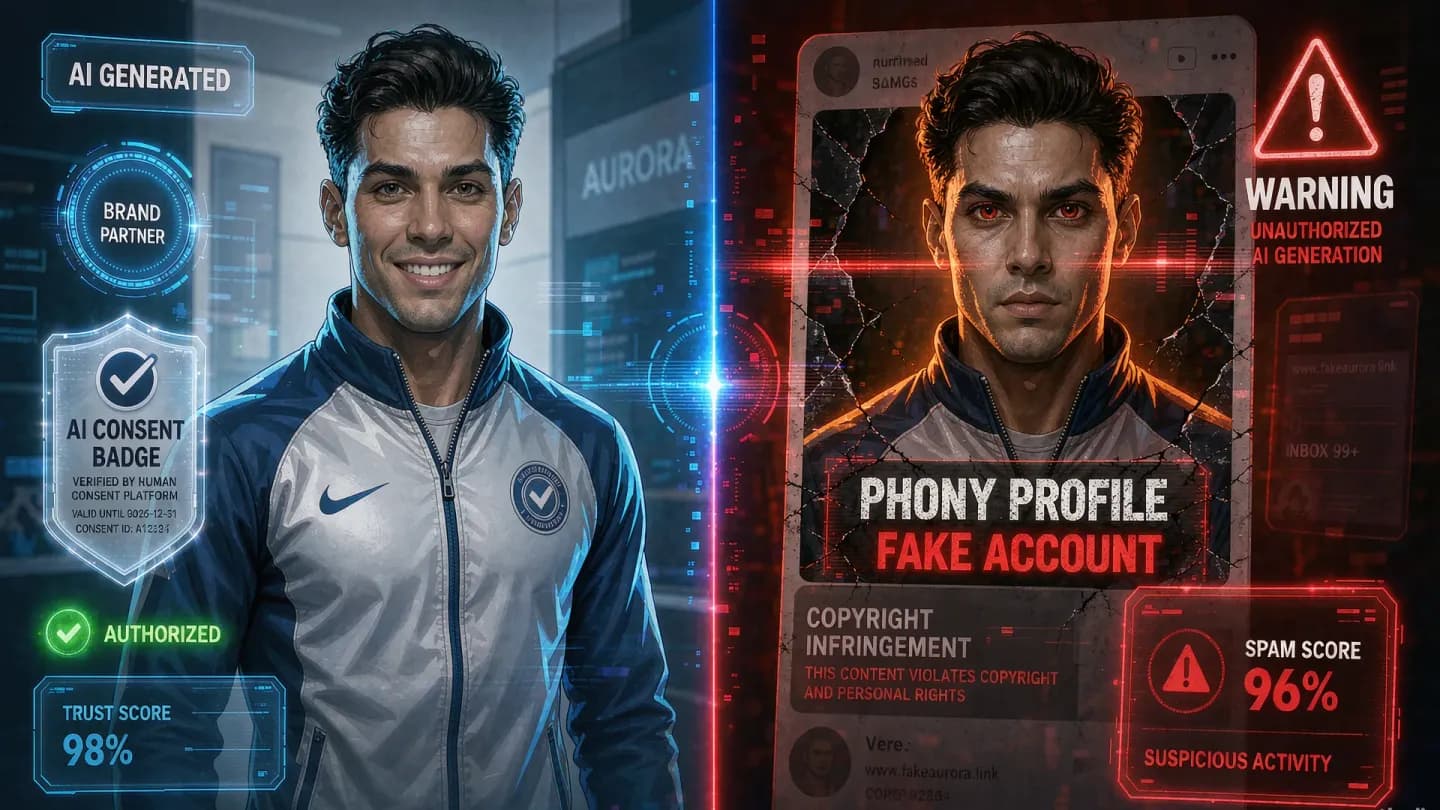
Synthetic Likeness in Video Ads: The 2026 Consent Gap
Synthetic likeness in video ads — an AI clip of a real person doing something they never did — is trivial to make, but the consent and disclosure rules lag. In 2026, right-of-publicity and deepfake-label rules are tightening faster than workflows, leaving a consent gap that turns a cut into legal risk.
 Sep 2026
Shoppable AI Video: Turning Product Content Into Checkout in 2026
Shoppable AI video is collapsing the distance between product content and checkout. This 2026 playbook for commerce teams covers the benchmark conversion data, the AI production stack that makes catalog-scale video affordable, and the QA gate that keeps it trustworthy.
 Sep 2026
AI Video Sound Design in 2026: Why the Audio Pass Decides Whether Generated Footage Reads as Real
AI video sound design is the pass that turns a generated clip into footage people believe. Generative models return picture that survives a phone screen, but the audio track rarely survives a first listen — from the ambience bed to the loudness gate and the caption track.
 Sep 2026
Synthetic Media Advertising Regulation Is Reshaping AI Video in 2026
Synthetic media advertising regulation moved from soft guidance to enforceable law in 2026. Here is what the EU AI Act, China's labeling rules, and Turkey's new ad amendment now require of AI video teams.
 Sep 2026
AI Campaign Optimization in 2026: Why Adoption Keeps Outrunning Activation
AI campaign optimization should be the easiest AI win in marketing — yet only 17% of marketers actually use it while 70% say optimizing spend is a top priority. The 2026 gap is one of activation, not ambition: fragmented data, thin talent, and unclear ROI keep teams stuck in pilots.
 Sep 2026
AI Video Frequency Capping in 2026: Why Variant Volume Rewrites the Impression Ceiling
AI video frequency capping has become the constraint commercial teams forgot to plan for. As generative models erase the production ceiling, the impression ceiling stays put, and unlimited variants start to fatigue audiences faster than the spots they replace.
 Sep 2026
The Best-of-Breed AI Video Stack: Routing Every Job to the Model That Wins It in 2026
A best-of-breed AI video stack routes each commercial job to the model that does it best — Seedance for duration, Veo for camera adherence, Runway for characters. No single 2026 engine wins every axis, so portfolio routing is the new operating model.
 Sep 2026
AI Video Stack Validation: Why 93% Confidence Isn't Proof
AI video stack validation is the gap ARF just measured: 93% of marketers are confident in AI outputs, but only 52% have a formal policy. With no single AI system dominating, video teams assemble per-stage stacks - and the handoff is what breaks.
 Sep 2026
The AI Video Delivery Era: From Clips to Finished Commercial Work at Scale
The AI video delivery era has arrived: vendors and brands have shifted from generating raw clips to shipping finished, brand-ready commercial work at industrial volume. Here is what changed, and why it matters for creative teams.
 Sep 2026
Sustainable AI Video Production: The 2026 Batch-and-Route System
AI video tools promised to remove the production bottleneck. The real constraint in 2026 is human stamina, not render time. Sustainable AI video production means a batch-and-route rhythm where AI drafts and repurposes while people keep the creative calls.
 Sep 2026
AI Video Usage-Based Billing Rewrites the 2026 Budget Model
AI video usage-based billing charges per second of generation, not per asset, turning video into a retainer cost and forcing a rewrite of the 2026 budget model.
 Sep 2026
AI Video Creative Displacement Is Hollowing Out the Middle Class in 2026
AI video creative displacement is the 2026 story behind commercial video: as generation gets nearly free, the mid-tier talent that produced competent work is being squeezed out. Here is what the data shows.
 Sep 2026
AI Video Ad Tolerance Is Collapsing in 2026
AI video ad tolerance is collapsing in 2026: 86% of Gen Z skip ads and 35% say AI-made creative is a reason to disengage. Here is what AI-video teams must change.
 Sep 2026
AI Video Model Readiness in 2026: What the Update Cycle Tells Commercial Teams
AI video model readiness in 2026 is no longer about demo quality. The year's model updates show teams should evaluate native audio, camera and character control, multi-shot coherence, licensing, and predictable cost before committing a workflow.
 Sep 2026
Constraint-Led AI Video Production Is Replacing Open-Ended Prompts
Generative video is now cheap and fast, but the 2026 differentiator is constraint-led AI video production: output that survives brand and legal review at scale. Here is how teams are building governed pipelines.
 Sep 2026
Enterprise AI Video Demand in 2026: What Runway's $200M ARR Signals for Commercial Teams
Enterprise AI video demand has crossed from experiment to budget line in 2026. Runway's $200M ARR, IAB's $80B video ad spend, and Epsilon's adoption data all point the same way: enterprises are now the buyers writing the checks.
 Sep 2026
The 2026 Video Attention Split: Why Forced Exposure Delivers 44%
Video attention did not shrink in 2026, it moved. Social video takes 3h54m a day against 3h20m for TV and streaming, yet only 12% give TV undivided focus and non-skippable ads are watched by 44%. Here is the planning and creative fix.
 Sep 2026
Creative Auction Weight: Why AI Video Volume Wins 2026 Auctions
Creative auction weight — the share of a paid-social auction decided by the creative itself — jumped after Meta's Andromeda update, and AI video is now how commercial teams manufacture the volume that wins.
 Sep 2026
AI Video Brand Lift: Why Most Teams Can't Measure Upper-Funnel Impact in 2026
AI video brand lift is the metric most commercial teams skip: Google's Brand Lift tool needs a 10-day campaign budget of $5k-$60k per question, so only scaled, sustained campaigns can prove upper-funnel impact.
 Sep 2026
AI Video Ad Fraud 2026: Synthetic Impersonation Risk
AI video ad fraud in 2026 pairs synthetic brand impersonation with bot-inflated inventory, draining generative campaigns of real reach. Commercial teams need a provenance-and-verification defense stack to protect spend.